How to Winterize Patio Furniture the Right Way (So It Comes Out Perfect in Spring)
Winterizing patio furniture isn't complicated, but it does ask you to treat every material differently. Here's the material-by-material sequence -- clean, dry, cover or store, elevate -- that keeps teak, aluminium, and wicker looking right through to spring.

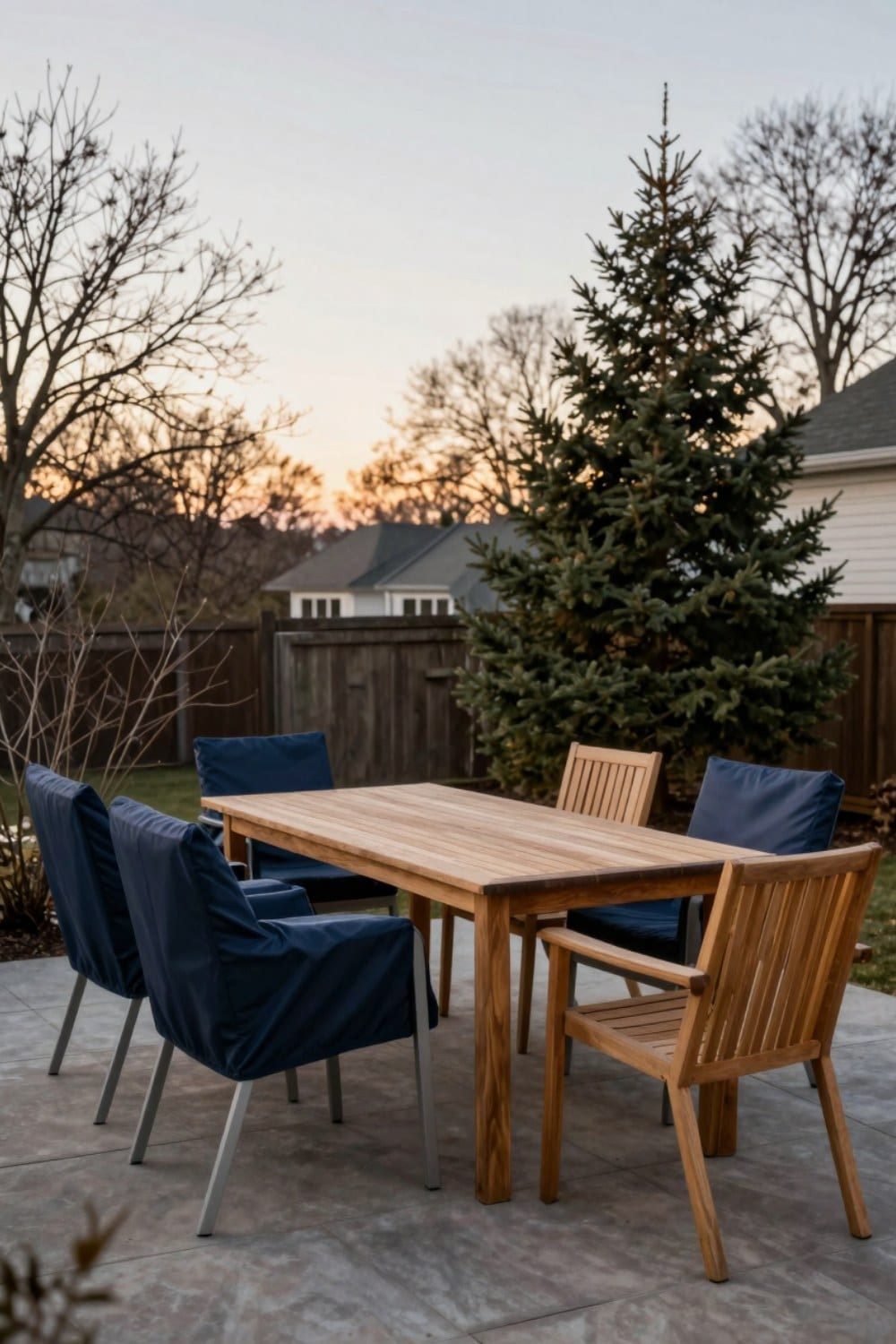
There's a specific kind of disappointment that shows up in April: you pull the cover off the sectional you were so careful with, and the cushions underneath smell like a damp basement. Or the teak table has gone patchy and grey in some spots and blotchy dark in others. Or the powder-coated chairs have a ring of rust starting right where the leg meets the foot. None of that is bad luck. It's almost always a decision made back in October.
Winterizing patio furniture isn't complicated, but it does ask you to treat different materials differently -- what protects teak can ruin all-weather wicker, and what's fine for powder-coated steel will trap moisture against cast aluminium. This is the material-by-material version: what to do, what to skip, and why the sequence matters more than any single product you buy.
The Real Enemy Isn't Cold -- It's Condensation
Almost every ruined piece of outdoor furniture I've seen wasn't damaged by cold. It was damaged by water that had nowhere to go. Cold, dry air is not hard on materials built for outdoor use -- teak, powder-coated steel, and resin wicker are all designed to sit outside through a real winter. What none of them are designed for is being sealed up wet, because that traps condensation against the surface for months instead of hours.
This is why the instinct to wrap everything tightly in plastic or a tarp the moment the weather turns is exactly backward. A tight seal keeps rain off the top and moisture trapped everywhere else. The furniture ends up wetter in March than it would have been if you'd left it uncovered all winter.
Clean and Dry Completely Before You Do Anything Else
Every winterizing job starts the same way regardless of material: a real cleaning, followed by real drying time, before a single cover goes on. Skip this step and you're not protecting the furniture for winter -- you're locking in whatever pollen, sap, and grime accumulated over the growing season, and giving mildew a head start it wouldn't otherwise have.
Wash frames and hard surfaces with mild soap and warm water, rinse thoroughly, and let everything air-dry somewhere with real airflow -- not pushed flush against a wall or stacked together while still damp. Give it a full day longer than feels necessary. An afternoon of sun on a surface is not the same as the surface being dry all the way through, especially in seams, joints, and anywhere two pieces overlap.
Teak: Let It Silver, or Seal It -- Just Don't Do Both
Teak is the one material on this list that genuinely doesn't need to come inside, and it doesn't strictly need a cover either. Left bare through the cold months, it weathers to that soft, even silver-grey that's become its own kind of finish -- a look plenty of homeowners choose on purpose rather than fighting.
The alternative is sealing it: an oil or teak sealer applied while the wood is clean and completely dry, then reapplied in spring to hold the honey-brown color through the season. Both choices are legitimate. What isn't legitimate is doing half of each -- oiling the wood and then wrapping it tightly for winter, because a sealed surface still needs to breathe, and a tight wrap over an oiled surface traps humidity right against the grain.
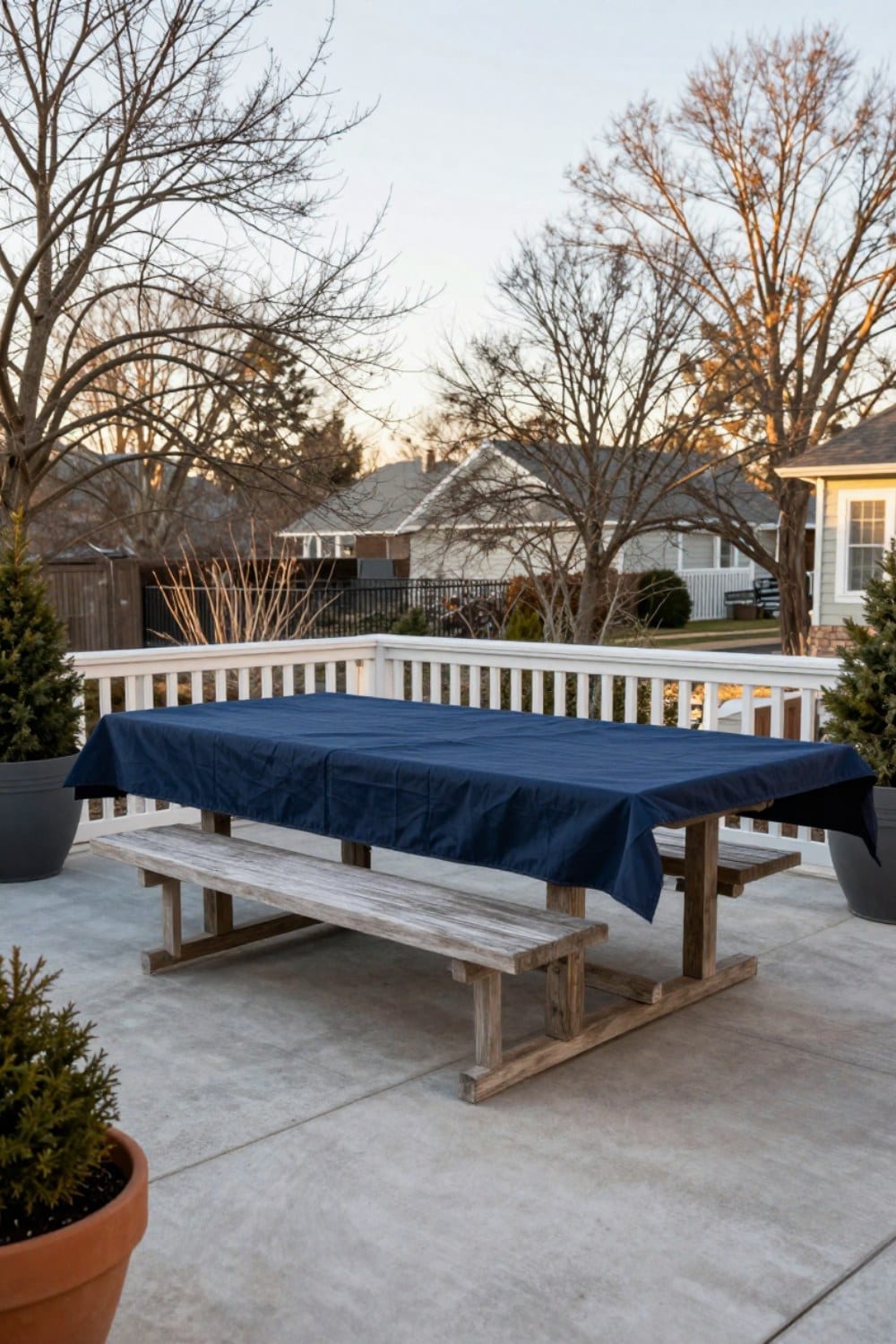
That's also the case against shrink-wrapping or fully tarping teak in general, sealed or not. A tarp pulled snug to the frame blocks airflow the same way a raincoat blocks airflow -- everything underneath stays damp for months, and mildew doesn't need much more than that to take hold. If you're covering teak at all, use a breathable cover that sheds rain but still lets air move, and leave the bottom edge loose rather than cinched.
TeakLeft bare, teak silvers evenly over its first winter outside -- an intentional, low-maintenance finish, not a sign of neglect. Sealed teak needs a breathable cover, never a tight tarp.here's what actually happens →that's the whole story
Left alone, teak turns a soft silver-grey within a year — evenly, if it gets even light. This is oxidation of the surface only; the wood beneath is unchanged and its natural oils keep it from rotting. Oil it if you want the honey colour back, and understand you are then committed to oiling it every spring. Grade A (heartwood, tight grain, no knots) silvers evenly; lower grades go blotchy. Nothing about the greying shortens its life.
Upkeep: One afternoon a year, at most. None, if you like grey.
Powder-Coated Steel and Aluminium Frames
Powder-coated frames handle cold well on their own -- the coating is the actual protection, and it doesn't need help from a cover to survive a season outside. What it needs help with is standing water and scratches, both of which give moisture a way underneath the coating, which is where rust actually starts.
Check welds, leg caps, and anywhere the coating has a visible nick before winter sets in, and touch up bare metal with a matching enamel paint pen if you find any -- a nickel-sized bare spot in October is a rust ring by March. Beyond that, a light cover is more about keeping debris and standing water off the seat than protecting the frame itself.
Cast Aluminium: The Low-Maintenance Choice
Cast aluminium is close to maintenance-free through winter -- it doesn't rust the way steel does, and it isn't porous the way wood is, so there's no real risk of the material itself absorbing moisture and failing. The main thing worth doing is checking for chipped or scratched paint, since bare cast aluminium can develop a chalky white oxidation where the finish is gone, even though it never rusts.

All-Weather Wicker and Resin Wicker
Woven resin holds up to real cold better than most people expect, but it does have one weakness: water that gets down into the weave and can't get back out. A hosed-down chair left to air-dry outside in full sun dries fine. The same chair pushed against a wall with a tight cover over it can stay damp inside the weave for weeks.
Clean it, let it dry completely with the weave facing open air rather than a wall, and use a breathable cover rather than a solid tarp if it's staying outside. The cushions are their own separate project entirely -- fabric holds moisture the weave doesn't, and it needs its own drying and storage sequence, which is worth reading on its own: how to store outdoor cushions for winter covers that end-to-end.
A Word on Wood That Isn't Teak
Eucalyptus, acacia, and other outdoor hardwoods don't weather quite the way teak does -- they carry less natural oil, so they're more prone to checking, those small surface cracks, and to greying unevenly if left bare and untreated. If you have furniture in one of these woods, plan on an actual sealer or oil every year rather than teak's more occasional touch-up, and don't skip the same clean-and-dry sequence before you apply it. A cover helps these woods more than it helps teak, since they're more porous and slower to recover from a wet season.
Elevate Everything Off the Cold, Wet Ground
Whatever stays outside all winter -- covered, uncovered, teak, aluminium, doesn't matter -- benefits from being lifted off the ground itself. A patio surface holds water and cold longer than the air above it, and legs sitting directly in that puddle of freeze-thaw moisture take on damage no amount of covering the top will prevent.
Furniture feet, a couple of scrap tile pieces, even a thin plastic pallet square under each leg is enough to break that contact. It's a five-minute fix that solves a problem most people only notice once the damage -- a stained ring on the patio stone, a soft spot at the base of a wood leg -- is already done.

Covers vs. Full Storage: Deciding Which Pieces Get Which
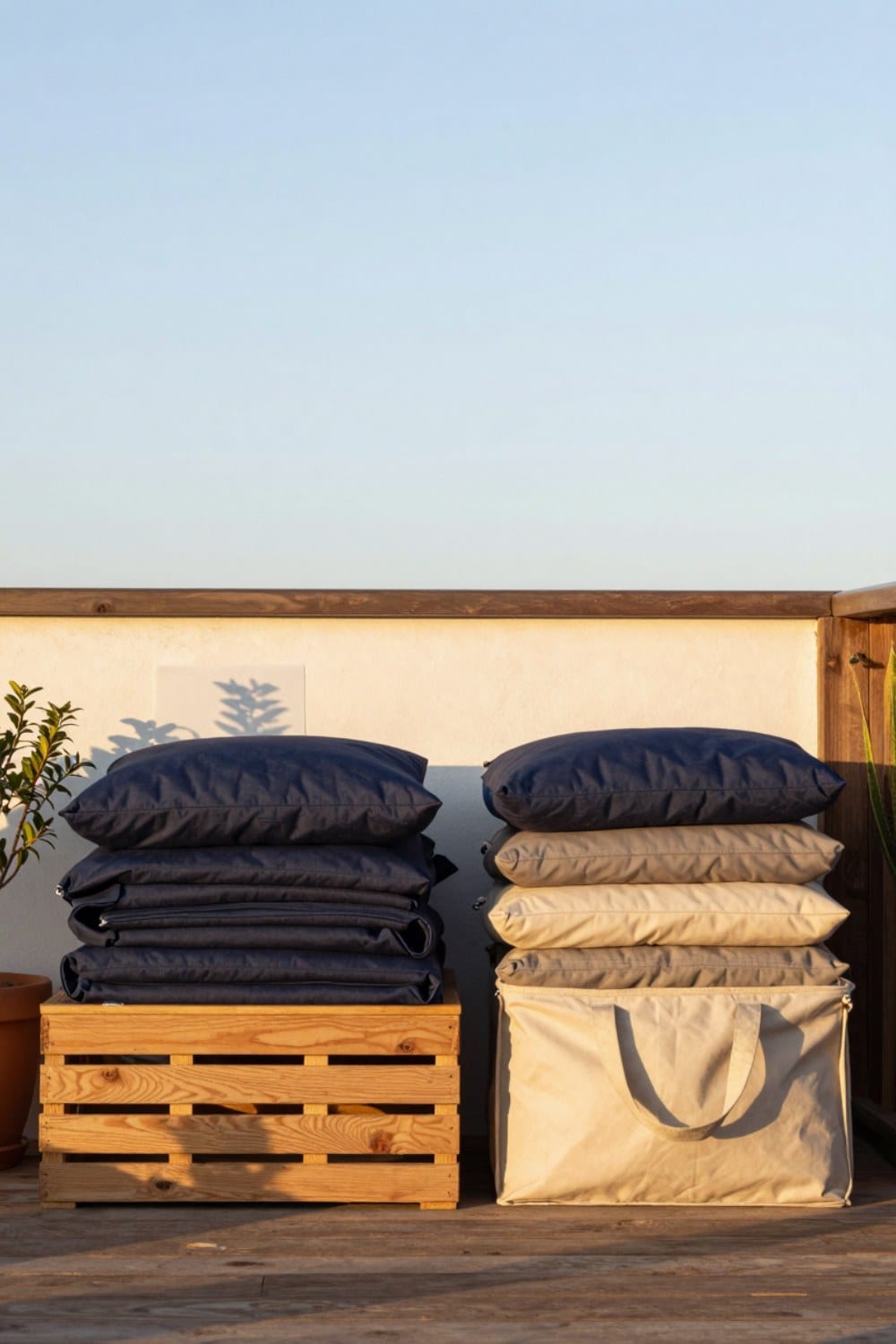
Not everything needs to come inside, and not everything should stay out. Teak, cast aluminium, and powder-coated steel frames are all built to winter outside under a breathable cover. Cushions, umbrellas, and anything with fabric or foam should come in every time -- a shed, garage, or basement, anywhere dry -- because fabric holds water in a way hard materials simply don't. The full sequence for getting cushions clean, dry, and stored without mildew is its own project: how to store outdoor cushions for winter.
Once the furniture itself is handled, the porch or patio it's leaving behind doesn't have to sit empty and bare all season. Swapping the summer containers for something built for cold is a natural next step -- winter porch pots and evergreen urns covers what to plant once the furniture's tucked away, and winter porch decorating ideas picks up the styling side once the space is otherwise winter-ready.
Common Mistakes That Undo a Good Winterizing Job
Most winter furniture damage doesn't come from one bad storm. It comes from a handful of small, repeatable choices made in October and November.
- Wrapping furniture tightly in plastic or a tarp, which traps condensation against the surface instead of keeping it out
- Covering furniture before it's fully dry, which seals existing moisture in rather than keeping new moisture out
- Leaving legs and feet in direct contact with a cold, wet patio surface all winter
- Treating teak, powder-coated steel, and resin wicker the same way, when each one fails differently if the wrong protection is used
- Storing damp cushions in a sealed bin, which is one of the fastest ways to grow mildew indoors
The care calendar
The same furniture, tracked from the first cold snap to the morning you pull the covers off for good.
- October
Clean every piece thoroughly and let it dry for a full extra day past what looks dry. Decide cover-and-stay vs. full storage material by material.
- November
Covers go on breathable and loose at the bottom, never cinched tight. Cushions, umbrellas, and anything fabric move indoors for the season.
- December-January
Check covered furniture after any major storm for pooling water on top of the cover, and brush off heavy snow before it compresses into ice.
- February-March
On the first mild, dry stretch, pull covers back to let everything air out for a few hours before the true spring uncovering.
The Winterizing Checklist
The printable is being finished. It will live here, free, with no sign-up wall.
The Pieces That Need Their Own Plan
Most of what lives outside follows the rhythm above — clean it, dry it, lift it off the ground, cover it. A few things don't, because they fail in their own particular way, and each one is worth its own afternoon.
Teak is the big one — it's one of the few woods that can genuinely stay out all winter, and a lot of the advice written about it does more harm than good. Planters crack for a reason that has almost nothing to do with cold, and once you understand it you won't lose another pot. And if you have a fountain, it is the most freeze-vulnerable thing you own — a stone bowl built to hold water, which is precisely the problem.
Then there's the ground itself. What you scatter on stone steps in January will do more damage across five winters than the ice ever would. And when the holiday decor finally comes down and the porch reads stripped, there's a way to carry it through to spring without it looking bare.
The Payoff: What Spring Actually Looks Like
Done right, winterizing patio furniture is almost anticlimactic -- you pull the covers off in spring to furniture that looks essentially the way it did in October, maybe a shade greyer if it's bare teak, and that's the whole story. No mildew smell, no rust ring, no cracked cushion foam. The furniture that looks the worst every April is almost never the furniture that was left outside. It's the furniture that was sealed up wet.
If the rest of the patio held up through the wetter, windier weeks of fall, you likely already have a good sense of which pieces need the most attention now -- fall patio rain and wind: what holds up is worth a read if you're still deciding what to trust bare through winter. And if you're not ready to put the outdoor evenings away entirely, patio heaters and fire pits for cool evenings can stretch the season a few more weeks before any of this becomes necessary.
Frequently asked
Should I cover patio furniture in winter, or leave it uncovered?
Is it bad to leave patio furniture outside all winter?
How do I keep teak furniture from turning grey over winter?
Do I need to store cushions inside for winter, or can they stay in a deck box?
Sarah Whitmore
she keeps the teak, she oils it in spring
Sarah has furnished the same porch three times and finally stopped. She writes about what actually survives a decade outdoors — which wood silvers, which fabric fades, and which inexpensive piece quietly reads the same as the expensive one.
SarahMore from this corner
 Patio Living
How to Protect Teak Furniture in Winter (What Actually Needs Doing — and What Doesn't)
Teak has a reputation as the fussy, high-maintenance wood on the patio. It's actually the opposite -- one of the only materials built to winter outside without a second thought, as long as you stop treating moisture and cold as the same threat.
Oct 30, 2026 · 10 min read
 Patio Living
How to Store Outdoor Cushions for Winter So They Come Out Spotless
Mildew doesn't come from cold, it comes from moisture sealed inside the foam. Here's how to dry outdoor cushions completely and store them somewhere breathable, so they come out in spring looking like you just bought them.
Jan 15, 2026 · 9 min read
 Patio Living
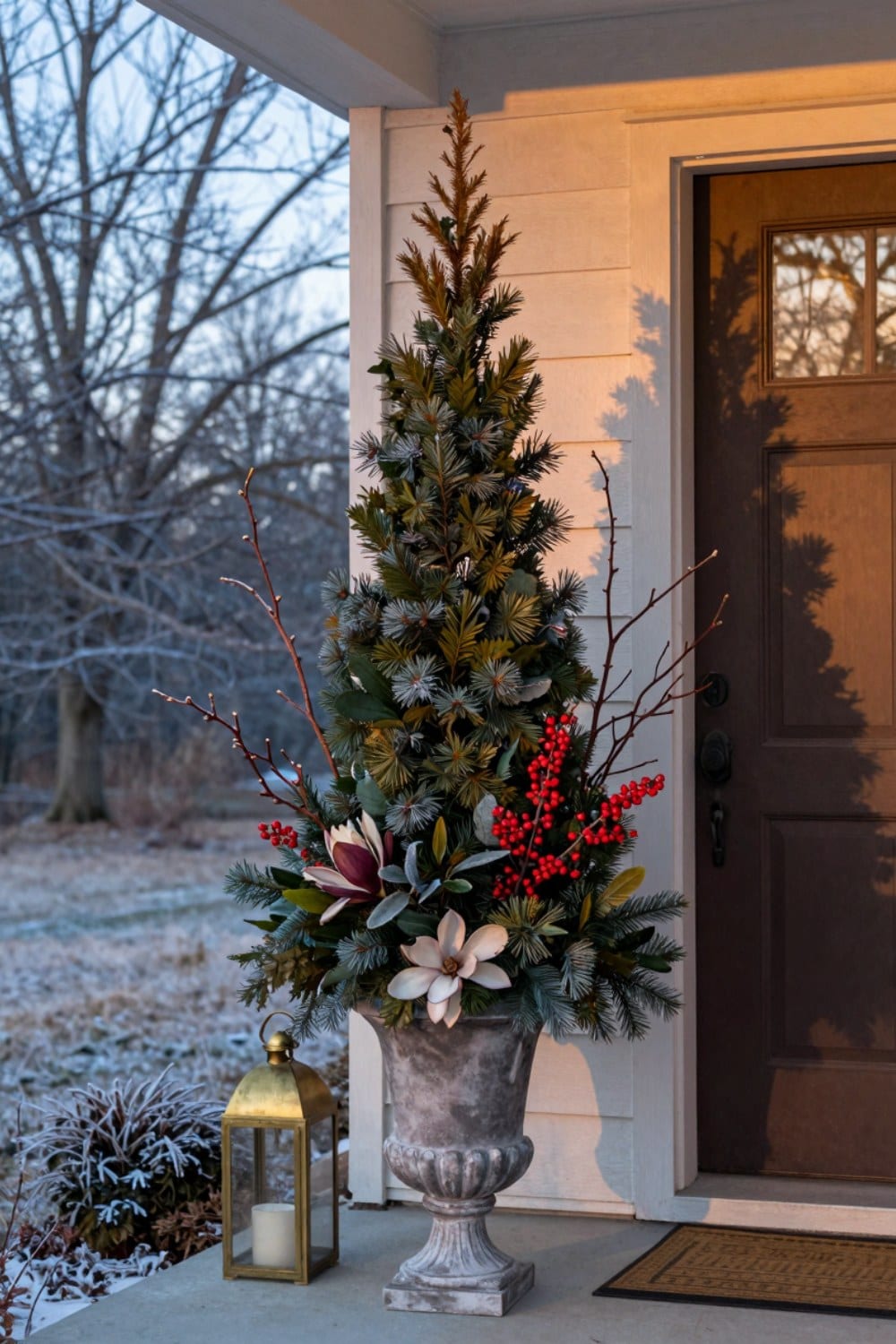
Winter Porch Pots: Cold-Hardy Evergreen Urns That Look Expensive
A winter urn is a florist's recipe, not a bundle of boughs -- a live or cut thriller, layered fir and cedar filler, bare branches for height, and a frost-proof pot that won't crack in a hard freeze. Here's how to build one that still looks pulled-together in February.
Jan 5, 2026 · 10 min read