The Best Patio Furniture Covers for Winter (What Actually Protects a Set You Invested In)
Most cover advice tells you to buy the most waterproof thing you can find. That's the mistake -- a fully sealed cover traps condensation underneath it, and the mildew grows where you can't see it. Here's what actually protects a set through winter.

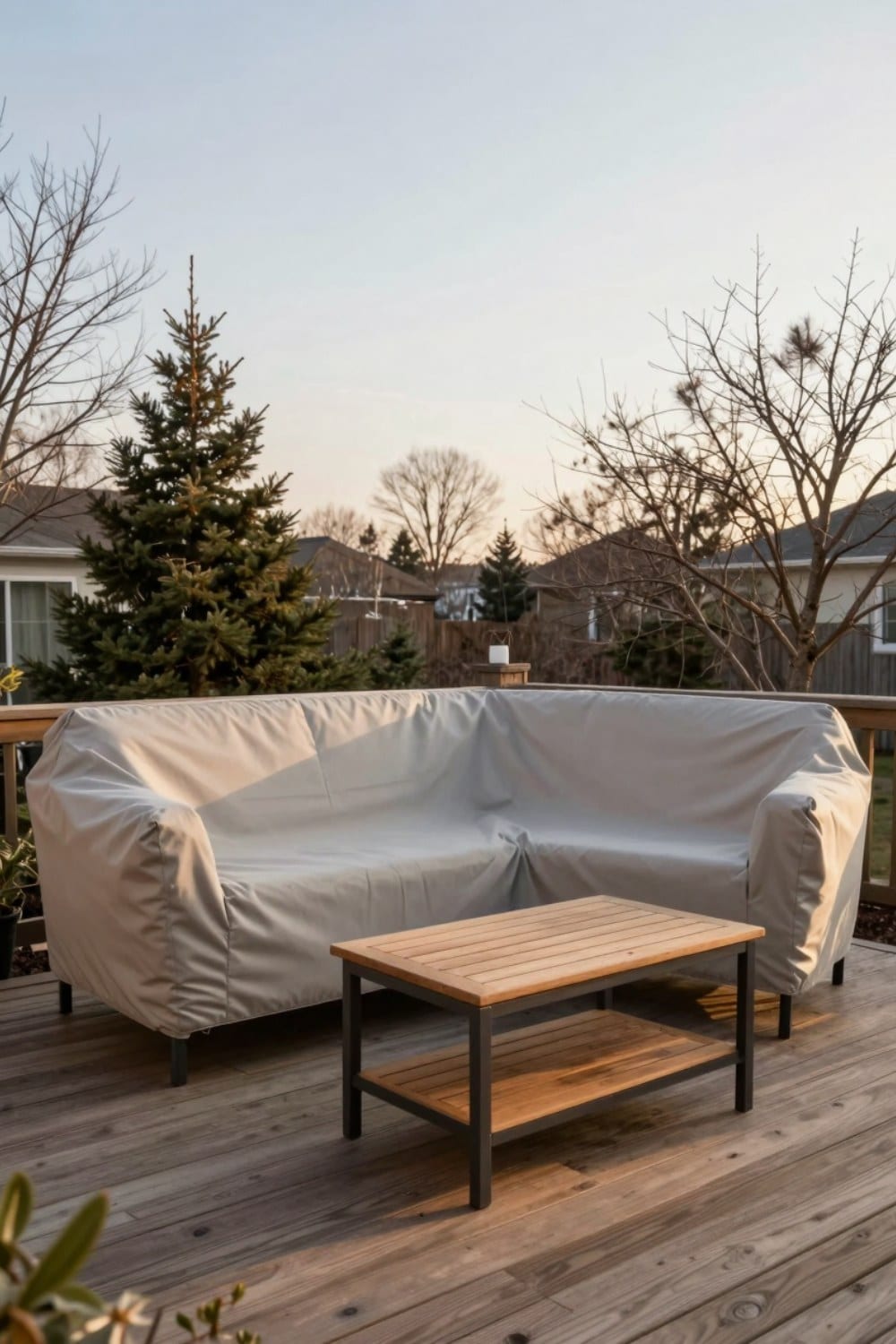
Most articles about winter furniture covers point you toward the same thing: buy the most waterproof fabric you can find, cinch it down, and walk away until spring. It sounds right and is, in one specific way, backwards.
A fully sealed cover keeps rain out beautifully. It also keeps in everything that was already there -- the moisture rising off damp wood and cool metal, the condensation that forms overnight when a cold cover meets a warmer frame. None of that has anywhere to go in a cover with no vent and no breathability, so it sits there all winter doing exactly the kind of quiet damage a cover is supposed to prevent.
The Cover Mistake Almost Everyone Makes
Picture a cover that looks flawless from the outside in March -- taut, dry, not a drop of visible water near it. Pull it off and the story underneath can be different entirely: a musty smell, dark speckling along a seam, cushions faintly damp though it hasn't rained in a week. That's not a failure of keeping water out. It's the cost of a cover never designed to let moisture out either.
A winter cover has two jobs, not one: keep rain and snow off the furniture, and let the air underneath keep moving so whatever moisture does form -- and some always will -- has somewhere to escape before it settles into mildew. A cover that only does the first job is doing half the work and calling it done.
Fabric: The Real Tradeoff Between Breathable and Waterproof
Cover fabric splits into two broad camps, and the tradeoff between them is most of the buying decision. A tightly woven, water-resistant fabric sheds rain from the surface while still letting air pass through the weave itself. A fully coated, laminate-backed fabric is genuinely waterproof -- nothing gets through it in either direction, which sounds like the better spec until you think through what that means for the air trapped inside.
Neither fabric type is wrong for every situation -- but for the long stretch of an actual winter, one holds up better than the other.
| Breathable Woven | Fully Waterproof Coated | |
|---|---|---|
| How rain behaves | Beads and rolls off; the weave still allows air through. | Nothing gets through in either direction -- rain stays out, and so does everything trying to get out. |
| What happens underneath | Air keeps moving, so overnight condensation has somewhere to go by morning. | Trapped humidity settles as standing moisture against the frame and cushions. |
| Mildew risk over a full winter | Low, provided the cover is snug and vented. | High, and often invisible -- growth happens where you can't see it. |
| Best use | A cover left on for weeks or months at a stretch. | Short-term coverage during an active storm, then removed. |
The verdict: A breathable, water-resistant cover protects furniture through a real winter better than a fully waterproof one -- the fabric that keeps the most rain out is not the same fabric that keeps the furniture driest.
Fit: A Snug Cover Beats a Tarp Every Time
Fabric quality gets all the attention, but fit is what actually determines whether a cover survives the season. A cover cut close to the shape of the piece it's protecting -- with a defined seat back, actual arm contours, a hem that sits low against the legs -- stays put and does its job quietly. A generic rectangular cover, or worse, an actual tarp draped over the top, behaves nothing like that.
A loose cover moves with every gust of wind, and that's where the real damage happens. It flaps against the finish for months, which on a powder-coated frame means fine abrasion right where rust likes to start. It also billows away from the furniture at the edges, opening gaps for wind-driven rain to work its way underneath -- defeating the entire purpose of the cover.
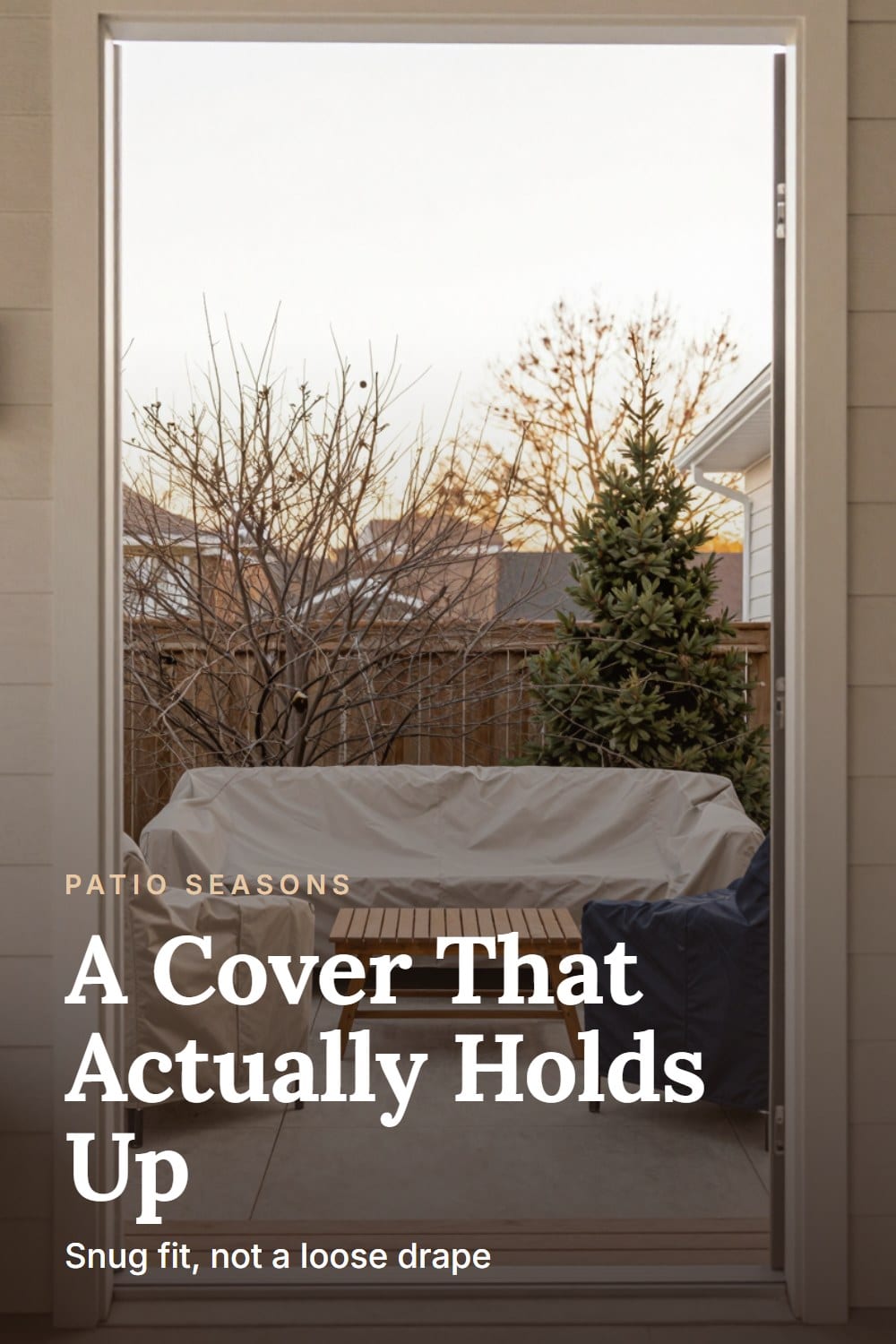
Buy for the piece, not the category. A cover sized for 'a chair' in general fits nothing in particular well. A cover cut for a deep lounge chair, a dining chair, or a loveseat with a defined back sits close enough to the actual shape of your furniture that wind has nothing to grab onto.
Why Vents Matter More Than They Sound Like They Should
A vent is a small mesh-covered opening built into the top or side of a cover, and it's the single most overlooked feature on the entire product page. Its job is simple: give the warm, moist air trapped underneath a way out before it condenses against the fabric and drips back onto the furniture. Without one, even a genuinely breathable fabric is fighting an uphill battle in still winter air, where there's no wind to help push moisture through the weave. With one, the cover behaves the way a well-ventilated attic does -- warm, damp air rises and escapes instead of pooling against the underside of the fabric.
Tie-Downs, Toggles, and Elastic Hems
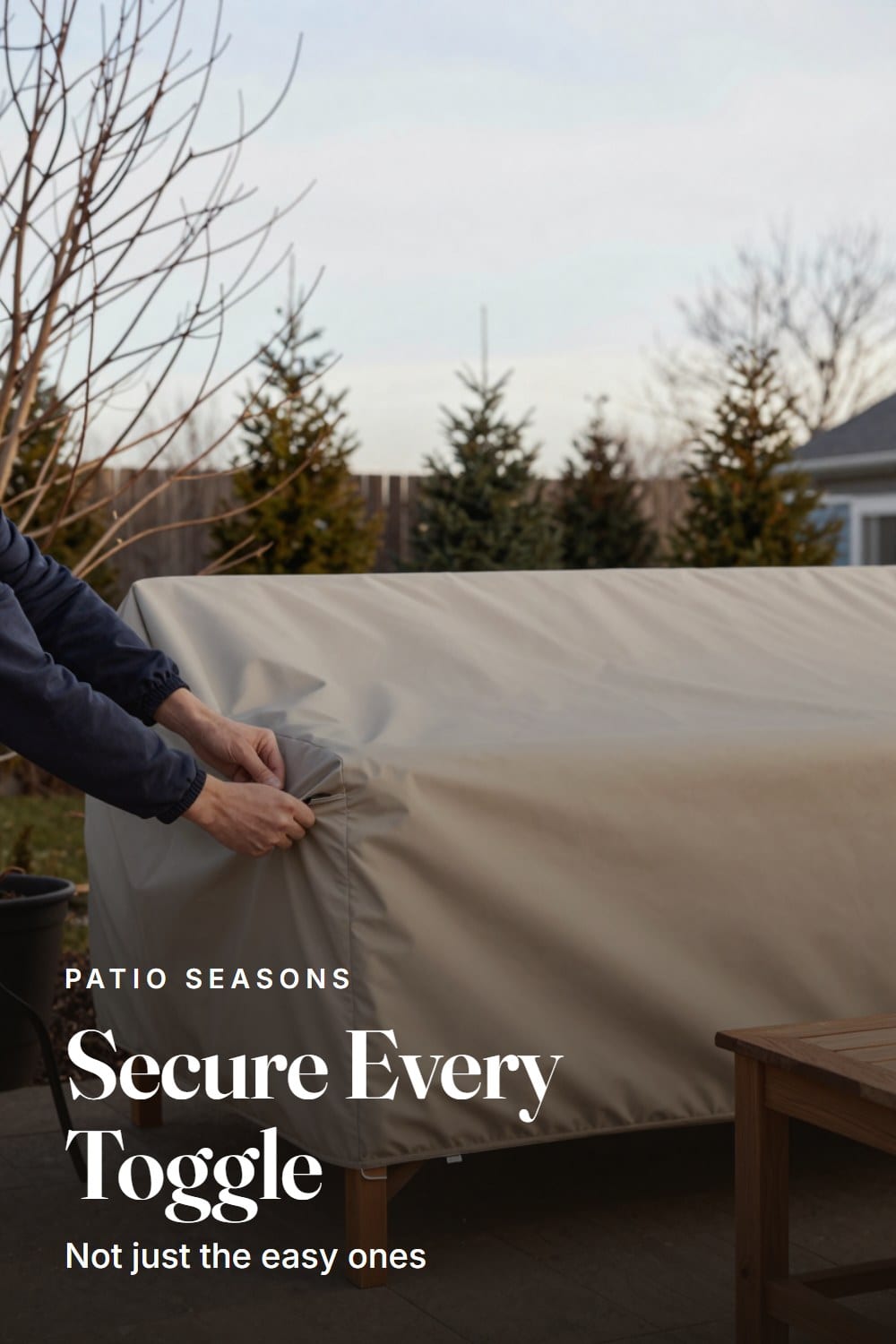
A cover that isn't secured to the furniture is, functionally, an expensive tarp waiting for the first real wind event to prove it. The features that actually hold a cover in place through a winter storm are unglamorous and easy to overlook when you're comparing fabric weights online.
- An elastic hem at the base, cinching the cover in against the legs rather than leaving it to hang loose
- Toggles or drawcords at multiple points around the hem, so the fit can be tightened unevenly to match the piece underneath
- A strap or buckle under the base -- the one feature that keeps a cover on through genuinely high wind, since everything above can be perfectly fitted and still lift if nothing anchors it below
- Corner or seam reinforcement at the points that take the most stress
Give Water Somewhere to Go: Support Poles and Cushions
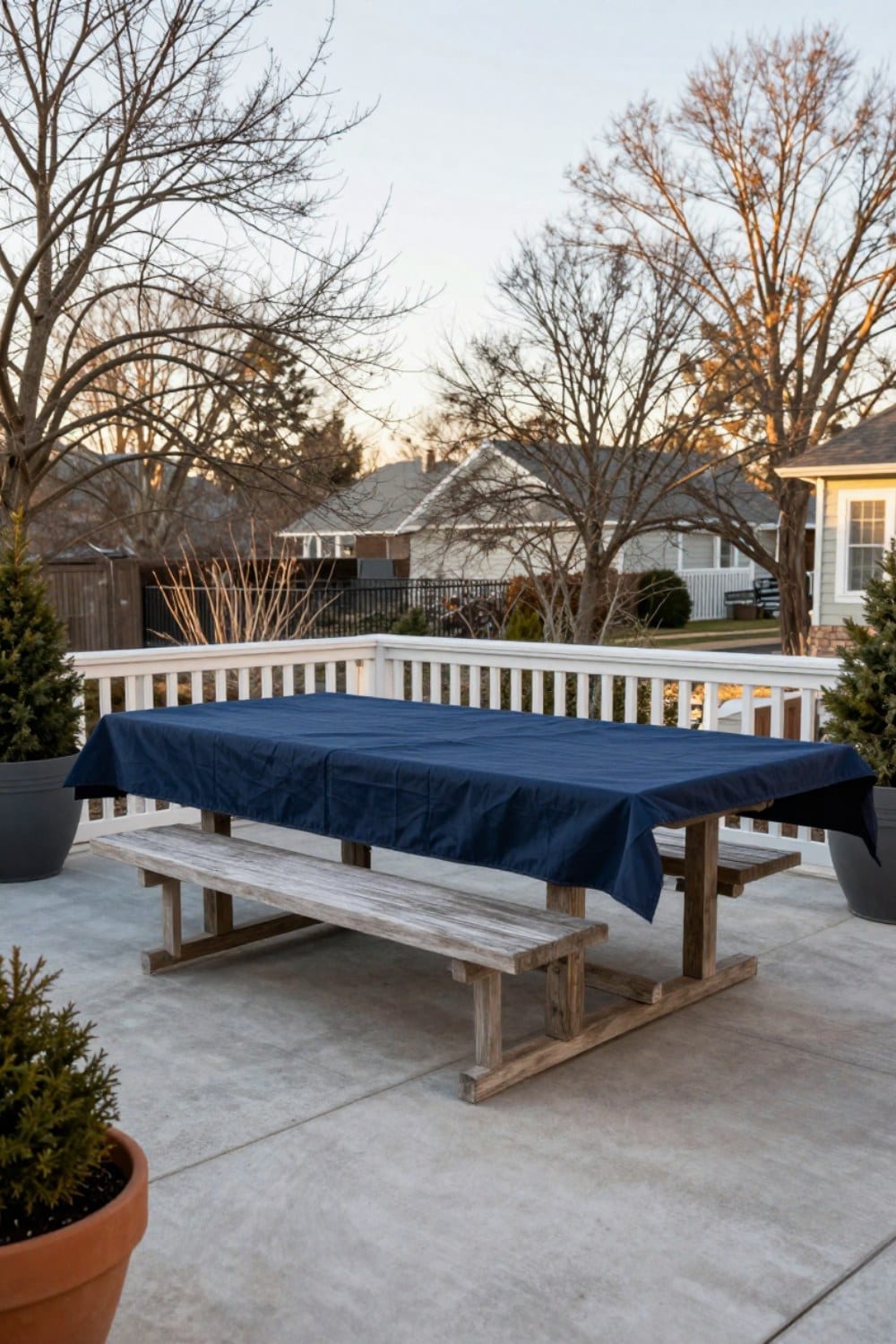
A flat-topped cover over a table or wide bench has one structural problem no fabric can solve on its own: water and snow have nowhere to run off from the center, so they collect there instead, and a puddle sitting on a cover for weeks eventually finds every small imperfection in the seam beneath it.
A support pole -- a simple center post, usually included with table-specific covers or sold separately -- lifts the middle of the cover into a peak, so rain and melting snow shed to the edges the way they would off a small roof. If a dedicated pole isn't available, a stacked cushion or folded towel placed under the center does the same job. The goal either way is the same: nothing about a cover's design should leave a flat, low point where water can sit.
Seams: Where a Cover Actually Fails First
Fabric rarely fails outright over a single winter. Seams do, because a seam is a row of small punctures holding two panels together, and every puncture is a potential entry point for water if it isn't sealed or taped from the inside. Run a hand along the inside of any seam before buying, or read the description closely for 'sealed seam' or 'taped seam' rather than just 'stitched' -- a stitched-only seam on an otherwise water-resistant fabric is the weak point that eventually lets water in, usually along the top ridge where rain runs directly over it for months.
Powder-coated steelThe coating holds up fine on its own, but trapped moisture at the welds under a sealed, unvented cover is how rust gets a head start it wouldn't otherwise have.here's what actually happens →that's the whole story
The coating is tough and the flat panels usually outlast everyone's expectations. Rust starts where the coating is thinnest — the welds, the cut ends of tubing, the scratch where the chair met the door frame. Touch those up the week you notice them and the frame lasts a decade. Ignore them for a winter and the rust travels underneath the coating, where you cannot reach it.
Upkeep: Ten minutes with touch-up paint, once a year, at the joints.
One Big Cover, or a Cover for Each Piece?
Both approaches work, and the right one depends on how the set is arranged. A single large cover over a whole grouped set -- a sofa, two chairs, and a coffee table pushed together -- reduces the number of gaps where wind and rain can find their way in, and it's faster to check after a storm. Individual covers fit more precisely, since a cover cut for one chair follows that chair's actual shape in a way a set-wide cover never quite can, and losing one doesn't leave the whole set exposed. Fixed groupings do well with one cover; furniture that gets shifted around -- dining chairs, a bench that moves between porch and yard -- holds up better with individual covers.

What Not to Use: The Hardware-Store Tarp
A plastic tarp is not a furniture cover, whatever the label on the folded package suggests. It has no shape, no vent, no elastic hem, and no give -- a flat sheet of fully sealed material with none of the features that actually keep a cover functioning through a winter. It traps moisture completely, sags into any flat surface underneath it and collects standing water there, and its edges have nothing to hold them against the furniture besides a rope or bungee cord you supply yourself. A real furniture cover exists precisely to solve the problems a tarp creates -- the vent that lets moisture out, the fitted shape that keeps wind from getting underneath, the hem that actually holds it in place.
Common Mistakes That Undo a Good Cover
- Buying by fabric weight alone and ignoring fit -- a heavyweight fabric cut too loose still flaps, abrades the finish, and lets rain in at the gaps
- Choosing fully waterproof over breathable without realizing that traps condensation against the furniture instead of letting it escape
- Skipping the vent, then wondering why a flawless-looking cover hides mildew underneath
- Covering a table with no support pole or stacked cushion underneath, so rain collects in a standing puddle at the center all winter
- Leaving cushions or fabric damp when the cover goes on, sealing that moisture in from day one
Covering vs. Bringing It Indoors
A cover is a compromise, not a guarantee, and it's worth being honest about where that compromise stops making sense. Cushions and any removable fabric do better stored somewhere dry than left under even the best cover all winter -- a cover slows moisture, it doesn't eliminate it. The right way to store outdoor cushions for winter covers exactly what to do with them once they're off the furniture.
For the frames themselves, a good cover is genuinely enough for most climates and most winters -- it's the covering step inside a larger winterizing routine, not a replacement for it. How to winterize patio furniture walks through what should happen before the cover ever goes on. And if you're still deciding how much weather your set can take before it needs covering at all, what actually holds up through fall rain and wind is the place to start.
The Winter Cover Buying Checklist
The printable is being finished. It will live here, free, with no sign-up wall.
Frequently asked
Should I buy a breathable cover or a fully waterproof one?
How do I stop water from pooling on top of a flat cover?
Should cushions stay under the cover with the furniture all winter?
Can I use a plastic tarp instead of a real furniture cover?
Sarah Whitmore
she keeps the teak, she oils it in spring
Sarah has furnished the same porch three times and finally stopped. She writes about what actually survives a decade outdoors — which wood silvers, which fabric fades, and which inexpensive piece quietly reads the same as the expensive one.
SarahMore from this corner
 Patio Living
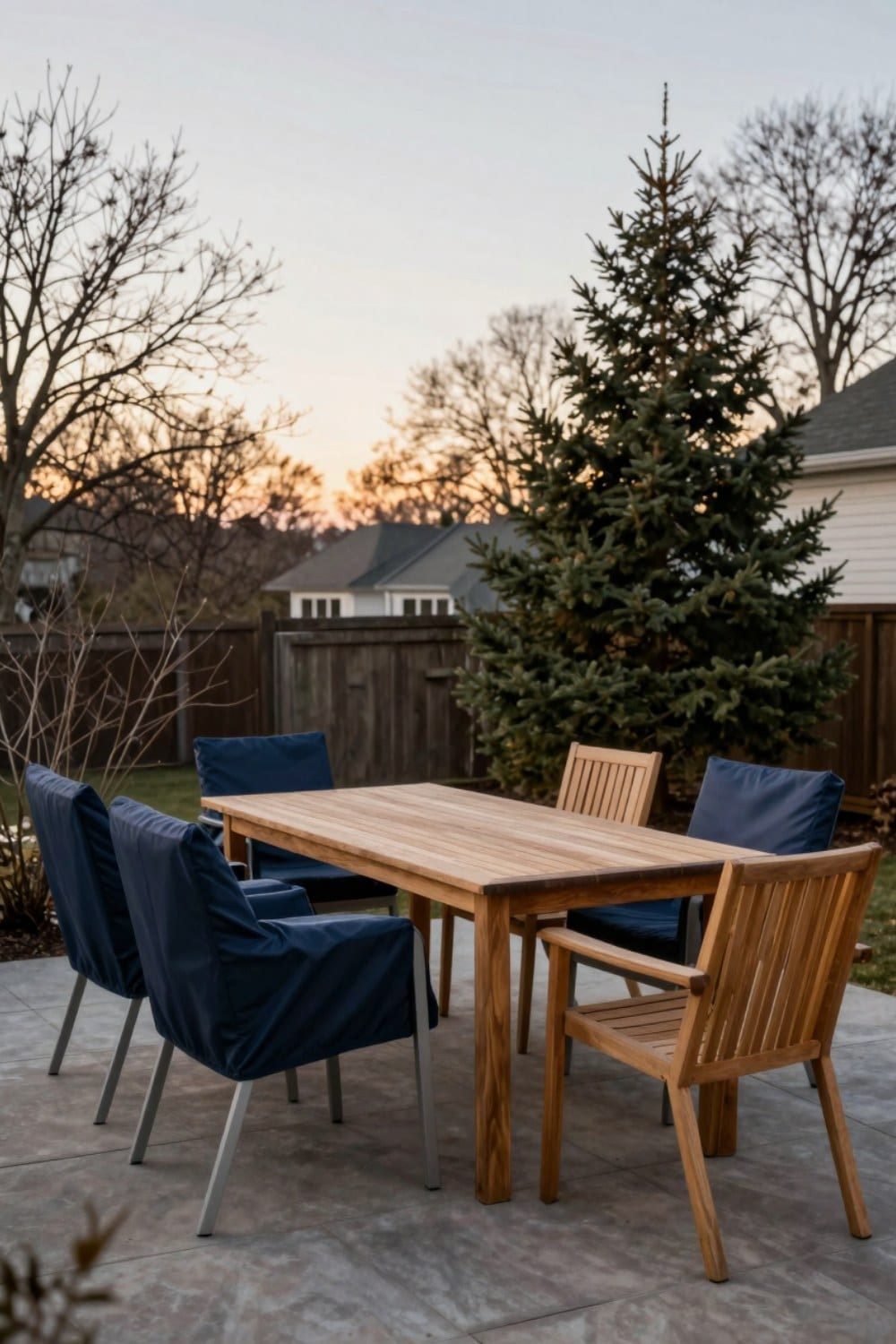
How to Protect Teak Furniture in Winter (What Actually Needs Doing — and What Doesn't)
Teak has a reputation as the fussy, high-maintenance wood on the patio. It's actually the opposite -- one of the only materials built to winter outside without a second thought, as long as you stop treating moisture and cold as the same threat.
Oct 30, 2026 · 10 min read
 Patio Living
How to Winterize Patio Furniture the Right Way (So It Comes Out Perfect in Spring)
Winterizing patio furniture isn't complicated, but it does ask you to treat every material differently. Here's the material-by-material sequence -- clean, dry, cover or store, elevate -- that keeps teak, aluminium, and wicker looking right through to spring.
Jan 24, 2026 · 11 min read
 Patio Living
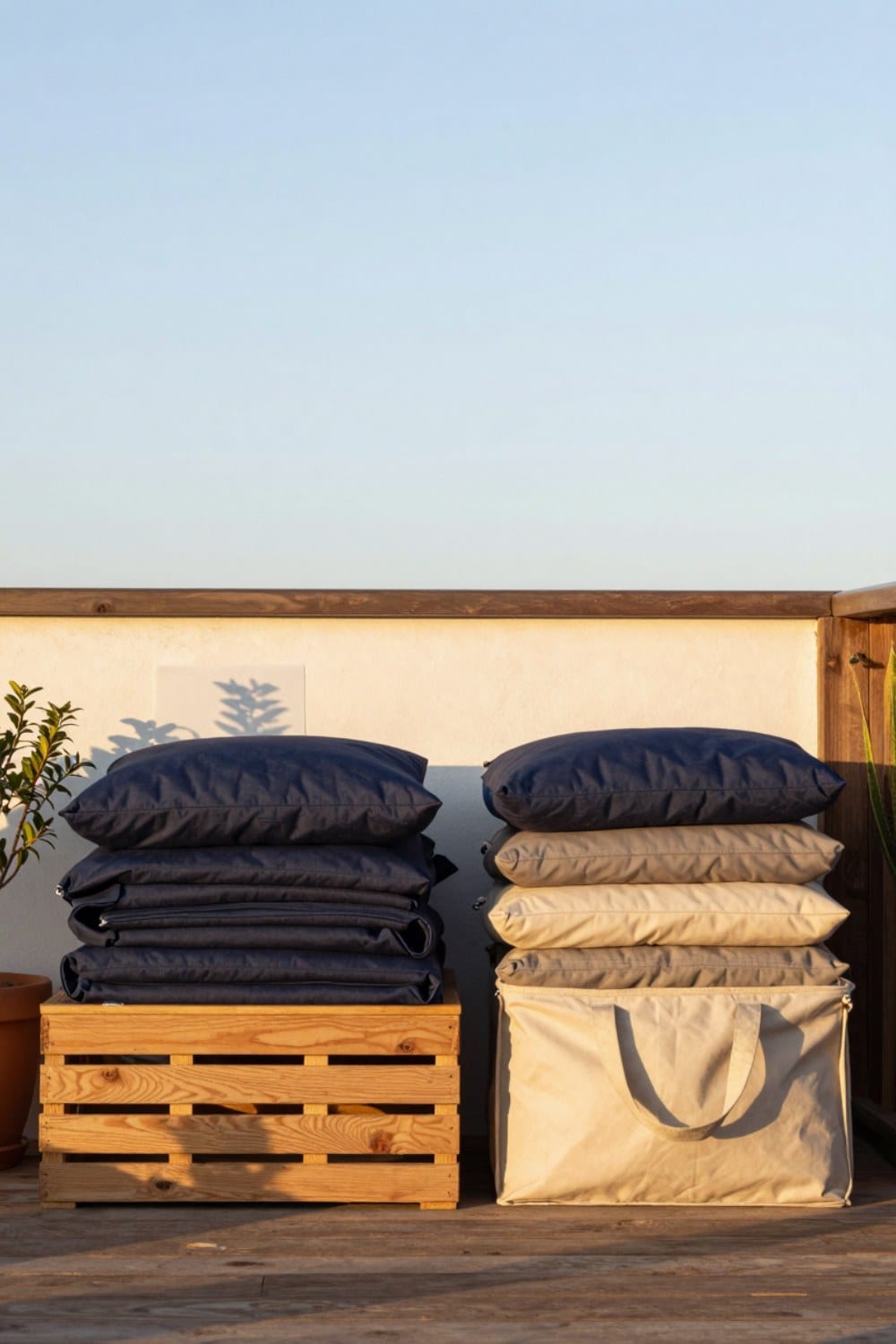
How to Store Outdoor Cushions for Winter So They Come Out Spotless
Mildew doesn't come from cold, it comes from moisture sealed inside the foam. Here's how to dry outdoor cushions completely and store them somewhere breathable, so they come out in spring looking like you just bought them.
Jan 15, 2026 · 9 min read