Patio Heater or Fire Pit? How to Choose for Cool Fall Evenings
Patio heaters and fire pits solve two different problems on a cooling patio. Here's how to tell which one actually fits how you use your evenings outside — and what it takes to run either one safely.

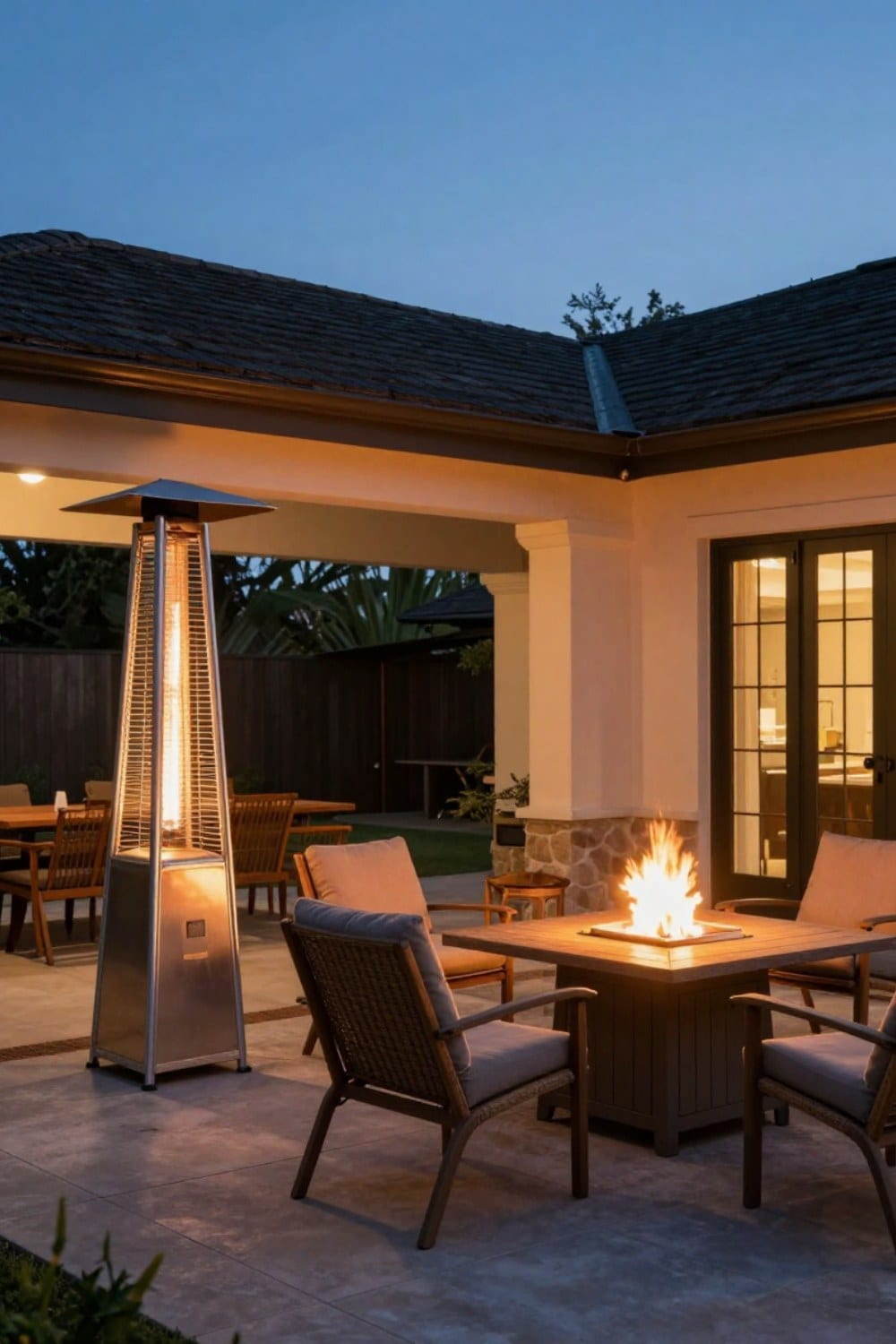
By the third week of September, our patio has a decision to make. The umbrella comes down, the citronella candles go into a storage bin, and somewhere around six in the evening the air turns from pleasant to genuinely cold in about the time it takes to finish a glass of wine.
Two things fix that, and people talk about them as if they're interchangeable: a patio heater, or a fire pit. They aren't. A heater throws warm air down from a fixed point above you. A fire pit throws heat and light out sideways from somewhere near your knees, and asks everyone to pull a chair in close. Which one actually belongs on your patio has less to do with how cold it gets and everything to do with how you use the space once the sun goes down — and neither one is optional to run safely.
The Real Difference Isn't the Heat — It's the Shape of the Evening
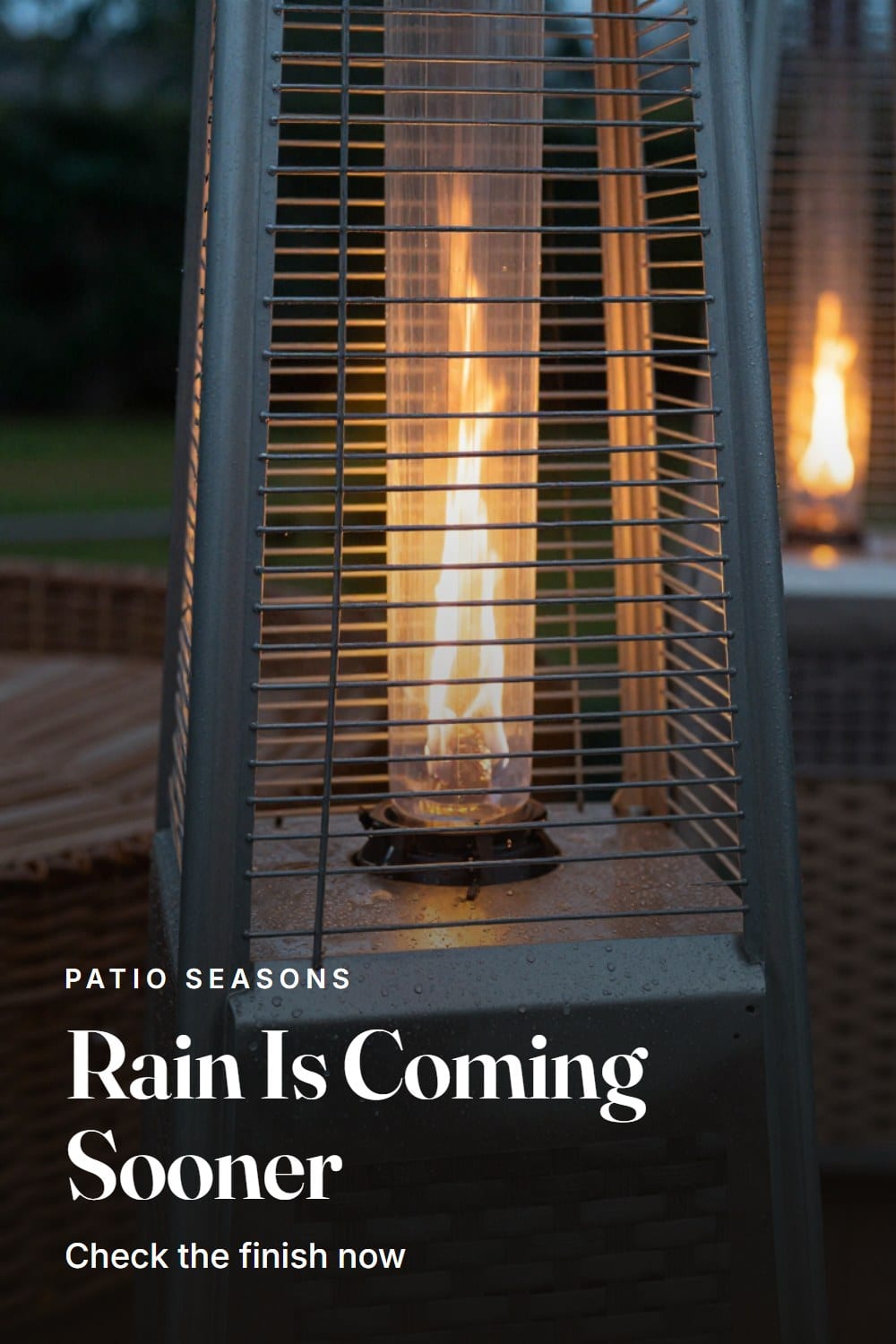
A propane or electric patio heater heats a column of air above a fixed point. Stand directly under one and you're warm; step six feet away and you're back in the evening you were trying to escape. That makes it excellent for a fixed dining table, a low-roofed porch, or any spot where people sit still instead of circulating.
A fire pit does the opposite job. It's a destination, not a utility. Nobody warms up at a fire pit and wanders off — they sit down, face it, and stay for another hour. The light does almost as much work as the heat: it gives a group something to look at besides each other, which is a large part of why a fire pit holds a table together long after a plain patio dinner would have broken up.
Neither one heats a whole yard, and neither is a substitute for dressing for the weather. What they do is extend the window — the hour or two of genuinely comfortable outdoor time — by a real margin. Which one gives you more of it depends on where you're standing when the sun goes down.
When a Patio Heater Is the Right Call
Say your outdoor space is a covered porch off the kitchen, maybe ten by twelve feet, with a table that seats six. You want people finishing dinner outside in October without their coats on, not gathered around a flame on the ground a few feet from a wood railing. A single freestanding heater positioned at one open corner, not tucked under the lowest point of the roofline, solves that cleanly — it warms the table without competing with the meal, and it doesn't ask anyone to rearrange where they're sitting.
It's also the right answer for a patio that's mostly hardscape close to the house — a raised deck, a stone terrace tight against the back wall — anywhere an open flame would sit closer to siding or furniture than it should. A heater's warm air column is far easier to place safely in a tight footprint, and most freestanding units are rated to be moved as the evening does. It's a quieter kind of cozy, too — no crackle, no smoke, nobody needing to tend it. If your fall evenings are dinner-party shaped, a heater usually wins.
When a Fire Pit Earns Its Place

Now picture an open backyard patio, no roof above it, chairs pulled into a loose half-circle, a s'mores tray on the side table. This is the fire pit's evening. The flame is the entertainment, not a background convenience, and people will happily sit around one for two or three hours in weather that would have driven them inside an hour into a heater-only evening — the radiant heat plus the visual pull does something a heater alone doesn't.
A wood-burning pit gives you the crackle and smoke smell people associate with fall, at the cost of tending it and dealing with ash. A gas fire pit, often built into a table so it doubles as a place to set a drink, lights and shuts off instantly and runs cleaner. Neither is more 'real'; they suit different amounts of effort you want to put in on a Tuesday versus a weekend. Either pairs naturally with the low, warm lighting we cover in our guide to fall porch lighting. The trade-off fire pits don't get around: they need open sky and real distance from the house. If your patio can't offer that, a fire pit isn't the right answer no matter how much you love the idea of one.
Steel or Aluminium: What the Base Is Actually Made Of
Most patio heaters and fire pit tables come down to one of two housings once you look past the finish color: powder-coated steel or cast aluminium. The difference matters more than the color you pick, because it decides how the piece behaves after its third winter outside, not its first.
How the two housings actually behave once they've spent a season outdoors.
| Powder-coated steel | Cast aluminium | |
|---|---|---|
| Weathering | Handles direct heat and sun well; the coating is genuinely tough on flat panels. | Can't rust at all — weathering shows up as a finish change, never structural. |
| Heat near the flame | Tolerates heat right beside a burner or fire bowl, so most fire pit bases default to it. | Used further from the direct burner in most designs; not the first choice for the inner ring. |
| Weight & stability in wind | Heavier — harder to tip on an open patio in a gusty fall evening. | Lighter and easier to move seasonally, but needs a wider base or ballast in wind. |
| Upkeep | A yearly check at the welds and any scratch, touched up before rust travels underneath. | A wash and a wax pass when the finish starts to chalk in strong sun; no rust to chase. |
| How it ages | Ages well if the welds are maintained; neglected, it fails at the joints first. | Ages by dulling, not failing — a tired base still works, it just needs refreshing. |
The verdict: Near an open flame or somewhere gusty, steel earns its weight. Want something you can carry in for winter without a dolly? Cast aluminium is the easier life — just don't expect it to be the sturdiest thing on a windy November evening.
What Belongs Around It
The heater or fire pit is only half the picture; what you set around it decides whether the corner reads as finished or like a folding chair dragged outside for the occasion. If you're already mid seasonal refresh, this pairs directly with our guide to transitioning a patio from summer to fall.
TeakTeak chairs pulled in around a fire pit or heater earn their keep here — they take radiant heat and the occasional stray ember better than most finishes, and a little extra weathering close to a flame just blends into teak's natural silvering. See the full routine in the <a href="/materials/#teak">materials guide</a>.here's what actually happens →that's the whole story
Left alone, teak turns a soft silver-grey within a year — evenly, if it gets even light. This is oxidation of the surface only; the wood beneath is unchanged and its natural oils keep it from rotting. Oil it if you want the honey colour back, and understand you are then committed to oiling it every spring. Grade A (heartwood, tight grain, no knots) silvers evenly; lower grades go blotchy. Nothing about the greying shortens its life.
Upkeep: One afternoon a year, at most. None, if you like grey.
What's worth the extra step
A heavy steel fire bowl with a spark screen
The screen is what lets you actually step away to refill drinks without someone standing guard over stray embers — it's the difference between a fire pit you relax around and one that needs a designated watcher all night.
A simple folding tray table for drinks
Keeps cups and lanterns off the ground near the flame without needing a matched, fitted piece — swap it out each season without a second thought.
- The table seats more than four and everyone stays seated through dessert — a heater
- The group naturally forms a circle and nobody wants to go back inside — a fire pit
- Your space is covered by a porch roof or pergola — a heater, sized to the manufacturer's clearance
- You have open sky and real distance from the house — either works, a fire pit especially
- You want instant on, instant off, and no ash to deal with — a gas heater or a gas fire pit, not wood
Clearances, Carbon Monoxide, and the Rules We Don't Bend
This is the part of the article I won't soften, because the risk is real and it's avoidable. Every gas patio heater and every gas or wood fire pit ships with a manual that states exact clearances — overhead, to the sides, and from the nearest wall — and those numbers exist because someone tested what happens when they're ignored.
Overhead clearance matters most under any roof: a covered porch, a pergola, a retractable awning. Manufacturers commonly ask for a minimum of several feet between the top of a heater and any surface above it, and the number shifts with the unit's wattage rating — check the specific manual for your model rather than a number you read online, including this one.
Carbon monoxide is the danger people underestimate. A gas heater or fire pit in an open yard disperses it into open air; the same appliance on a three-sided, partly enclosed porch can let it build up in a way open air never would. Treat a space like that as enclosed for gas-appliance purposes and follow the manufacturer's ventilation guidance, or choose electric there instead.
For a fire pit, keep it well clear of the house, any overhanging eaves, and anything combustible — cushions, umbrellas, dry planting — and check your local fire code before you site it; many municipalities set their own minimum distance from a structure, separate from the manufacturer's, and the stricter of the two wins. Decking needs a heat-rated mat or paver base under a fire pit; most residential decking isn't rated to take direct radiant heat or a dropped ember on bare wood. Stone and concrete handle this far better.
Common Mistakes That Turn a Cozy Night Into a Problem
- Placing a heater at the lowest point of a roofline instead of the tallest, open corner, ignoring the printed clearance
- Running a gas appliance on a three-sided porch without checking whether that counts as enclosed for ventilation
- Setting a fire pit directly on wood decking without a heat-rated mat or paver base underneath it
- Leaving a lit fire pit unattended for 'just a minute' to grab something from inside
- Storing warm wood ash in a paper bag or plastic bin instead of a cooled metal container
- Pulling seating inside the stated side clearance because the group won't fit otherwise, instead of adding seating further back
Off-Season Care, in Under an Hour
Both a heater and a fire pit need one real maintenance pass before storage, and it's shorter than most people assume.

The Printable: Your Fall Shutdown Checklist
I turned the exact walkthrough I use on my own patio — clearance check, burner inspection, ash disposal, and cover fit — into one printable page. For more on getting the rest of the patio ready alongside it, see our fall porch and patio ideas roundup.
Get the Fall Patio Heater & Fire Pit Shutdown Checklist
One printable page: the clearance check, the burner and ash steps, and the cover-fit final look, in the order I actually do them every fall. Bring it outside with you the day you close things up for the season.
The printable is being finished. It will live here, free, with no sign-up wall.
Frequently asked
Can I put a fire pit on a wood deck?
Is a gas patio heater safe under a covered porch?
Which one actually keeps people outside longer, a heater or a fire pit?
How do I know if I need steel or cast aluminium?
Sarah Whitmore
she keeps the teak, she oils it in spring
Sarah has furnished the same porch three times and finally stopped. She writes about what actually survives a decade outdoors — which wood silvers, which fabric fades, and which inexpensive piece quietly reads the same as the expensive one.
SarahMore from this corner
 Patio Living
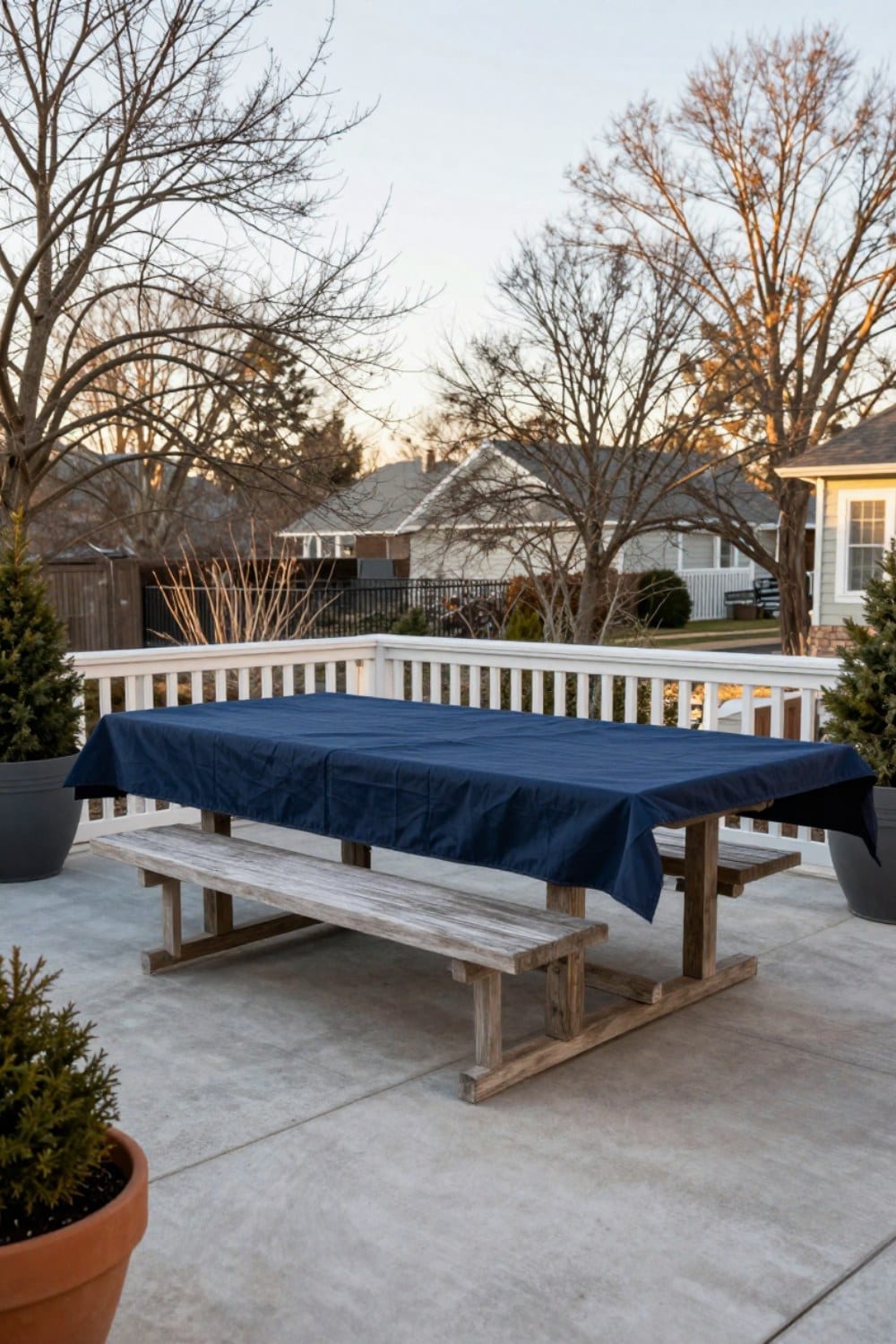
How to Protect Teak Furniture in Winter (What Actually Needs Doing — and What Doesn't)
Teak has a reputation as the fussy, high-maintenance wood on the patio. It's actually the opposite -- one of the only materials built to winter outside without a second thought, as long as you stop treating moisture and cold as the same threat.
Oct 30, 2026 · 10 min read
 Patio Living
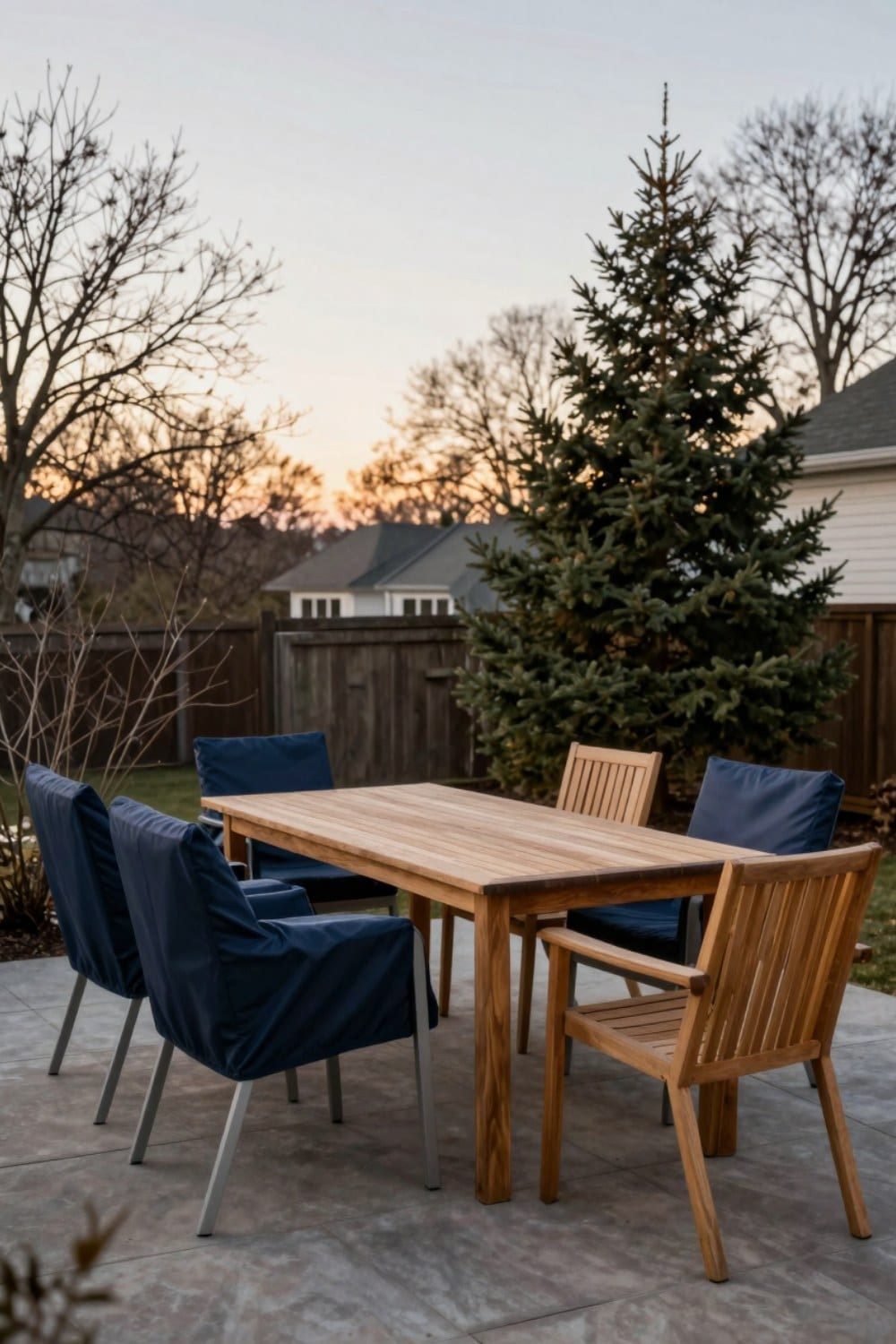
How to Winterize Patio Furniture the Right Way (So It Comes Out Perfect in Spring)
Winterizing patio furniture isn't complicated, but it does ask you to treat every material differently. Here's the material-by-material sequence -- clean, dry, cover or store, elevate -- that keeps teak, aluminium, and wicker looking right through to spring.
Jan 24, 2026 · 11 min read
 Patio Living
How to Store Outdoor Cushions for Winter So They Come Out Spotless
Mildew doesn't come from cold, it comes from moisture sealed inside the foam. Here's how to dry outdoor cushions completely and store them somewhere breathable, so they come out in spring looking like you just bought them.
Jan 15, 2026 · 9 min read