How to Transition Your Patio from Summer to Fall (Without Buying New)
A room-by-room way to carry your patio from bright summer nights into golden fall evenings using what you already own, plus a few honest additions worth making.

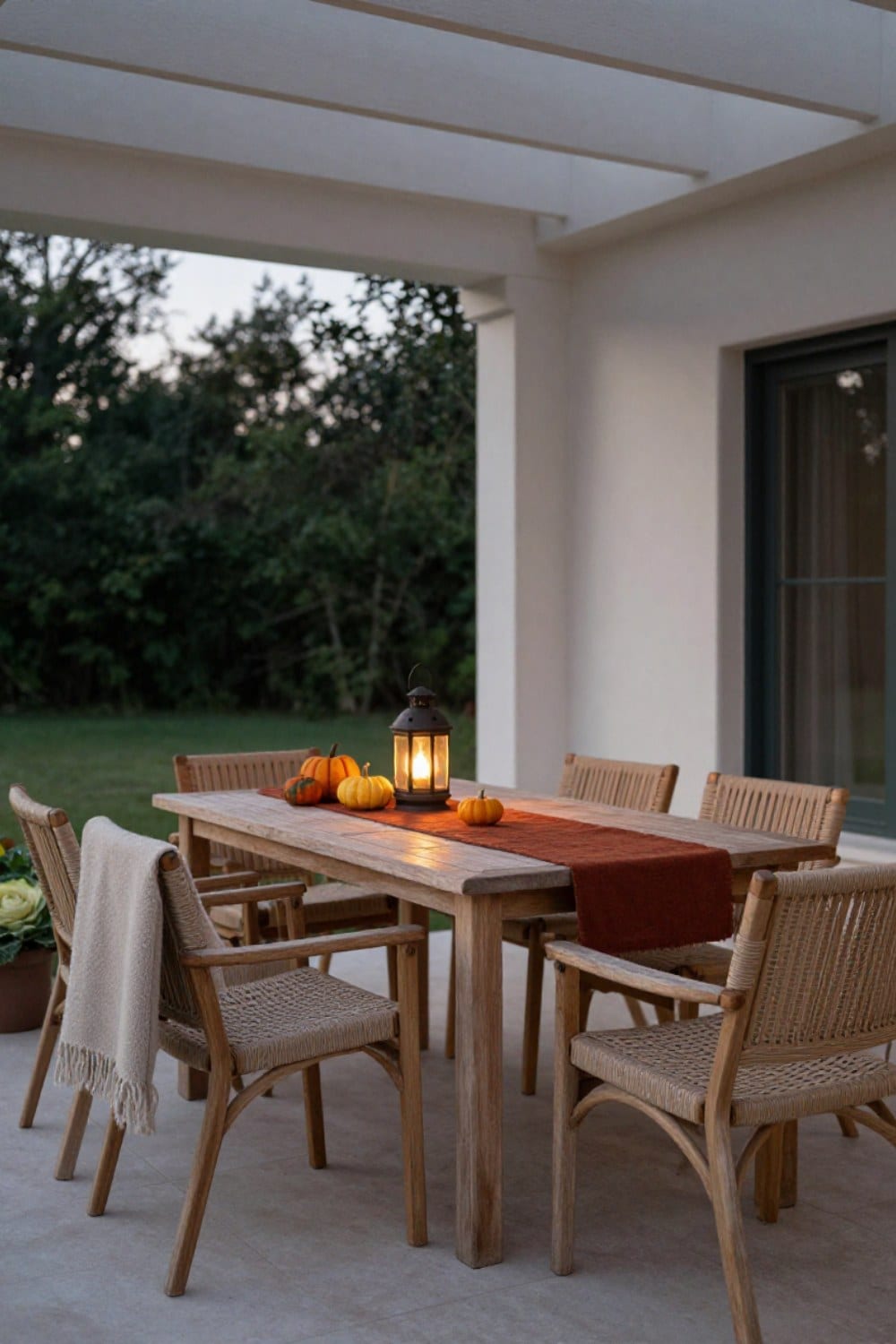
The first cool evening always catches me the same way. I'm out on the patio with a sweater I didn't need in August, looking at cushions that still say July. It doesn't take new furniture to fix that. It takes about an afternoon and a plan for what to keep, what to layer, and what to finally let go of.
This is the transition I actually use on my own patio, not a styled-for-photos version. It moves your space from bright summer entertaining into a fall evening room using mostly what's already in your garage or closet, with a short, honest list of what's worth adding.
Why a full seasonal swap beats a slow drift
Most patios drift into fall by accident. A cushion fades, a citronella candle runs out and never gets replaced, and by October the space just looks tired instead of seasonal. The difference between a patio that reads as neglected and one that reads as intentional is almost never money. It's a single deliberate pass where you edit, layer, and reposition.
Doing it all in one sitting also means you catch maintenance issues while you're already out there: a wobbly teak joint, a cushion with damp fill, a solar light that stopped charging. Bundle the seasonal refresh with a quick care check and you save yourself a second trip later.

Step 1: Edit before you add anything new
Clear the surfaces completely
Pull everything off the table, side tables, and shelving: cushions, citronella candles, bright melamine plates, anything that reads distinctly summer. You can't layer a season on top of clutter; you need a clean surface to actually see what fall additions will do.
This is also your moment to spot damage. Check cushion piping for mildew, look under planters for water rings on wood, and give the table a real wipe-down before anything goes back.
Sort your summer textiles into three piles
Keep, store, and retire. Anything faded past its color or with fill that's gone flat gets retired. Fall is not the season to prop up textiles that were already struggling in July. Anything neutral or deep-toned (navy, rust, forest, cream) goes in the keep pile; it'll carry straight through fall without looking out of place.
Bright citrus and aqua tones go into storage bins, not the trash. They'll be exactly right again come June.
- Faded or sun-bleached cushion covers: retire, don't repurpose
- Bright citrus, aqua, and white textiles: store for summer, don't force into fall
- Neutral, rust, or deep green pieces: keep out; they carry the season
- Citronella candles and bug-repellent accessories: pack away once evenings cool
- Anything with visible mildew or a musty smell: wash or retire before it touches new textiles
Step 2: Layer, don't replace, your textiles
The fastest way to age a patio into fall is a second layer of texture, not a new set of furniture. A chunky knit or wool throw draped over the same cushions you used all summer changes the whole read of a chair. The cushions underneath can be the exact ones from June.
Layer textiles by weight, not by color alone
Start with your base cushions, then add one heavier layer per seat: a waffle-knit or wool-blend throw folded over the arm or back of the chair, not draped flat across the seat where it'll just get sat on and pushed aside. A deeper table runner in rust, olive, or charcoal does the same job on the tabletop.
Swap any thin outdoor rug for a denser weave if you have one on hand. If not, a rug you already use indoors during the day and bring in at night works through the shoulder season.
Solution-dyed acrylicLook for a performance-fabric throw or cushion cover with a tight, dense weave. It holds up to dew and light rain far better than a decorative cotton throw, and it still folds soft enough to actually use.here's what actually happens →that's the whole story
Colour in solution-dyed acrylic goes all the way through the fibre rather than sitting on it, so it fades slowly and evenly instead of going patchy. Expect a gentle softening of tone over five or six seasons, which most people never notice. What ends a cushion is the stitching and the zip, both of which sit on the surface and take the full sun. Ask what the thread is made of; nobody does.
Upkeep: Brush them off. Bring them in when the season turns.
TeakIf your table and chairs are teak and you want to keep the honey color, early fall is a good moment to seal them, while the wood is dry from summer and not yet exposed to the wetter, colder months ahead. See the full care routine in the <a href="/materials/#teak">materials guide</a>.here's what actually happens →that's the whole story
Left alone, teak turns a soft silver-grey within a year — evenly, if it gets even light. This is oxidation of the surface only; the wood beneath is unchanged and its natural oils keep it from rotting. Oil it if you want the honey colour back, and understand you are then committed to oiling it every spring. Grade A (heartwood, tight grain, no knots) silvers evenly; lower grades go blotchy. Nothing about the greying shortens its life.
Upkeep: One afternoon a year, at most. None, if you like grey.

Step 3: Move your lighting plan earlier
By late September, it's dim outside well before your evening actually starts. A lighting plan built for summer, a few string lights meant to click on around nine, won't carry a patio that's dark by seven. This is less about adding fixtures and more about rethinking when and how the ones you have turn on.
Warm up the bulbs and move the light source lower
If your string lights or lanterns use a cooler white bulb, swap to a warm amber tone. The difference in how a patio feels at dusk is bigger than most people expect from a bulb swap. Bring one or two lanterns down to table height instead of only overhead string lights; low, warm light reads as cozy in a way that overhead light alone doesn't.
Set any solar lights or timers to switch on earlier, matching the actual sunset time rather than the summer schedule you set months ago.
Add one grouped vignette with a single lit lantern
Pick one corner (a side table, a step edge, or a console near the door) and group two or three items: a lantern, a small planter, a stack of folded throws. One lit lantern in that grouping does more for the evening feel than scattering light evenly across the whole patio.

Step 4: Plant for the whole season, not just October
Mums are the easy reflex, and they're lovely. For about six weeks. If you plant mums alone in early September, they're often spent and brown well before Thanksgiving, right when your porch needs to look its best for visitors. Mixing in a few cold-hardy plants alongside them keeps the planters looking intentional clear through the first hard frost.
- Plant mums for immediate color, but don't rely on them alone
- Add ornamental cabbage or kale; it actually improves in color as it gets colder
- Tuck in pansies or violas at the edges; they'll often survive a light frost and rebloom
- Use dried elements like wheat stalks, dried hydrangea and a few gourds for structure that doesn't fade
- Water less often than summer but check more often; fall rain is inconsistent, not absent
Common mistakes worth avoiding
A few patterns show up on almost every patio I've helped a friend transition, mine included some years.
- Decorating over damp cushions instead of letting them fully dry first. Trapped moisture under a throw invites mildew fast
- Buying a whole new seasonal textile set instead of layering what you own. It's rarely necessary and skips the editing step that actually makes a space feel finished
- Leaving citronella candles and bright summer accessories out alongside fall decor, so the two seasons visually compete
- Planting mums alone and forgetting the porch needs to look good in November too, not just late September
- Ignoring furniture care until spring, when a five-minute fall check would have caught a small problem before winter made it worse
Bringing it all together
None of this requires a shopping trip. It requires an afternoon, a clear-eyed edit, and a willingness to layer instead of replace. Start with the table, work outward to the seating, then finish with lighting and planters last. That order matters, because lighting and plants are what people notice first when they walk up, and you want them layered onto a base that's already settled.
If you want more direction on the pieces that make the biggest difference this season, our fall porch and patio ideas guide and our piece on styling the front porch with pumpkins and mums both build on the same principles in more detail.
Get the Fall Patio Transition Checklist
I put the exact walkthrough from this article (the edit list, the layering order, and the planting mix) onto one printable page you can bring outside with you. It's the same checklist I use on my own patio every September.
The printable is being finished. It will live here, free, with no sign-up wall.
The care calendar
The seasonal task list for carrying a patio from late summer into the first frost. Do these in order as the weeks turn cooler.
- Late August
Do the full textile edit (keep, store, or retire) and give teak or acacia furniture a real cleaning before any treatment.
- Early September
Layer in wool or waffle-knit throws and a deeper table runner; swap string-light bulbs to a warmer tone.
- Mid September
Plant mums alongside ornamental cabbage, kale, or pansies so planters carry past the six-week mum window.
- Late September
Treat or oil teak surfaces while the wood is still dry from summer, before fall rain becomes regular.
- Early October
Move lighting timers earlier to match the actual sunset; add one grouped lantern vignette per seating area.
- Mid October
Check cushion fill and covers for trapped moisture after the first few cool, damp nights.
- Late October
Refresh dried elements: swap any faded gourds or dried stems before porch visitors arrive for the holidays.
- First frost
Bring in any fabric that isn't rated for freezing temperatures and do a final furniture check before winter storage or covers go on.
Frequently asked
Do I need to buy new furniture to make my patio feel like fall?
When should I start transitioning my patio for fall?
How do I keep my fall planters looking good past October?
Is fall a good time to treat teak patio furniture?
Sarah Whitmore
she keeps the teak, she oils it in spring
Sarah has furnished the same porch three times and finally stopped. She writes about what actually survives a decade outdoors — which wood silvers, which fabric fades, and which inexpensive piece quietly reads the same as the expensive one.
SarahMore from this corner
 Patio Living
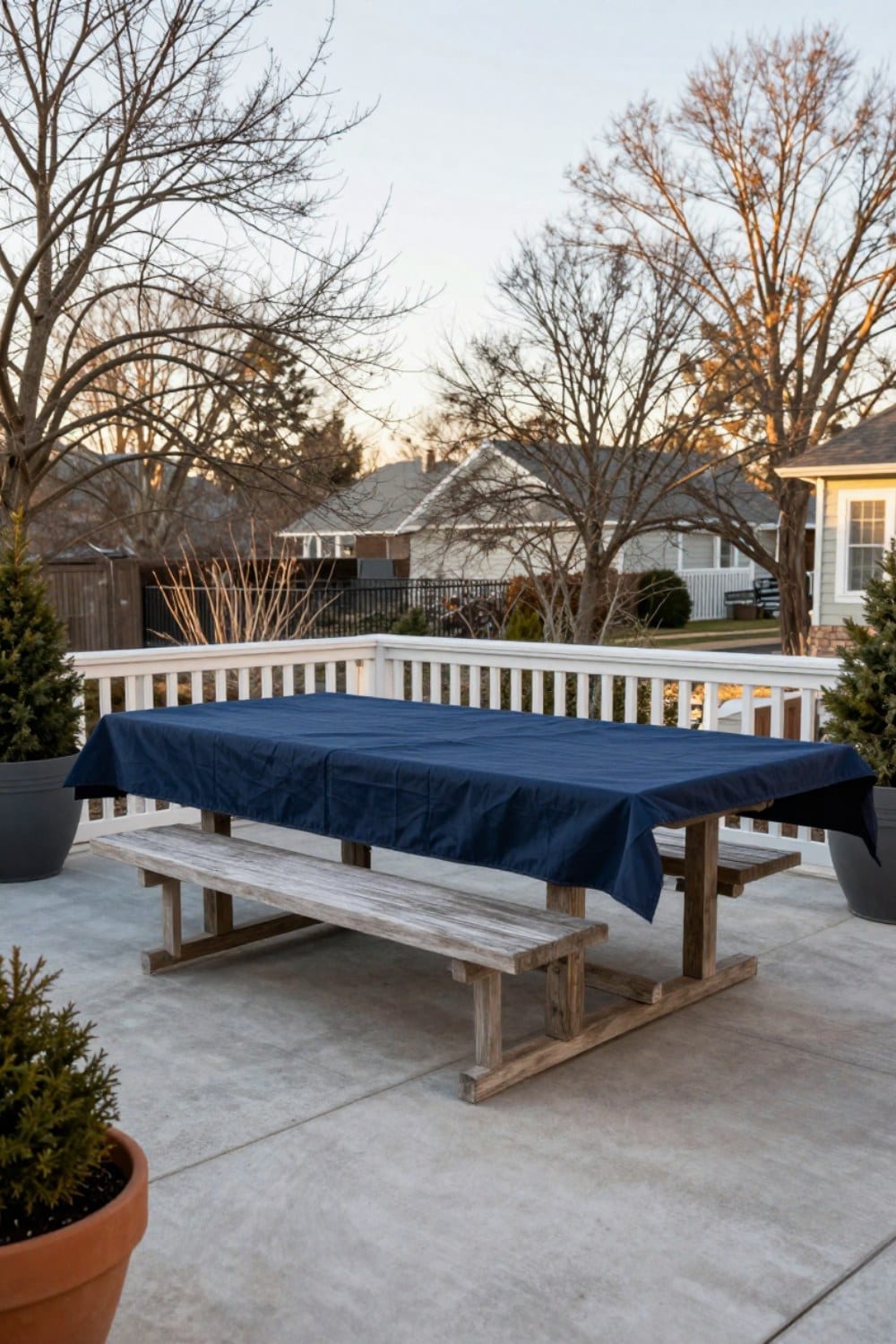
How to Protect Teak Furniture in Winter (What Actually Needs Doing — and What Doesn't)
Teak has a reputation as the fussy, high-maintenance wood on the patio. It's actually the opposite -- one of the only materials built to winter outside without a second thought, as long as you stop treating moisture and cold as the same threat.
Oct 30, 2026 · 10 min read
 Patio Living
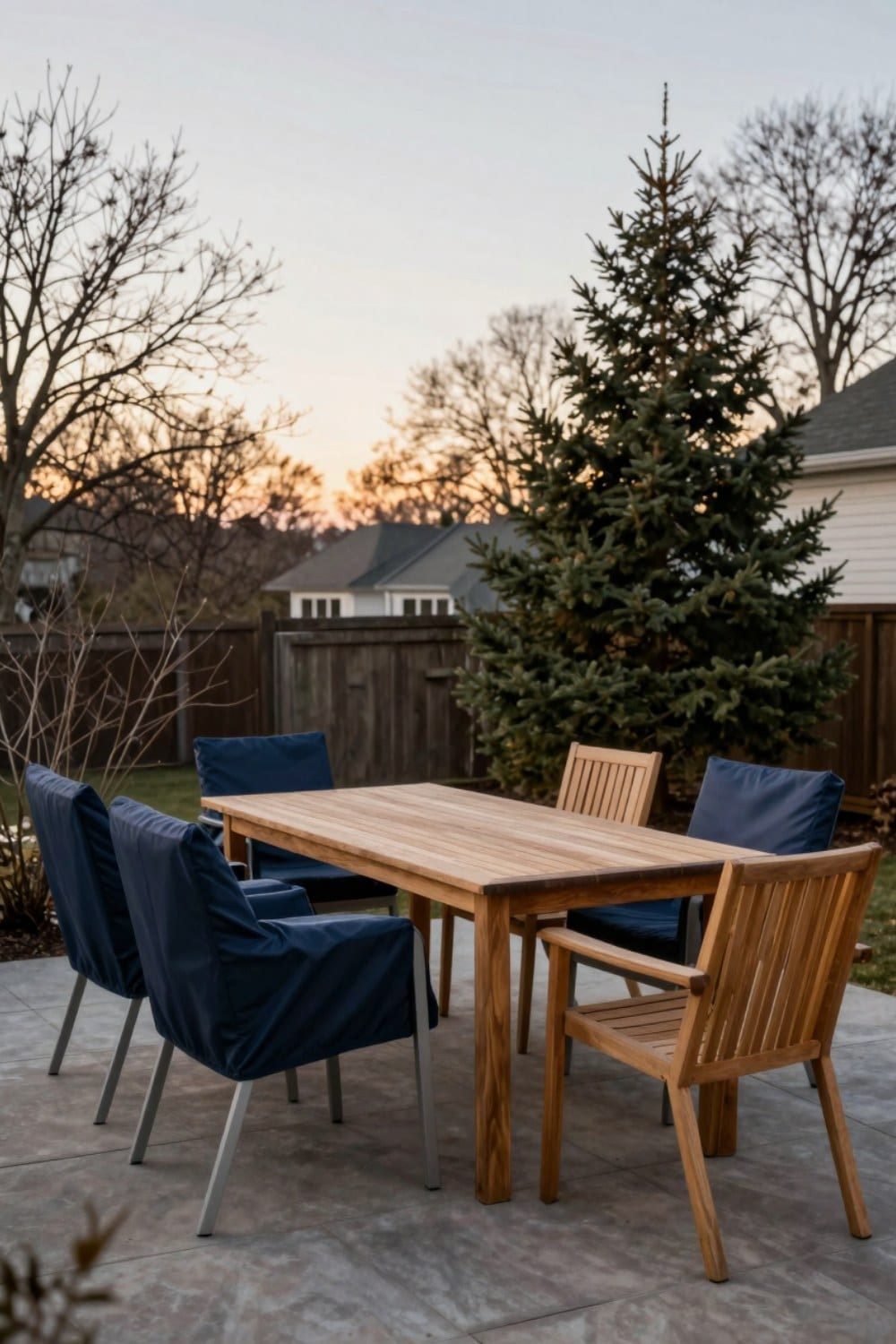
How to Winterize Patio Furniture the Right Way (So It Comes Out Perfect in Spring)
Winterizing patio furniture isn't complicated, but it does ask you to treat every material differently. Here's the material-by-material sequence -- clean, dry, cover or store, elevate -- that keeps teak, aluminium, and wicker looking right through to spring.
Jan 24, 2026 · 11 min read
 Patio Living
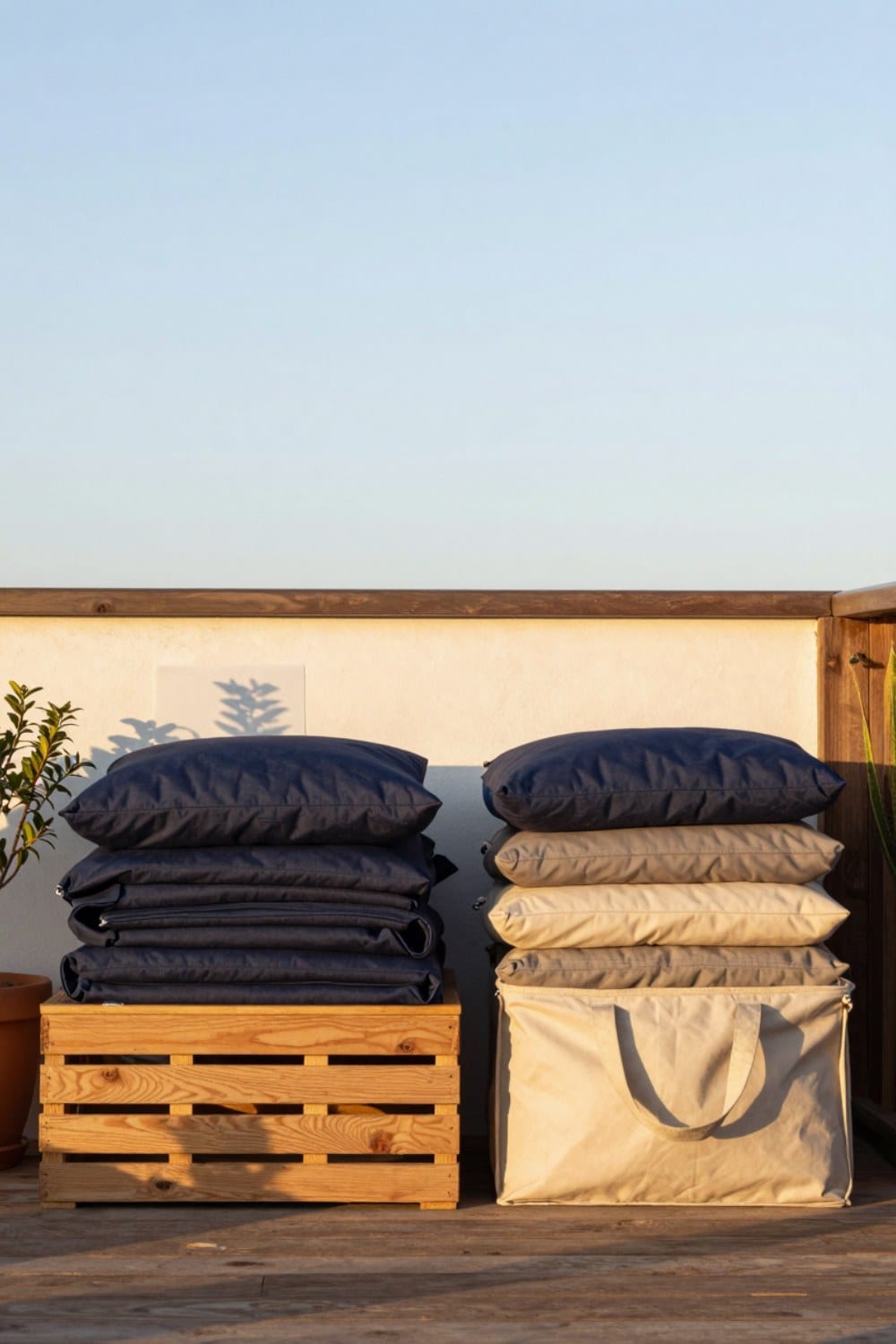
How to Store Outdoor Cushions for Winter So They Come Out Spotless
Mildew doesn't come from cold, it comes from moisture sealed inside the foam. Here's how to dry outdoor cushions completely and store them somewhere breathable, so they come out in spring looking like you just bought them.
Jan 15, 2026 · 9 min read