Fall Porch Styling With Pumpkins and Mums That Still Looks Good in November
Pumpkins and mums are the fall porch default — but styled by form, texture and repetition instead of color, the same porch still looks considered in mid-November, not just on the day it was staged.


Pumpkins on the steps and a pair of mums by the door — it's the fall porch reflex, and by Thanksgiving week it usually looks tired: the mums have gone leggy and brown at the edges, the pumpkins have softened on one side, and the whole thing reads like decor nobody's touched in six weeks. Because nobody has.
Here's what I've settled on after a decade of over-buying orange in September: style the porch by form and texture instead of color, and it holds up. Group in odd numbers, repeat one shape instead of scattering five different squash varieties, and let grasses and greenery carry the arrangement once the pumpkins start to go. It still says fall in November. It just doesn't shout it in September and mumble it by Halloween.
Mums Are Cut Flowers With Extra Steps
A mum in a grower's pot is a flowering annual bred to put on one enormous show and then quit. It isn't the perennial investment people assume — most garden-center mums aren't hardy enough to survive winter where the fall display market sells them, and even in mild climates the flush you buy in September is close to its final one. You're not planting a plant. You're buying a bouquet that happens to arrive in a pot.
That's fine, if you know it going in. The problem is styling a whole porch around something engineered to peak and fade on a two-week clock, then acting surprised when the display looks spent by the second week of October.
There's a real distinction between a 'garden mum' — the ones sold in September at every grocery store and garden center — and a true hardy chrysanthemum planted in spring, which establishes a root system before the first frost and can survive winter in many zones. If you want a mum that comes back, buy it in May, not September. A September mum, however healthy it looks on the shelf, hasn't had the season to root in, and is being treated as an annual whether the tag says perennial or not.
Style by Form and Texture, Not a Color Wheel
Orange isn't a design decision in October — it's the default color of the season, already covering every tree on your street for free. Building a display entirely around matching that orange is redundant decor. The porch that actually gets noticed is doing something else: repeating a shape, a height, or a texture so the eye reads it as one considered idea instead of a pile of seasonal inventory.
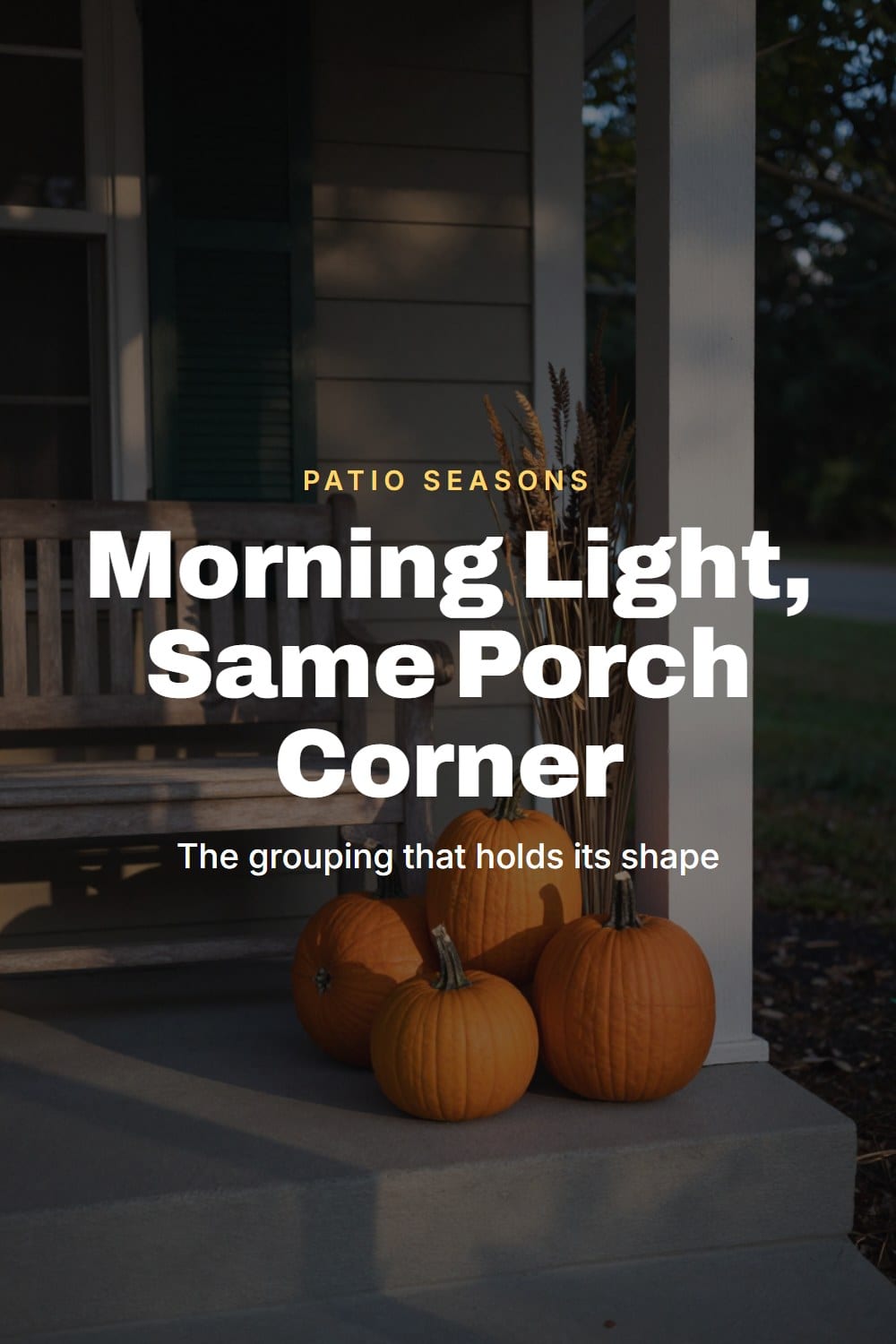
This is where odd numbers matter more than most people give them credit for. Three pumpkins of graduated size photograph and read as a still life. Two of matching size read as a pair you forgot to finish. Four scattered ones read as clutter. Odd numbers, uneven height, and one dominant texture repeated at least twice — that's the whole formula, and it works whether you're going generous or minimal. For more on getting the rest of the space ready before you style a single pumpkin, see how to transition a patio from summer to fall.
- An odd number of objects — three or five, rarely more
- At least two different heights, so the eye has somewhere to travel
- One texture repeated at least twice — nubby gourds, smooth stems, a woven basket
- A single dominant color note instead of five competing ones
The Repeatable Grouping Formula
Once you've settled on materials, building the grouping itself takes about fifteen minutes and follows the same four steps every time, whether you're working with three pumpkins on a step or a whole console of tabletop pieces.
- Pick your anchor first. One large pumpkin, urn, or planter goes down before anything else — usually at the back or the tallest point.
- Add the middle height. A smaller pumpkin, a potted mum still in its nursery pot (never planted straight into decorative gravel — the drainage will fight you), or a stack of two crates.
- Fill the gap at the base with texture, not more of the same shape. Dried grasses, a low cluster of gourds, or trailing greenery closes the visual gap between the tallest and shortest piece.
- Stand back ten feet. If your eye lands on one clear shape instead of counting individual objects, you're done. If you're still counting pumpkins, take one away.
What to Use Instead of the Orange Pile
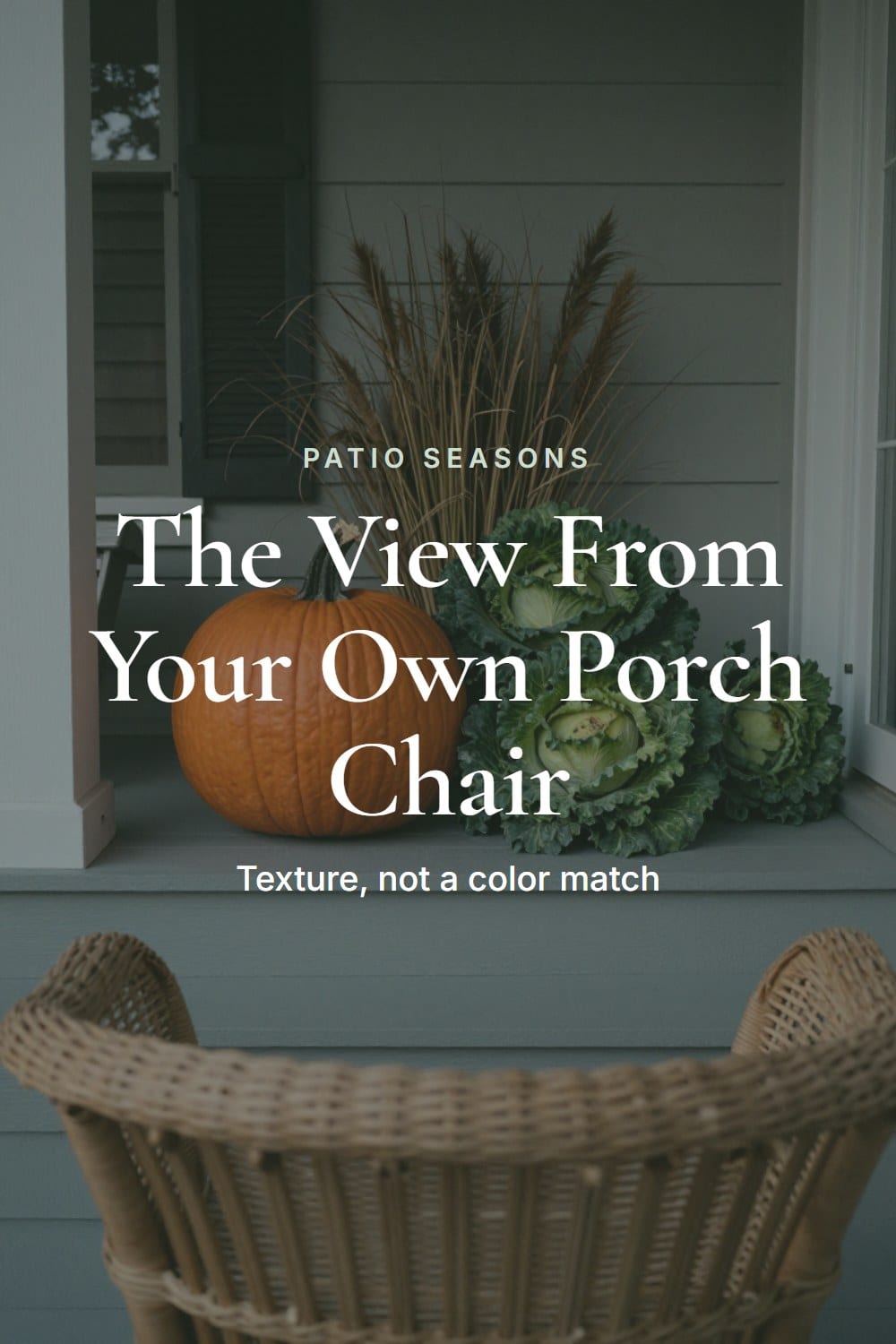
The material that actually carries a porch past Halloween isn't more pumpkins — it's whatever doesn't rely on staying fresh. Ornamental cabbage and kale get better looking as it gets colder, tightening into that blue-green rosette that reads as intentional rather than seasonal clearance. Ornamental grasses, dried or planted in a weatherproof pot, hold their shape and color through a hard frost with zero maintenance. Hellebores, where your zone allows planting them out in fall, are quietly doing their best work in November and December, long after the mums are compost.
The trick with heirloom pumpkins specifically: buy one exceptional variety instead of five ordinary ones. A single ribbed Cinderella pumpkin or a pale Jarrahdale sitting alone at the top of the steps reads as chosen. A pile of five identical grocery-store pumpkins reads as inventory. If you want volume, get it from the grasses and greenery, not from stacking more of the same round orange shape.
Pale and blue-toned pumpkins — Jarrahdale, Fairytale, and true Cinderella types — do something an ordinary orange pumpkin can't: they read as considered against the actual orange already everywhere in the season, instead of blending into it. Pick the variety once you've settled on a dominant color note, not the other way around, and resist adding a second variety just because the farm stand had it. One variety, repeated or graduated in size, beats a mixed collection every time.
TeakA teak bench or console at the door holds the whole grouping at a working height and only gets better looking as it silvers through the season — see the full care truth in the <a href="/materials/#teak">materials guide</a>.here's what actually happens →that's the whole story
Left alone, teak turns a soft silver-grey within a year — evenly, if it gets even light. This is oxidation of the surface only; the wood beneath is unchanged and its natural oils keep it from rotting. Oil it if you want the honey colour back, and understand you are then committed to oiling it every spring. Grade A (heartwood, tight grain, no knots) silvers evenly; lower grades go blotchy. Nothing about the greying shortens its life.
Upkeep: One afternoon a year, at most. None, if you like grey.
Keeping It Considered Through Thanksgiving
The reason a porch looks staged rather than lived-in by mid-November usually comes down to timing, not taste. Real pumpkins have a shelf life outdoors, and pretending otherwise is how you end up with a soft, weeping gourd two days before guests arrive. Plan the display in two layers: the perishable layer — real pumpkins, fresh gourds — that you're prepared to swap or remove by early-to-mid November, and the durable layer — grasses, cabbage, a good urn, string lights — that just keeps going.
Lighting does more for the finished feeling than any amount of squash. As the evenings get shorter, a porch lit warmly reads as maintained even when nobody's touched the pumpkins in a week — worth pairing with fall porch lighting, lanterns and string lights, and once the evenings turn properly cold, a patio heater or fire pit for cool evenings so the space still gets used, not just looked at.
Common Mistakes That Make a Porch Look Staged for One Day
Most of the porches that look great for exactly one photo and rough for the six weeks after share the same handful of habits. None of them are expensive to fix — they're just easy to default into without noticing.
- Buying only mums, with nothing durable underneath them for when they fade
- Scattering pumpkins in even numbers instead of grouping in odd ones
- Setting real pumpkins directly on a warm, painted step with no riser underneath
- Matching every piece in size and color, so there's no height for the eye to travel
- Skipping the lighting layer and relying on the pumpkins to do all the work after dark
Fixing any one of these takes minutes, not money — swap the numbers, add a riser, turn on a lantern. The porches that look tired by November didn't start wrong; they just never got touched again after the first week.

Where to Spend, and Where Not To
Not every piece of a fall porch grouping deserves the same consideration. The pieces that get used every season — an urn, a console, a lantern — are worth choosing well, since they carry across many autumns instead of one. The pieces that are genuinely disposable by design don't need the same thought.
The same logic applies to a lantern or a console table: buy the piece you'd be glad to see again next October, because you will. A pumpkin has one season in it. A good urn has twenty.
Invest vs. everyday
A weatherproof cast-aluminium or teak urn
It comes back out every fall — and doubles for spring bulbs and summer planting — so its use amortizes over many seasons instead of one.
The grocery-store pumpkins and gourds themselves
They're perishable by nature — there's no version of a real pumpkin built to last, so there's no reason to fuss over the thing you're removing by Thanksgiving.
A Few Finishing Touches
A couple of small additions round the whole thing out without adding another trip to the garden center.
The Grouping Formula, Printed
The printable is being finished. It will live here, free, with no sign-up wall.
A porch that only looks finished on the day you staged it isn't styled. It's just decorated.— Sarah Whitmore
Frequently asked
How long do real pumpkins actually last on a porch?
Are mums worth buying at all?
What actually looks good all the way to Thanksgiving?
Do I need to match pumpkins in color and size?
Sarah Whitmore
she keeps the teak, she oils it in spring
Sarah has furnished the same porch three times and finally stopped. She writes about what actually survives a decade outdoors — which wood silvers, which fabric fades, and which inexpensive piece quietly reads the same as the expensive one.
SarahMore from this corner
 Patio Living
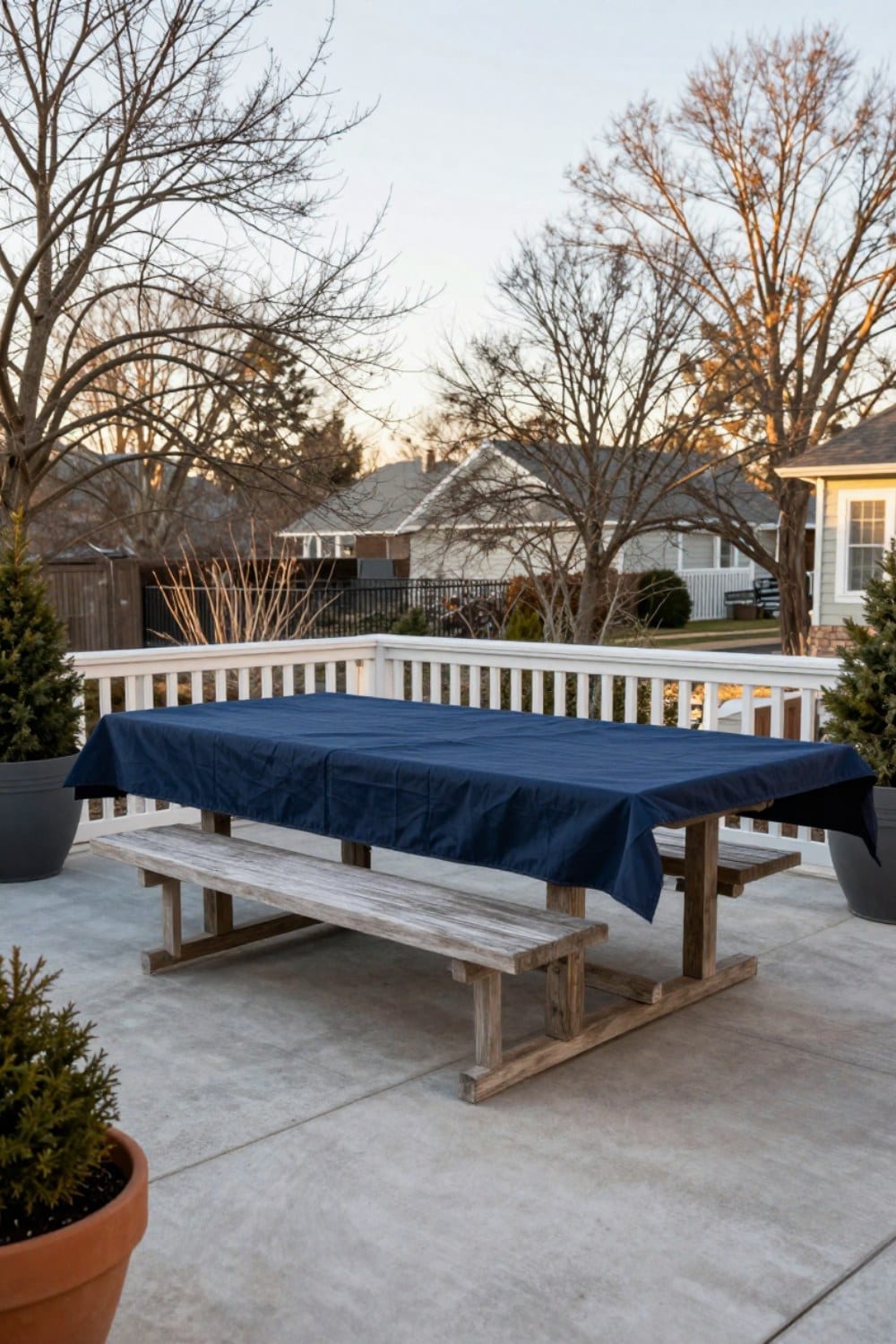
How to Protect Teak Furniture in Winter (What Actually Needs Doing — and What Doesn't)
Teak has a reputation as the fussy, high-maintenance wood on the patio. It's actually the opposite -- one of the only materials built to winter outside without a second thought, as long as you stop treating moisture and cold as the same threat.
Oct 30, 2026 · 10 min read
 Patio Living
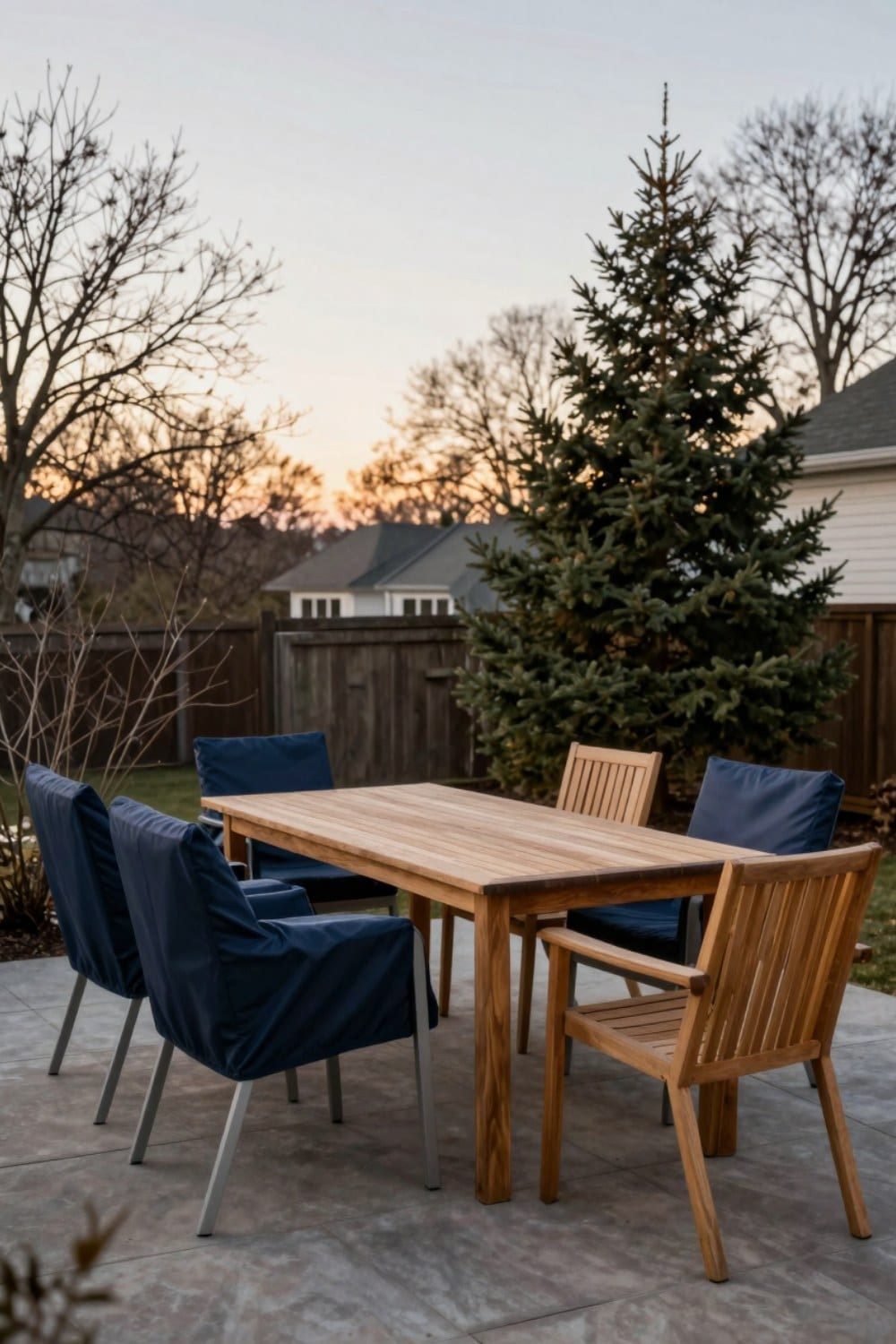
How to Winterize Patio Furniture the Right Way (So It Comes Out Perfect in Spring)
Winterizing patio furniture isn't complicated, but it does ask you to treat every material differently. Here's the material-by-material sequence -- clean, dry, cover or store, elevate -- that keeps teak, aluminium, and wicker looking right through to spring.
Jan 24, 2026 · 11 min read
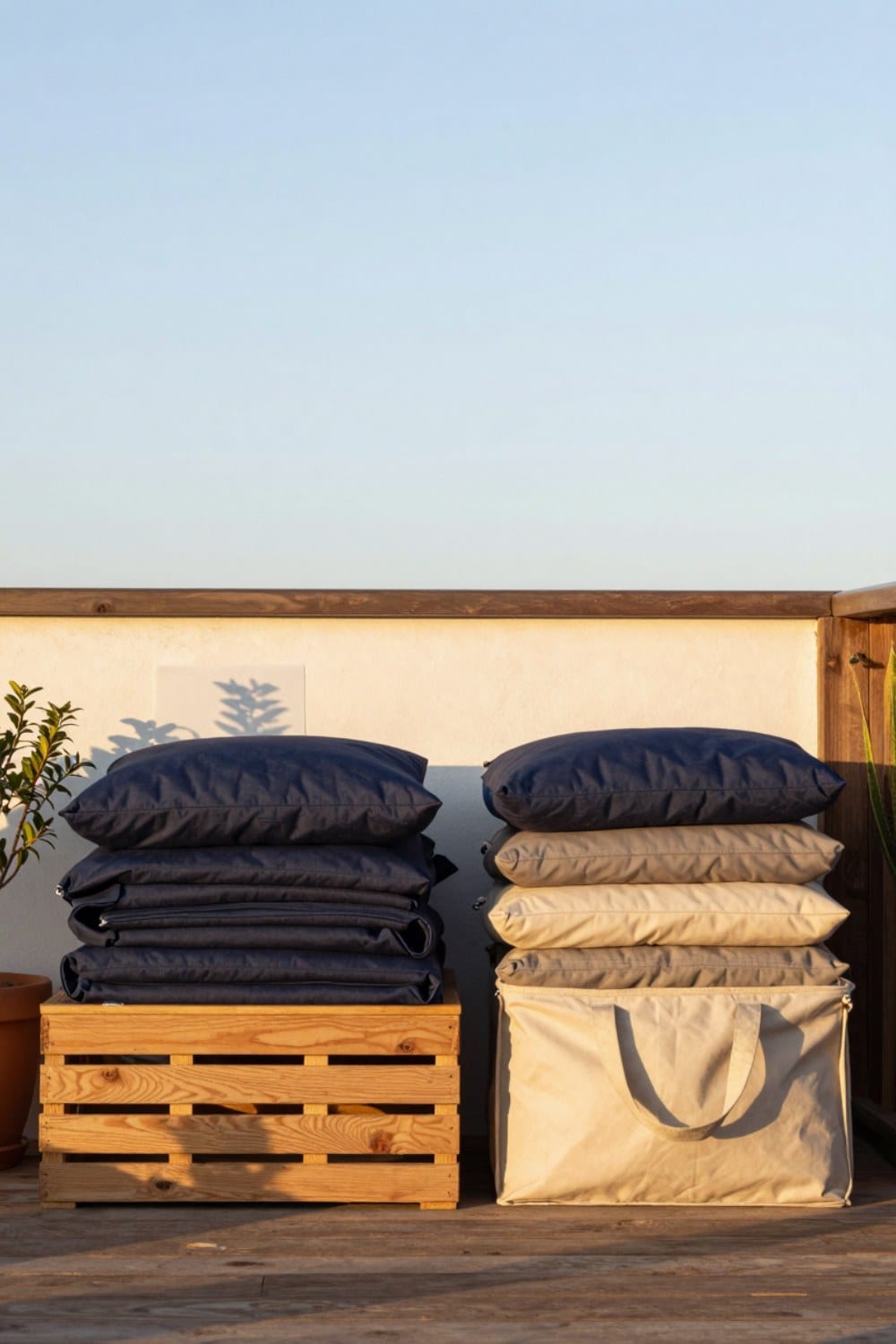 Patio Living
How to Store Outdoor Cushions for Winter So They Come Out Spotless
Mildew doesn't come from cold, it comes from moisture sealed inside the foam. Here's how to dry outdoor cushions completely and store them somewhere breathable, so they come out in spring looking like you just bought them.
Jan 15, 2026 · 9 min read