Fall Porch Lighting: Lanterns and String Lights That Look Warm, Not Staged
Light is the single highest-leverage change you can make to a fall porch, and almost everyone gets it wrong the same three ways. Here's the fix — colour temperature, placement, and timing.

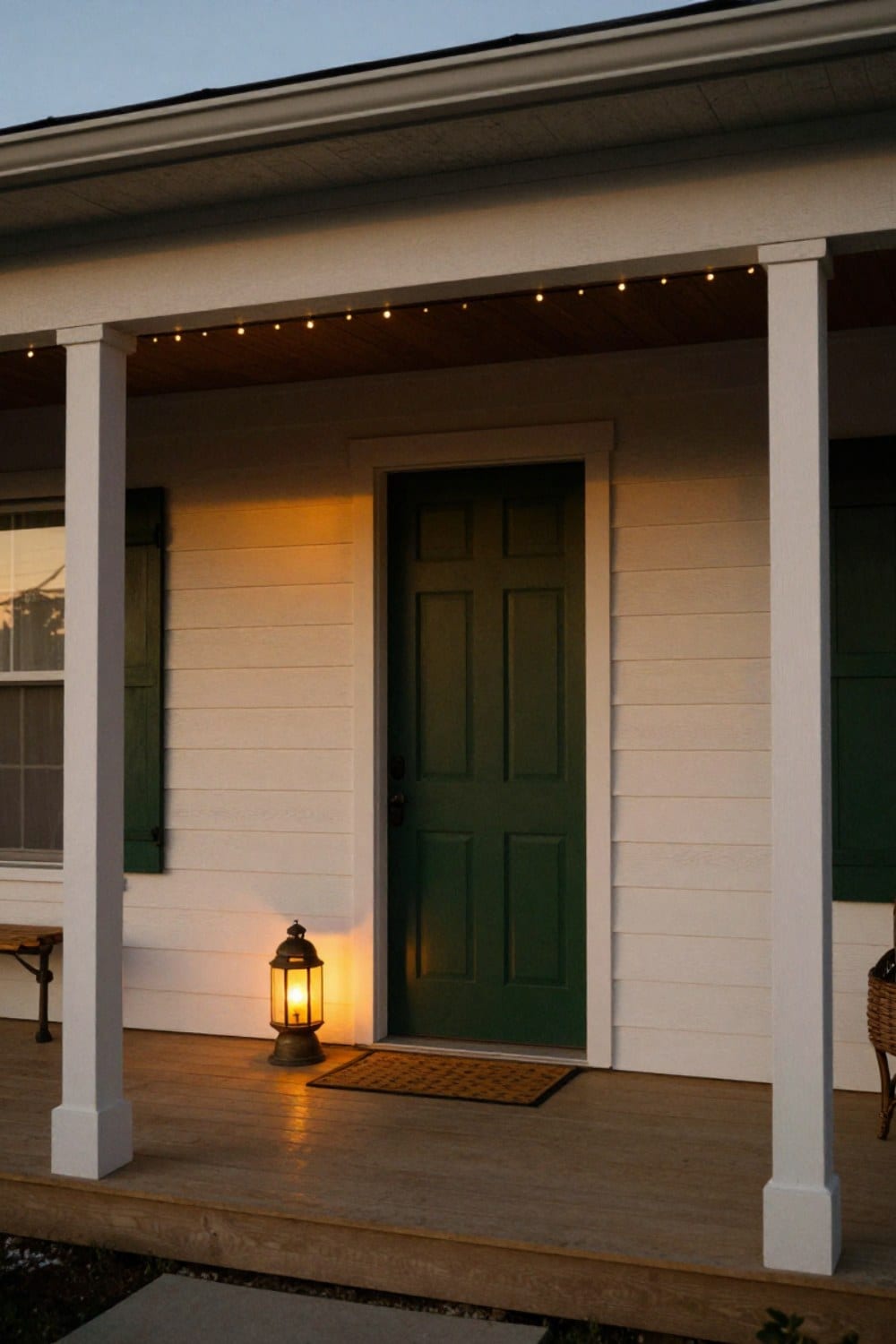
The porch that stops you on a walk isn't lit after dark — it's lit before it. You'll pass a house at four in the afternoon, sun still up, and one lantern by the door is already glowing amber against the daylight. It looks lived-in and cared for in a way no amount of pumpkins on the steps can fake. That's not an accident, and it isn't about buying more light. It's about three specific fixes, and almost every porch I walk past is missing at least one of them.
This is the lighting pass I actually run on my own porch every September, in order: fix the colour first, then the placement, then the timing. None of it requires an electrician, though I'll tell you honestly when it does. What it requires is understanding why the string lights you already own can look completely different depending on when you flip the switch.
Fix the Colour Temperature First
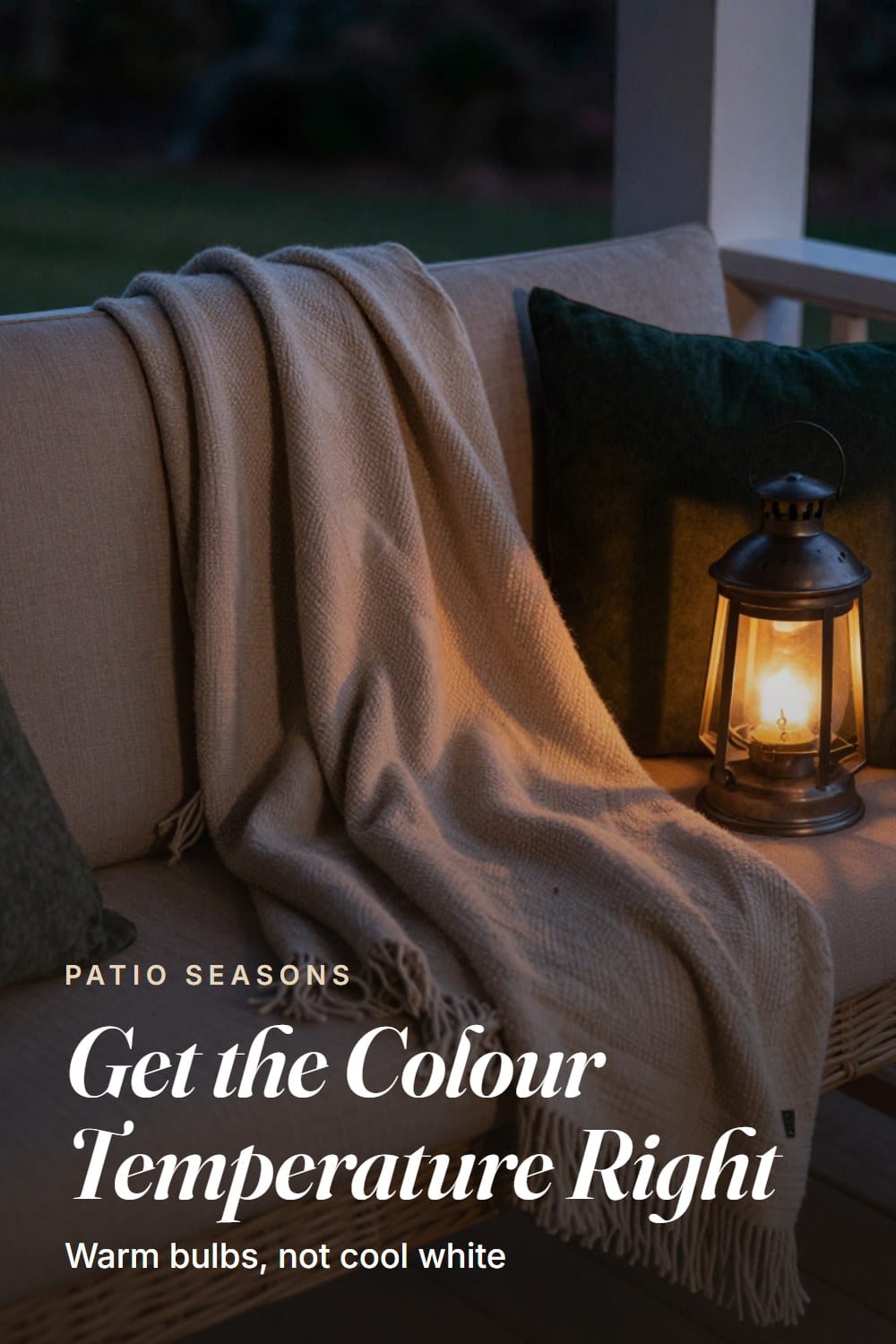
Every bulb has a colour temperature, measured in kelvin, and it's usually printed in small type on the package or the base of the bulb itself. This one number decides whether your porch reads as an autumn evening or a strip mall, and it matters more than the fixture, the price you paid, or the number of bulbs strung.
Aim for roughly 2200 to 2700K. That range sits right where a lit candle and a warm incandescent lamp both live — it's the light your eye already associates with evenings indoors, which is exactly the feeling a fall porch is borrowing. Most string-light multipacks and a good number of lantern candles sold for outdoor use land here by default, which is part of why they photograph so well.
The trap is anything labeled "daylight" or "cool white," usually 4000K or higher — a lot of solar path lights and cheaper LED string sets default there because it reads as brighter on the shelf. Outdoors, at night, that same light goes blue-white and clinical, the exact tone that makes a porch look like a loading dock instead of a room. Not sure which you have? Compare them lit side by side at dusk. Bluer or whiter than your porch fixture is your answer.
Why Solar Lanterns Underperform Right When Fall Needs Them Most
Solar lanterns have a real appeal — no cord, no outlet, no bulb to replace for a season or two. The problem is timing. Every condition that makes solar lighting weaker shows up in fall at once, and most people don't connect the dim lantern in October to the bright one they remembered from July.
- Shorter days mean fewer charging hours — a panel getting nine hours of light in June might get five by late October
- The sun sits lower in the sky, so a covered porch roof or overhang that let light through in summer now blocks it almost entirely
- Bare branches let in more light near trees, but that rarely offsets a lower sun angle on a porch facing north or east
- Cooler temperatures reduce battery efficiency, so even a fully charged cell holds less usable light than it did in summer
- Cloudier fall weather is common right when the charging window is already shortest
Put those together and a lantern that ran until midnight in July can be dark by nine in November — dimmer, then flickering, then off, usually without warning. On a north-facing or deep-roofed porch, solar was likely always working harder than it looked. Fall is when that debt comes due.
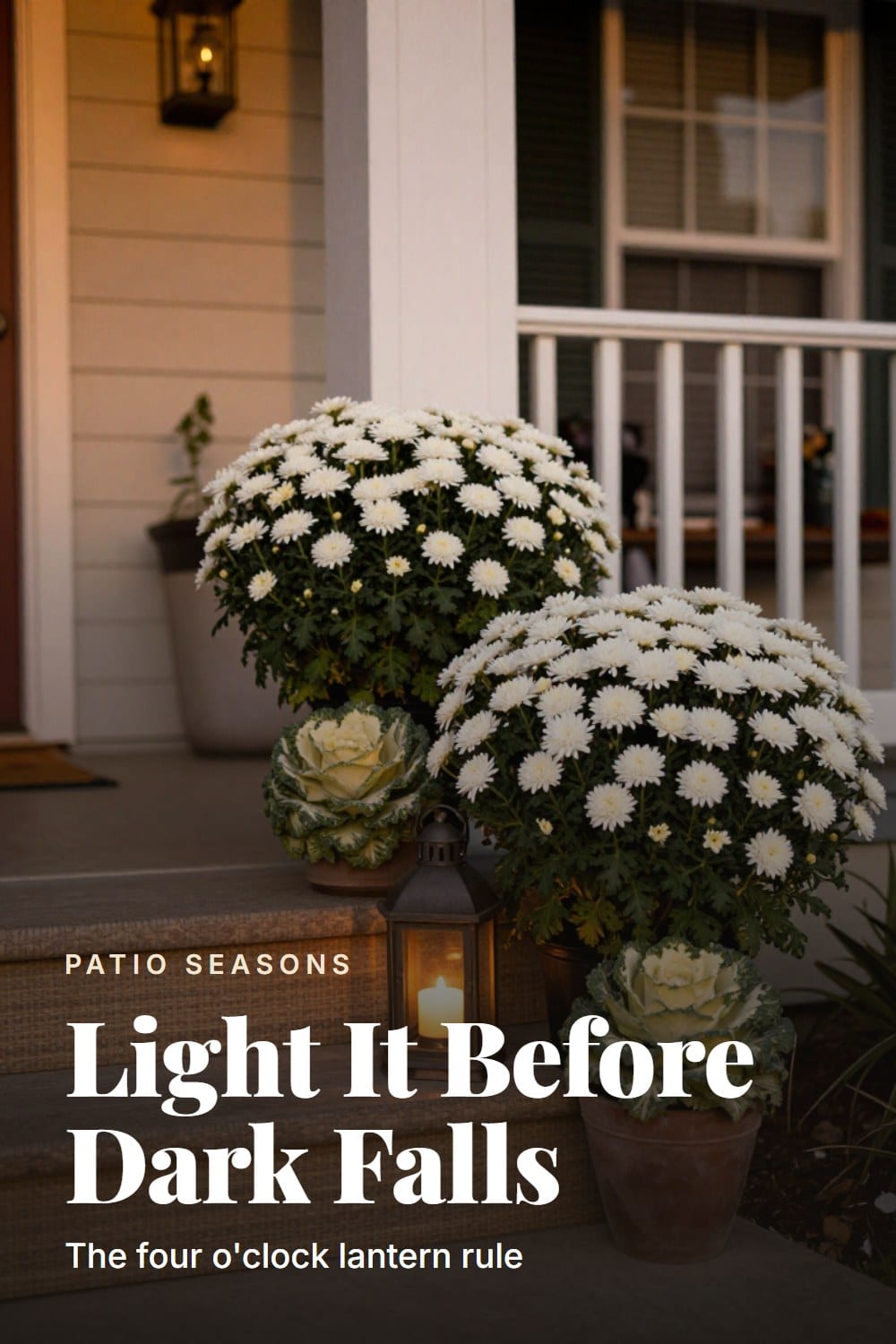
The Four O'Clock Rule: Light It Before You Need It
Here's the rule I actually follow, and it sounds almost backwards the first time you hear it: light the lantern at four in the afternoon, while it's still full daylight outside. Not at dusk. Not once you're actually sitting out there and it's gotten dark enough to need it.
The reason is simple once you say it out loud — nobody driving or walking past your house at nine at night sees your porch. They see it at four, on the way home from pickup or a Saturday errand, when a lit lantern reads as a small warm detail against the daylight rather than a necessity against the dark. That's the moment it changes the face of the house from the street, a different job than lighting your own evening. It also means the lantern is already warm and established by the time dusk arrives, instead of you fumbling for a switch while guests walk up the steps.
Layering the Light: One Pool at the Door, One at Seat Height, Nothing Overhead
This is the actual how-to, and it's simpler than most porch lighting advice makes it sound. You need light in at least two places, at two different heights, and neither of them should be directly overhead.
- Start at the door. One lantern on a small table or hung at chest height, right where guests arrive — warm and low, never a floodlight
- Add a second pool at seat height. A lantern on a side table or a run of warm bulbs along a railing at roughly shoulder height while seated — this is what actually lights faces and hands
- Skip the overhead flood entirely. A single bright fixture straight above a seating area casts hard shadows across faces — the default a lot of builder-grade porch lights fall into
- Let the two pools overlap slightly at the edges rather than evenly lighting the whole porch — real rooms have brighter and dimmer corners
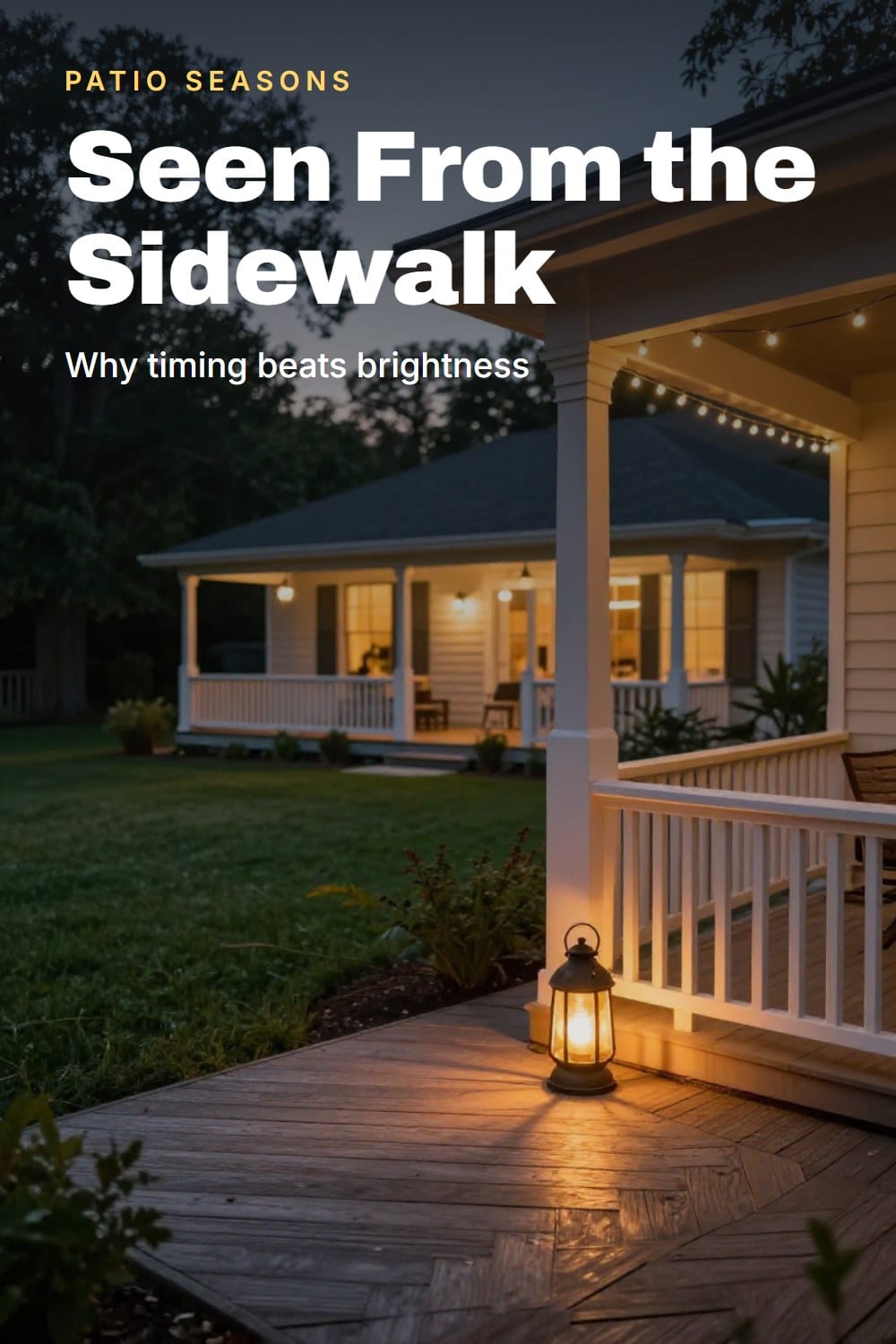
- Run string lights along the porch beam or eave at a modest height, bringing at least part of the line down to head height near a doorway so it reads as a layer, not a canopy
String Lights That Read as Warm, Not a Chain-Store Aisle
String lights fail a porch two specific ways, and both are fixable without buying anything new. The first is colour temperature — swap to warm filament-style bulbs if what you have runs cooler. The second is shape: one flat, high line along a roofline reads as generic and thin, no matter how warm the bulbs are.
Let a run dip lower at one or two points — over a doorway, along a railing near the seating group — instead of pulling the whole line taut and high. A slight sag reads as intentional; a perfectly straight, high line reads like it was hung by whoever installs the ones outside a restaurant.
Cast aluminiumGood lantern frames are often cast aluminium rather than a thin stamped metal — it won't rust through a wet fall, and the slight chalking it develops in strong sun actually softens over a season into a look that reads as established, not new.here's what actually happens →that's the whole story
Aluminium cannot rust, which removes the failure that ends most metal furniture. What it does instead is chalk: the finish oxidises to a fine white powder that comes off on your hand and dulls the colour. A wash and a coat of automotive wax restores it. It is also light — genuinely light — which is a virtue on a deck and a liability in a gale.
Upkeep: A wash and a wax each spring. Something to tie it down.
Where to spend real attention
A well-made cast-aluminium or powder-coated lantern with a dimmable warm bulb
It holds its finish through wet falls and cold snaps, and the bulb's colour stays consistent year over year instead of drifting cooler as cheaper LEDs age.
Warm filament-style replacement bulbs in the string lights and fixtures you already own
The colour temperature is what the eye actually registers as warm — swapping the bulbs in an existing set does most of the visual work a full new lighting scheme would.
When to Just Run a Cable
Solar and battery lighting have a real place — a lantern you move around the yard, a spot with no nearby outlet, a light you only need occasionally. But a porch you actually use through fall, especially one facing north or under a deep roof, is usually better served by a plain outdoor-rated extension cable run to an actual outlet.
It's the honest answer, even for a site that talks about teak and lantern glass: a wired string of warm bulbs on a mechanical timer will outperform a solar lantern in a shaded or north-facing spot every time from October on. Set the timer around four in the afternoon and you've solved the timing rule automatically.
Common Mistakes Worth Avoiding
A handful of the same mistakes show up on almost every porch I've helped a friend fix, including my own some years.
- Relying on a single solar lantern in a shaded or north-facing spot and being surprised when it's dark by nine come October
- Lighting everything from directly overhead, which flattens faces and skips the warm, layered look a porch actually wants
- Waiting until dusk to turn anything on, so the porch is dark exactly when people are walking or driving past it in daylight
- Mixing cool-white string lights with warm lantern bulbs on the same porch, so the two visually compete instead of reading as one warm scene
- Running an extension cord outdoors without an outdoor rating or a sealed connection, then losing the whole string to one wet week
The porch light that makes people slow down on their walk is never the brightest one. It's the one that was already on before it got dark.— Sarah Whitmore
Get the Four O'Clock Lighting Checklist
I turned this exact walkthrough — colour temperature, placement, and the four o'clock timing rule — into one printable page you can keep by the porch light switch. It's the same checklist I run every September before the first cool evening.
The printable is being finished. It will live here, free, with no sign-up wall.
Bringing the Whole Porch Together
None of this asks you to rewire anything or replace furniture you already like. It asks you to check the kelvin number on the bulbs you own, move at least one light source down to seat height, and change the time on the clock in your head from "when it's dark" to "four in the afternoon." That's the whole system, and it's the reason some porches look finished the moment the sun starts to drop and others never quite catch up.
If you're doing this alongside a fuller seasonal changeover, our guide on transitioning a patio from summer to fall covers the textiles and planting side of the same afternoon. For more on the overall look, start with fall porch and patio ideas, and if cooler evenings have you thinking about heat as well as light, our piece on patio heaters and fire pits for cool evenings is the natural next stop.
Frequently asked
What colour temperature should fall porch lights be?
Why do solar lanterns stop working well in the fall?
What time should I turn on my porch lights in the fall?
Is it better to run an extension cord or use solar lights on a porch?
Sarah Whitmore
she keeps the teak, she oils it in spring
Sarah has furnished the same porch three times and finally stopped. She writes about what actually survives a decade outdoors — which wood silvers, which fabric fades, and which inexpensive piece quietly reads the same as the expensive one.
SarahMore from this corner
 Patio Living
How to Protect Teak Furniture in Winter (What Actually Needs Doing — and What Doesn't)
Teak has a reputation as the fussy, high-maintenance wood on the patio. It's actually the opposite -- one of the only materials built to winter outside without a second thought, as long as you stop treating moisture and cold as the same threat.
Oct 30, 2026 · 10 min read
 Patio Living
How to Winterize Patio Furniture the Right Way (So It Comes Out Perfect in Spring)
Winterizing patio furniture isn't complicated, but it does ask you to treat every material differently. Here's the material-by-material sequence -- clean, dry, cover or store, elevate -- that keeps teak, aluminium, and wicker looking right through to spring.
Jan 24, 2026 · 11 min read
 Patio Living
How to Store Outdoor Cushions for Winter So They Come Out Spotless
Mildew doesn't come from cold, it comes from moisture sealed inside the foam. Here's how to dry outdoor cushions completely and store them somewhere breathable, so they come out in spring looking like you just bought them.
Jan 15, 2026 · 9 min read