12 Fall Porch and Patio Ideas That Still Look Right in November
Twelve fall porch and patio ideas built on real materials and real seasons -- styling that still looks finished in November, not just for the photo the day it goes up.

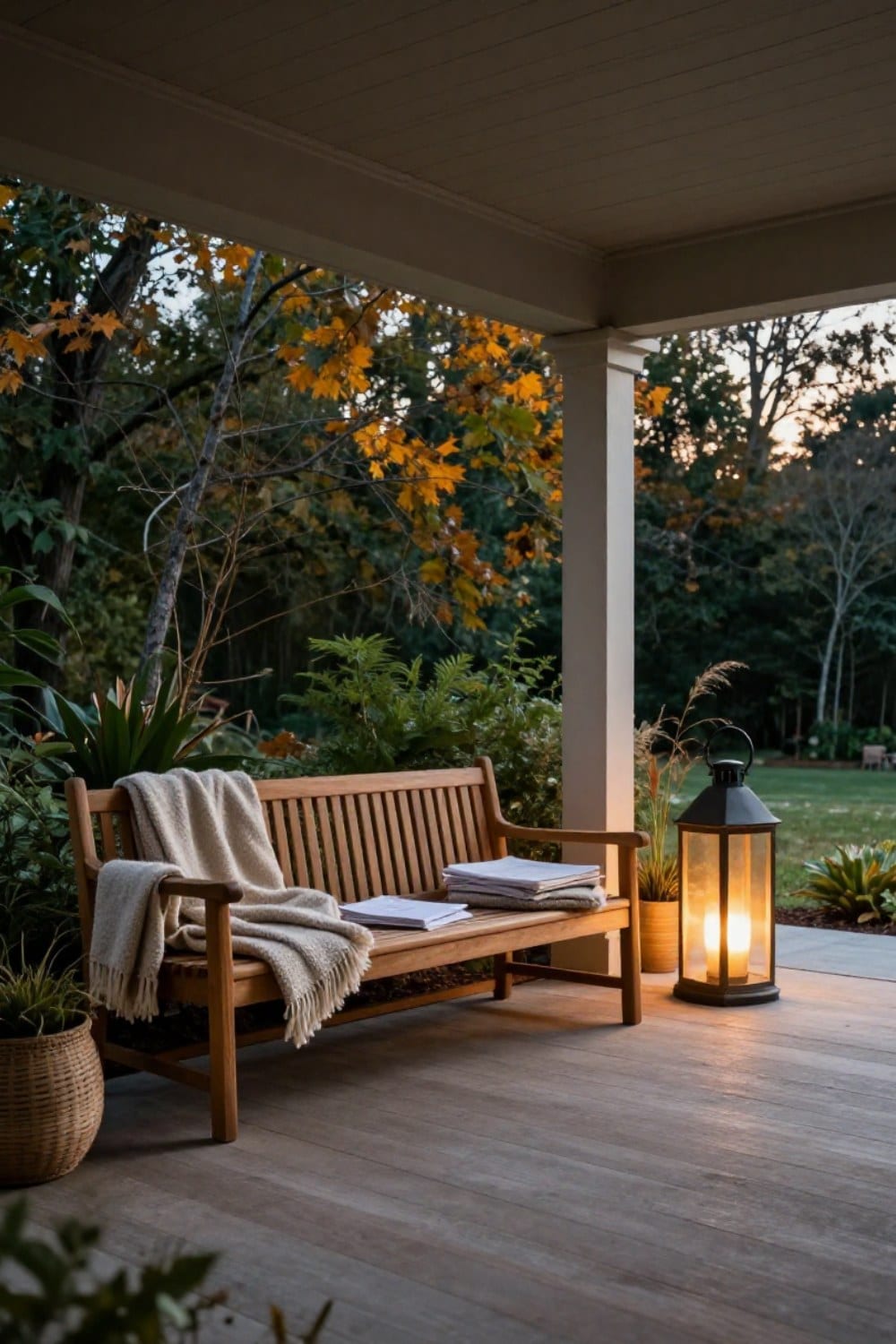
By the third week of October, half the porches on my street have already started sliding backward. The pumpkins have gone soft, the mums have crisped up brown, and the string lights are the only thing still holding up its end of the bargain. Mine hasn't, and it isn't luck.
The difference is never the shopping list. It's picking pieces that were built to sit outside past the first frost, and skipping the ones that only work for the day you take the photo. These twelve ideas are the ones I keep coming back to on my own east-facing porch, season after season -- the kind that still look composed in November, when the light gets low and everyone else has quietly given up.
Let the Furniture Do the Autumn Work, Not the Pumpkins
Before you add a single gourd, look hard at what's already sitting there. A weathered teak bench or a chair in a deep, grounded finish already reads as autumn -- you're accessorizing it, not disguising it. Transitioning a patio from summer to fall starts with the bones, not the accent table.
This is where teak earns its keep. It doesn't need a seasonal identity, because it already has one -- silvering a little further as the year goes on, which reads as settled rather than tired. If you want to see how it should look at every stage of that process before you buy anything new, the materials library's teak page is worth a slow read.
TeakSilvers evenly with weather -- the grey is the point, not a flaw to fight.here's what actually happens →that's the whole story
Left alone, teak turns a soft silver-grey within a year — evenly, if it gets even light. This is oxidation of the surface only; the wood beneath is unchanged and its natural oils keep it from rotting. Oil it if you want the honey colour back, and understand you are then committed to oiling it every spring. Grade A (heartwood, tight grain, no knots) silvers evenly; lower grades go blotchy. Nothing about the greying shortens its life.
Upkeep: One afternoon a year, at most. None, if you like grey.
Worth Getting Right Once
A solid teak side table
It ages instead of degrading -- the silvering is the finish, and it will outlast several rounds of trend cushions and seasonal display fads.
A well-made faux-teak resin side table
A convincing wood-look resin blend reads like weathered teak from normal porch distance and holds its color without the upkeep real teak asks for.
Choose a Fall Palette by What Weathers, Not What's Trending
Pumpkin-orange cushions look right for about three weeks and then start fighting with everything else on the porch. A palette built around what's already outside your door -- rust brick, bark, faded hydrangea, the deep green of the boxwood that hasn't given up yet -- keeps working long after the seasonal display at the garden center gets swapped out for something else.
It also photographs more honestly. A porch styled in colors that already exist in your yard doesn't look staged for a single week of the calendar -- it looks like it belongs to the house, which is the whole point of doing any of this in the first place.
My own working palette is rust, walnut brown, and a deep bottle green, repeated across the throw, the rug, and the planters so nothing has to match exactly -- it just has to belong to the same family. A neighbor asked me last year what my "fall colors" were, and the honest answer was that most of them are the same colors I use in June. I just let more of them show.

Layer One Real Wool Throw Instead of Three Thin Ones
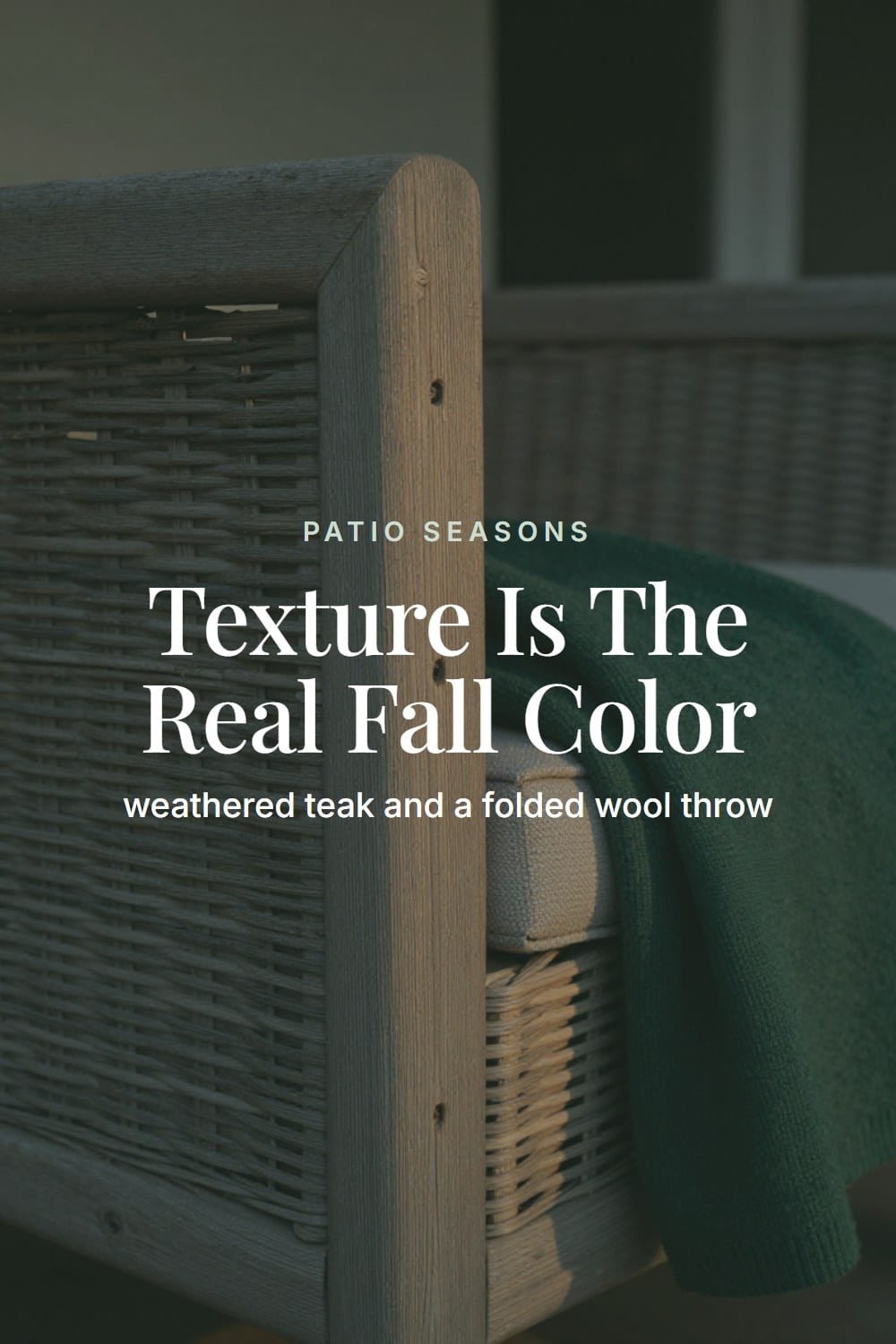
A single, honestly-made wool or wool-blend throw folded over the arm of a chair does more work than three thin ones stacked for a photo. It holds its shape, it doesn't flatten after one damp evening, and it looks like something you actually reach for -- not something arranged five minutes before company arrived.
Swap the Rug for Something a Half-Size Heavier
Summer rugs are made to disappear underfoot in bright light. Fall asks for something with a little more visual weight -- a denser weave, a darker ground color, a pattern that can hold its own once the leaves start doing to your yard what they're already doing to the sidewalk.
A well-made polypropylene rug is the practical choice for the shoulder season. It shrugs off the first cold rains, it doesn't hold moisture the way a natural fiber does, and it rolls up and comes inside easily once the real cold arrives.
PolypropyleneFade-resistant and quick-drying -- the reason it survives a season of morning dew without ever feeling damp underfoot.here's what actually happens →that's the whole story
A flatweave polypropylene rug is the most forgiving thing on a patio: it takes rain, it takes a hose, and jewel tones hold their depth for years. The failure is not the rug, it is what happens beneath it. A rug left wet under a table traps moisture against stone or decking and leaves a ghost of itself in mildew. Lift it, let both sides dry, put it back.
Upkeep: Ten minutes after heavy rain. Lift it, do not just sweep it.
Let Mums Read as Shrubs, Not Lollipops
The tight, ball-shaped mums lined up in a neat row are the fastest way to make a porch look like a parking-lot display. Loose, slightly leggy mums -- the kind that haven't been forced into a perfect sphere -- read like something that's actually growing in your yard. Styling a fall front porch with pumpkins and mums goes deeper into which shapes and colors hold up longest.
Underplant Before You Overdecorate
Most porches fail by addition -- another pumpkin, another sign, another string of something. The better move is underneath: a few structural plants in good containers, left mostly alone, so the eye has somewhere to rest before you add anything seasonal on top.
- Ornamental kale or cabbage for steady color that doesn't wilt with the first light frost
- Ornamental grasses for movement once the deciduous leaves are gone
- A fern or hosta going toward its autumn copper, left in place rather than swapped out
- One evergreen anchor -- boxwood or dwarf spruce -- that carries the container straight past the season
It's also the cheat code for looking established fast. A newly planted container full of only seasonal color reads as recently arrived; the same container with one evergreen anchor and a fern already in it reads as though it's been there for years, even in its first autumn.
One Oversized Lantern Beats Six Tea Lights
Tea lights photograph well and then blow out the moment there's any real wind. One substantial lantern -- real glass, real weight, a genuine flame or a warm-toned flameless insert -- holds its own on a blustery evening and reads as considered instead of scattered. Fall porch lighting done right covers how to layer it with string lights without the whole thing looking like a display.
The lantern I use most is the same one I bought the year we moved in. It's outlasted four rounds of trend candles, two strands of string lights, and every seasonal centerpiece I've tried next to it. That's the test worth applying before you buy anything for the porch: will you still want to look at this in three autumns, or only in photographs of this one?
Bring the Fire Element In Before the Cold Actually Arrives
Don't wait for the first genuinely cold night to think about heat. Getting a patio heater or a proper fire feature settled in while it's still comfortable outside means you'll have actually used it a dozen evenings before anyone else on the street has pulled a heater out of the garage. Patio heaters and fire pits for cool evenings walks through which kind suits which kind of space.
There's a practical reason for the head start, too: the first cool snap is exactly when everyone else is comparison-shopping for the same handful of well-reviewed heaters and fire tables. Settling on yours in late summer means you get the one you actually researched, not whatever's still in stock in October.
A porch that only works on the warmest day of fall isn't a fall porch. It's a summer porch that got confused.— Sarah Whitmore
Dress the Threshold, Not Just the Table
It's easy to spend all your attention on the coffee table and forget the door itself. A doormat with some actual texture, a wreath that isn't made of plastic leaves, a pair of matched lanterns flanking the entry -- the threshold is what a guest actually walks through, and it's the one spot most porches leave bare.
I learned this one the slow way, after years of noticing that my own reaction to a friend's house always started at her door, not her patio furniture. A wreath, a mat, and a lantern take an afternoon to put together and change how the entire house is read before anyone sits down.
Choose Gourds and Squash That Will Actually Hold Through November
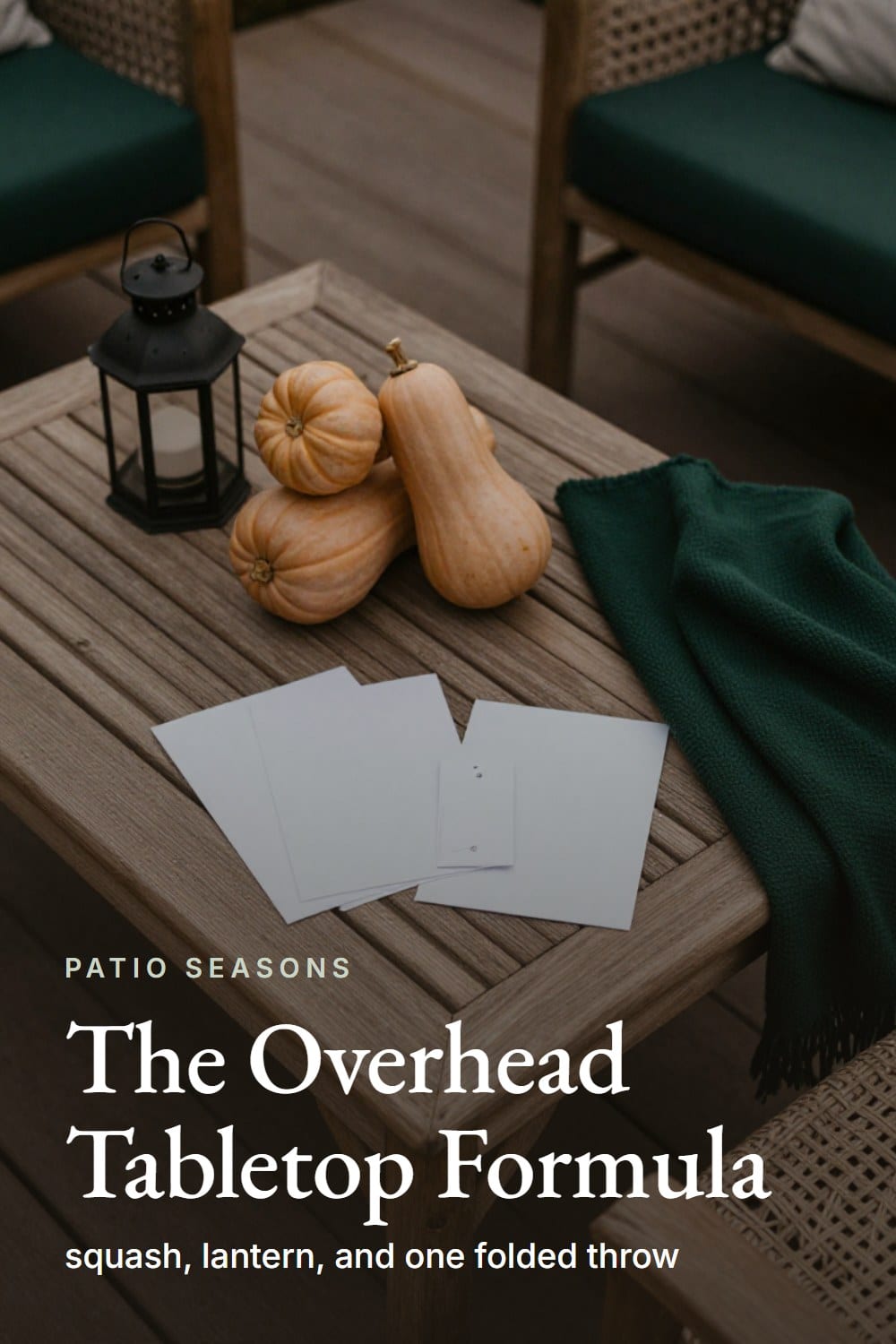
Not every gourd is built for a season outside. Thin-skinned decorative pumpkins go soft within a few weeks; hard-shelled squash -- turban, warty, the dense little pie pumpkins -- last considerably longer and weather into something better rather than something collapsed. Pick the ones that feel heavy for their size, and you'll get most of the season out of them.
Keep them off direct ground contact if you can -- a low tray or a wooden stand under a grouping slows the rot that starts from underneath first. It's a small step, but it's the difference between squash that make it to Thanksgiving and squash you're quietly disposing of by the second week of October.
Keep One Green Thing Alive on the Table
A porch that's gone entirely brown, orange, and dried out reads as neglected by Halloween, however intentional it started out. One live plant on the table -- a small evergreen topiary, a rosemary standard, even a hardy fern -- keeps the whole arrangement looking tended rather than abandoned.
This is the detail that quietly separates a styled porch from a decorated one. Dried and seasonal elements tell a guest you did something once, in September; one living plant tells them you're still paying attention in November, which is a different and better impression to leave.
Plan the November Teardown Before You Style the October Photograph
The best fall porches are built with an exit in mind. Skip anything that only works whole -- a display that collapses the moment one pumpkin gives out looks worse than no display at all. Choose pieces you can pull one at a time as the season turns, so the porch degrades gracefully instead of all at once, and stays presentable right up until it's time for the winter version.
In practice that means the squash come off the table first, then the mums once they've finished, while the furniture, the lantern, the throw, and the planters simply carry straight through into whatever you're doing for winter. Nothing has to come down all at once, and nothing is left holding up a display on its own.
The Fall Porch Reset Checklist
The printable is being finished. It will live here, free, with no sign-up wall.
Frequently asked
When should I start decorating my porch for fall?
How do I keep a fall porch from looking dated by November?
What colors work best for a fall patio that isn't orange-and-black Halloween?
Do I need to bring cushions in every night once it's fall?
Sarah Whitmore
she keeps the teak, she oils it in spring
Sarah has furnished the same porch three times and finally stopped. She writes about what actually survives a decade outdoors — which wood silvers, which fabric fades, and which inexpensive piece quietly reads the same as the expensive one.
SarahMore from this corner
 Patio Living
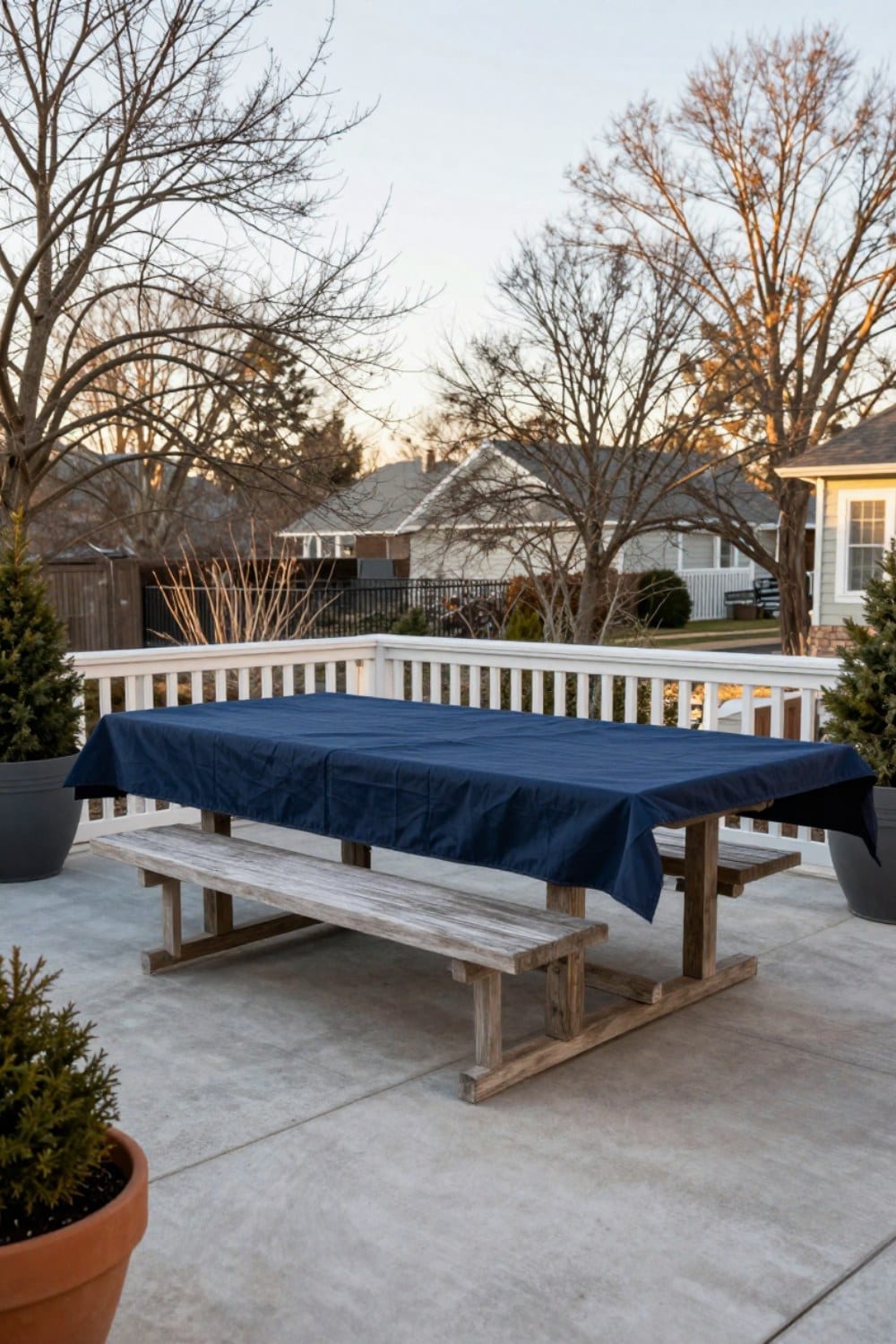
How to Protect Teak Furniture in Winter (What Actually Needs Doing — and What Doesn't)
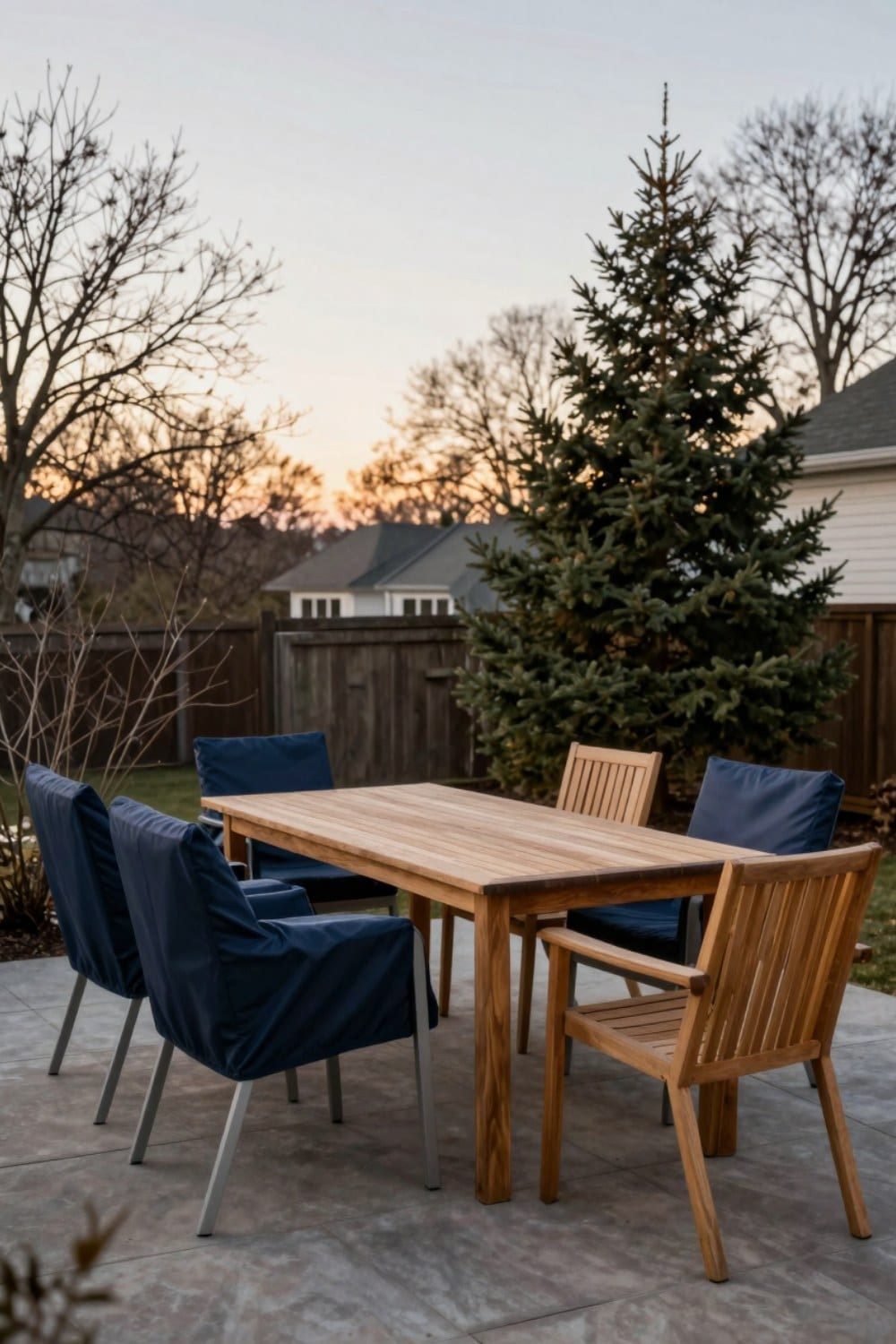
Teak has a reputation as the fussy, high-maintenance wood on the patio. It's actually the opposite -- one of the only materials built to winter outside without a second thought, as long as you stop treating moisture and cold as the same threat.
Oct 30, 2026 · 10 min read
 Patio Living
How to Winterize Patio Furniture the Right Way (So It Comes Out Perfect in Spring)
Winterizing patio furniture isn't complicated, but it does ask you to treat every material differently. Here's the material-by-material sequence -- clean, dry, cover or store, elevate -- that keeps teak, aluminium, and wicker looking right through to spring.
Jan 24, 2026 · 11 min read
 Patio Living
How to Store Outdoor Cushions for Winter So They Come Out Spotless
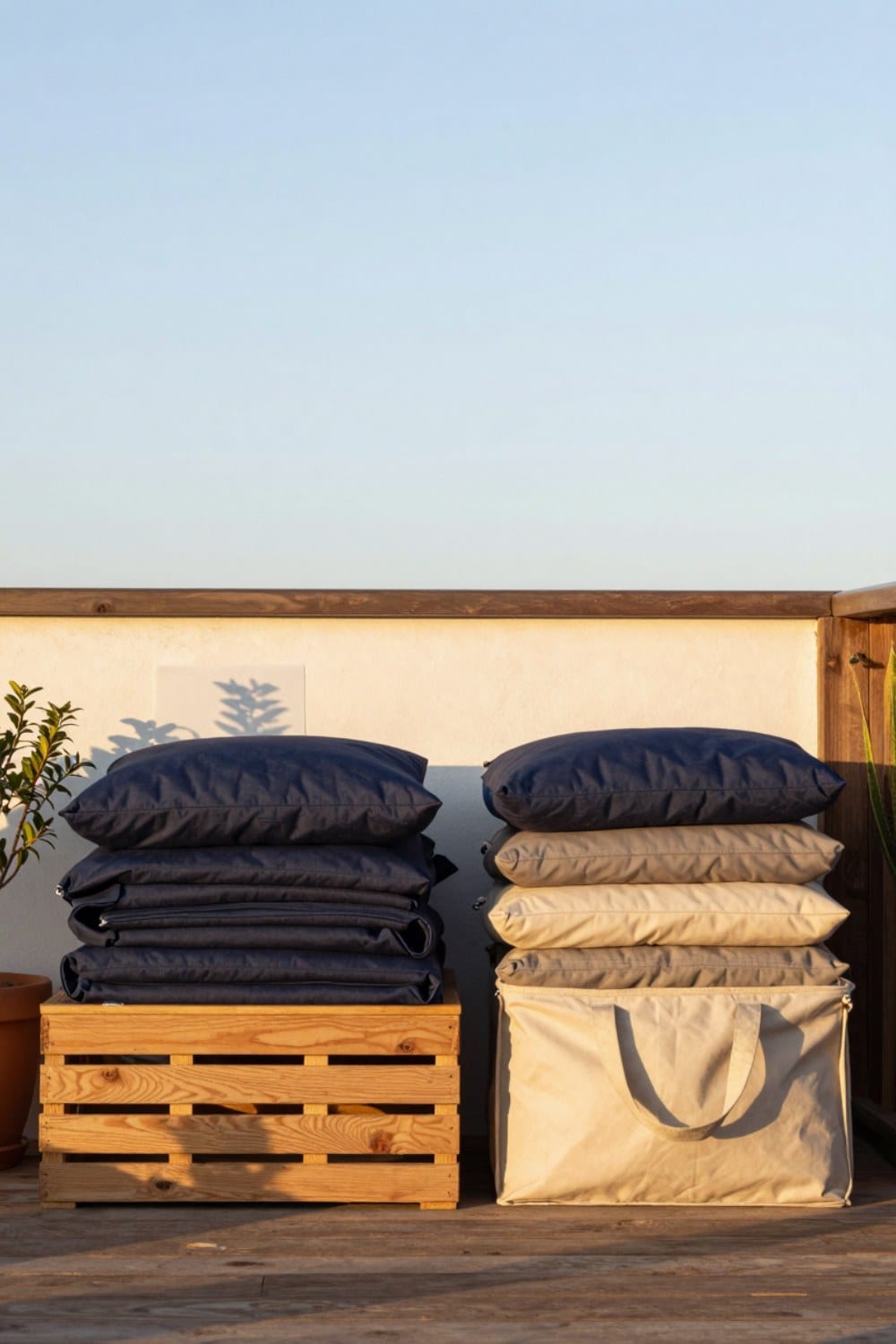
Mildew doesn't come from cold, it comes from moisture sealed inside the foam. Here's how to dry outdoor cushions completely and store them somewhere breathable, so they come out in spring looking like you just bought them.
Jan 15, 2026 · 9 min read