Winter Porch Decorating Ideas That Aren't Christmas (and Still Look Good in February)
The holiday decor comes down and most porches go bare or forgotten for two months. Here are ten ways to style a porch for winter itself -- evergreen without the red, oversized lanterns, texture over color -- so it still looks considered in February.

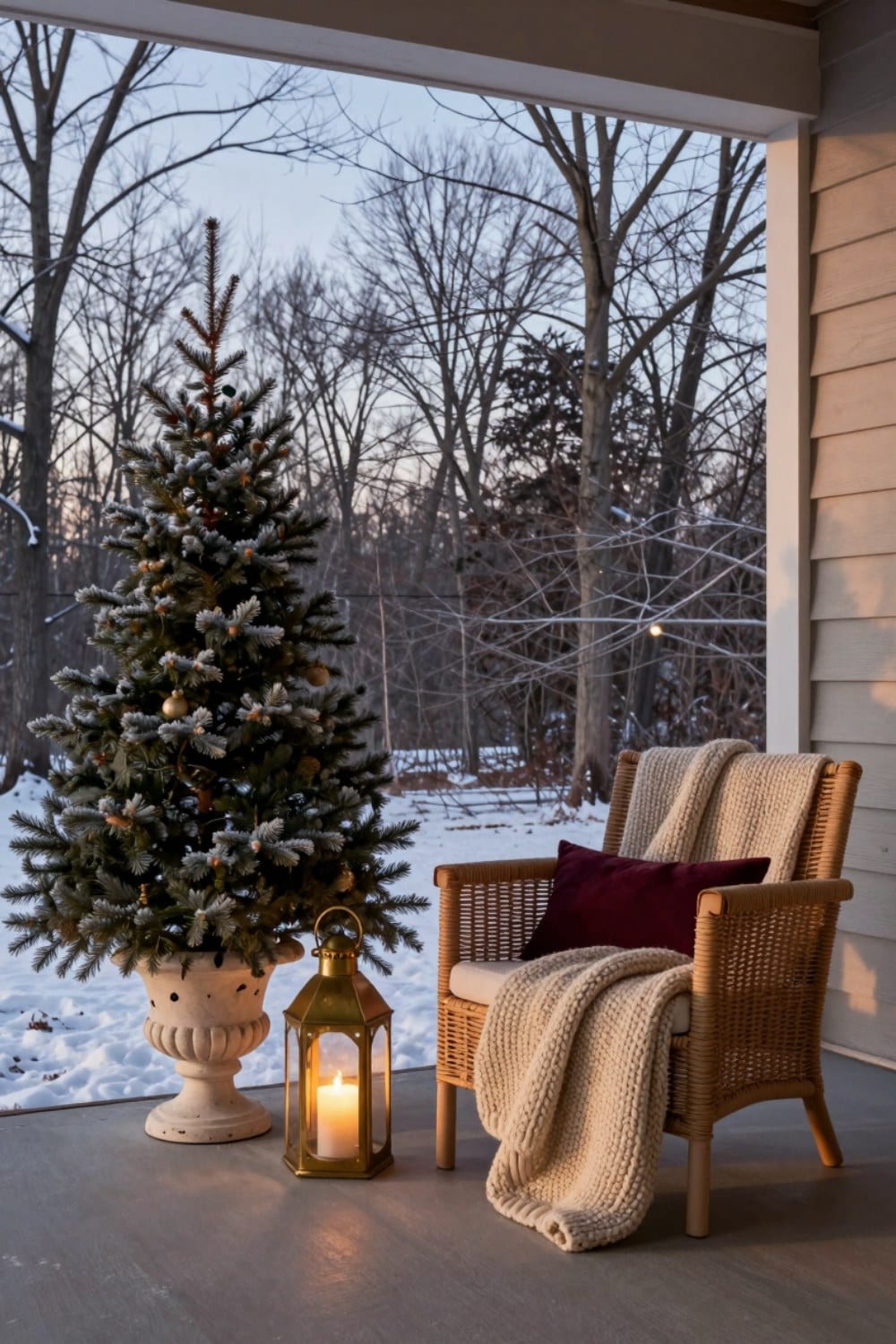
By the time the last string of lights comes down off the eaves, most porches are stuck between two bad options. Leave up whatever's left of December and the space reads like nobody got around to finishing the job. Strip everything back to bare boards and a folded chair, and the porch goes quiet for two months, waiting on the first daffodil.
There's a third option, and it's the one that actually gets used. Style the porch for winter itself -- not for the holiday, and not as a placeholder until spring -- and it stays a place you want to walk past, sit on for five minutes, or glance at from the window on a dark evening. None of it needs to look like a showroom. It needs to look like someone who lives here decided winter was worth a little effort too.
Here's what actually earns its keep on a porch from January into March, once the ornaments are packed away and the ground still hasn't thawed.
1. Keep the Greenery, Lose the Red
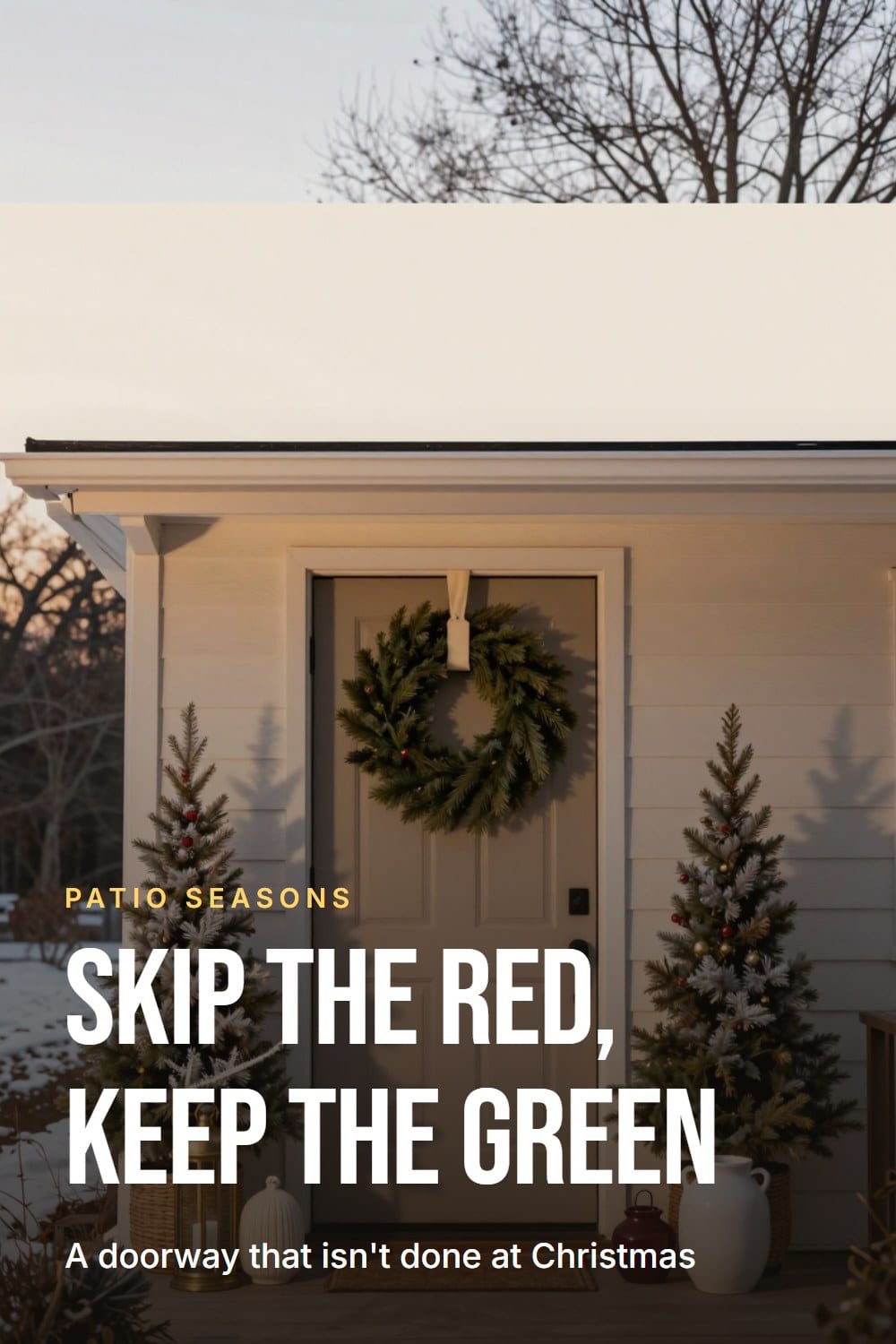
The easiest change on this list is also the one people skip: you don't have to take the evergreen down with the ornaments. A swag or garland built from fir, cedar, or juniper has nothing inherently holiday about it -- the branches themselves are neutral. What reads as Christmas is almost always the ribbon and accents wired into it: red plaid, gold bells, a spray of berries.
Pull those out in early January and what's left is just winter greenery, exactly what it should be doing on a porch through February. Replace the ribbon with something in cream, ivory, or a deep neutral canvas, or skip ribbon altogether and let the swag hang plain. The structure stays; only the seasonal signaling changes. It's a short job for a porch element that otherwise gets thrown out weeks before it's finished looking good.
2. Trade the Pine-and-Berry Wreath for Magnolia or Eucalyptus
A classic pine-and-berry wreath is doing one specific job, and that job ends the day the tree comes down. Magnolia and eucalyptus hold their color, shape, and shine for months rather than weeks, which makes them a winter wreath rather than a holiday one.
Magnolia leaves are the sturdier of the two: deep glossy green on top, a soft rust-brown underside that shows as the leaves dry and curl slightly, which only improves the texture. Eucalyptus brings a cooler, silvery-blue note and a looser shape. Either one hangs without a hint of pine-and-berry left in it, and both dry in place rather than dropping needles the way a cut evergreen wreath eventually will.
3. Let Birch Logs and Bundled Branches Stand In for a Centerpiece
A vase of anything cut and living is a losing proposition on a porch in January -- it wilts, it freezes, it needs replacing before the month is out. Birch logs and bundled bare branches solve the same problem without the upkeep. Stood upright in a tall vessel by the door, they give a porch height and arrangement with nothing to water and nothing to lose color.
Birch works especially well because the bark does the styling -- pale and papery, striking against a dark wall or a deep-toned cushion. Bundled willow or dogwood does the same job with more movement if birch isn't easy to find locally. Either reads as considered rather than sparse, and won't look different in March than it did the week you set it out.
4. Go Oversized With Lanterns and Real Candlelight
String lights do their best work in fall, a warm outline against an early dusk. Winter asks for more weight. An oversized lantern -- glass-paned, ideally with room for a real pillar candle rather than a battery votive -- reads as intentional in a way a strand of lights hung back up in January never manages. If a porch already has fall lighting in place, this isn't a replacement so much as an evolution of it: size up and slow down, with one or two substantial lanterns doing the work a dozen small lights did in October.

5. Add a Winter-Weight Rug That Can Actually Take the Weather
A porch rug bought for summer -- thin, light-colored, built mostly for looks -- tends to look tired by January, especially anywhere with real snow or sustained damp. A winter-weight outdoor rug is a different category: denser weave, a darker or more saturated color that hides salt and mud, and a backing built to handle a freeze-thaw cycle without curling at the edges. Layer it over whatever's already down, and it's one of the fastest ways to make a porch look finished instead of emptied out.
6. Bring In a Chunky-Knit Throw and a Weatherproof Basket
A folded throw does more for a winter porch than almost anything else on this list, because it signals a porch is meant to be used, not just looked at. Choose a chunky, cable-knit or waffle-weave throw in cream or oatmeal -- wool or a wool blend holds up to damp far better than a thin cotton throw, which goes limp and stays that way once it's picked up any moisture.
The trick is storage, not styling: a throw draped over a chair looks intentional for about a week, then abandoned the first time it rains on it. A woven, weatherproof basket beside the seating solves that -- toss it in when it's not being used, pull it back out for the ten minutes you're actually outside. It reads as considered on its own, and keeps the throw from turning into a wet, faded lump by February.
Rope weaveA tightly rope-woven basket sheds rain better than a loose open weave and won't sag once a heavy knit throw's been sitting in it all winter.here's what actually happens →that's the whole story
The olefin and polyester ropes used on good outdoor seating are UV-stable and will not rot. They do stiffen when cold and damp, and a rope chair left out through a wet winter feels like a different chair in March — it softens again as the weather turns. Real deterioration shows as fuzzing at the points where the rope crosses the frame. That is abrasion, not weather, and it is the thing to inspect.
Upkeep: Nothing, most years. Look at the crossing points each spring.
7. Choose a Matte-White or Stone Urn Over Glossy Ceramic
The vessel matters as much as what's planted in it. A glossy, brightly glazed ceramic pot that looked cheerful in June reads garish against bare branches and grey winter light. A matte-white, stone, or cast-look urn recedes just enough to let the evergreen or birch inside it be the actual subject, and it holds up to freeze-thaw cycles that can crack a thinner glazed pot outright.
If you're planting an urn for winter rather than filling it with cut greenery, winter porch pots and evergreen urns covers the planting side in full -- what actually survives in a container through real cold, and how to arrange it so it still looks intentional in eight weeks, not just the day you plant it.
8. Light for the Long, Dark Evenings
Winter evenings start early and stay dark a long stretch, which makes lighting do more emotional work than in any other season. The goal isn't brightness -- it's warmth. A porch lit like a hallway, one bright overhead fixture and nothing else, feels utilitarian. A porch lit low, with lanterns at seating height, feels like somewhere you'd choose to sit before heading back inside.
Layer the sources rather than relying on one: a lantern by the door, another near the seating, a low glow from inside spilling through a window. Keep the tone warm -- amber and gold, never cool white -- and keep it at a height a person actually passes by, not up in the eaves.
9. Build Texture, Not Color
Winter strips a lot of color out of a porch's surroundings by default -- the yard goes brown and grey, the sky stays flat. Fighting that with bright color rarely works; leaning into texture instead does. Wool, woven baskets, matte stone, wrought iron, weathered wood -- put enough of these next to each other and the porch reads as rich even though the palette is almost entirely neutral. A smooth stone urn beside a chunky knit throw beside a rough iron lantern reads as considered. Three shades of the same beige, with nothing to distinguish them by touch, reads as simply unfinished.

10. Add One Current, Tasteful Jewel-Tone Accent
A porch built entirely from cream, stone, and wood can start to feel flat by midwinter, and there's room for one departure without undoing the quiet, considered look you've built. A single cushion or throw in a deep, saturated jewel tone -- burgundy leaning toward wine rather than crimson, or true emerald rather than kelly green -- does that job without reading as a holiday leftover. This kind of note has a name in interior circles right now: a deep, moody jewel tone paired with warm brass and dark wood, sometimes called a 'Neo Deco' palette. Worth knowing mostly so you use it with restraint -- one cushion, not a whole porch recolored around it.
None of this replaces the basics of getting furniture through the cold months. If the cushions haven't been covered or stored yet, that's worth handling first. How to winterize patio furniture covers the storage and moisture checks that keep the pieces themselves in good shape; this piece is about what goes on top once that part's done.
Common Mistakes That Keep a Winter Porch Looking Stuck in December
Most winter porches don't fail from a lack of effort. They fail from a handful of small, repeatable choices left over from the holiday setup.
- Leaving red, gold, or plaid accents in place past the first week of January -- the greenery can stay, but anything holiday-coded reads as forgotten, not intentional
- Stripping the porch down to nothing rather than restyling it -- an empty porch looks colder and less cared-for than one with even a single lantern and a throw
- Relying on string lights alone once the days get shorter -- they read thin against a long, dark winter evening in a way an oversized lantern doesn't
- Choosing a glossy or brightly colored planter that clashes with bare branches and grey winter light instead of a matte, neutral urn
The Winter Porch Styling Checklist
The printable is being finished. It will live here, free, with no sign-up wall.
A winter porch built like this isn't competing with the holiday version that came before it, and it isn't marking time until the daffodils show up either. It's doing its own job for its own stretch of the calendar -- weeks where the greenery holds its color, the lanterns do the work string lights can't, and one good throw makes the whole thing worth stepping outside for. Come March, most of it is still right where you left it, and swapping over to spring is subtraction, not starting over.
Frequently asked
When should I take down holiday decorations and switch to a winter porch look?
Will cut evergreen swags and wreaths survive outdoors all winter?
What's the easiest single change to make a porch look less like leftover holiday decor?
Do I need to protect porch furniture separately from decorating it for winter?
Sarah Whitmore
she keeps the teak, she oils it in spring
Sarah has furnished the same porch three times and finally stopped. She writes about what actually survives a decade outdoors — which wood silvers, which fabric fades, and which inexpensive piece quietly reads the same as the expensive one.
SarahMore from this corner
 Patio Living
How to Protect Teak Furniture in Winter (What Actually Needs Doing — and What Doesn't)
Teak has a reputation as the fussy, high-maintenance wood on the patio. It's actually the opposite -- one of the only materials built to winter outside without a second thought, as long as you stop treating moisture and cold as the same threat.
Oct 30, 2026 · 10 min read
 Patio Living
How to Winterize Patio Furniture the Right Way (So It Comes Out Perfect in Spring)
Winterizing patio furniture isn't complicated, but it does ask you to treat every material differently. Here's the material-by-material sequence -- clean, dry, cover or store, elevate -- that keeps teak, aluminium, and wicker looking right through to spring.
Jan 24, 2026 · 11 min read
 Patio Living
How to Store Outdoor Cushions for Winter So They Come Out Spotless
Mildew doesn't come from cold, it comes from moisture sealed inside the foam. Here's how to dry outdoor cushions completely and store them somewhere breathable, so they come out in spring looking like you just bought them.
Jan 15, 2026 · 9 min read