Fall Patio Dining and Entertaining: The Harvest Table That Keeps Everyone Outside
A guide to fall patio dining and entertaining built around the table that keeps people outside past the meal -- sizing, seat-height lighting, harvest styling, and the setup order that makes an autumn evening actually run late.
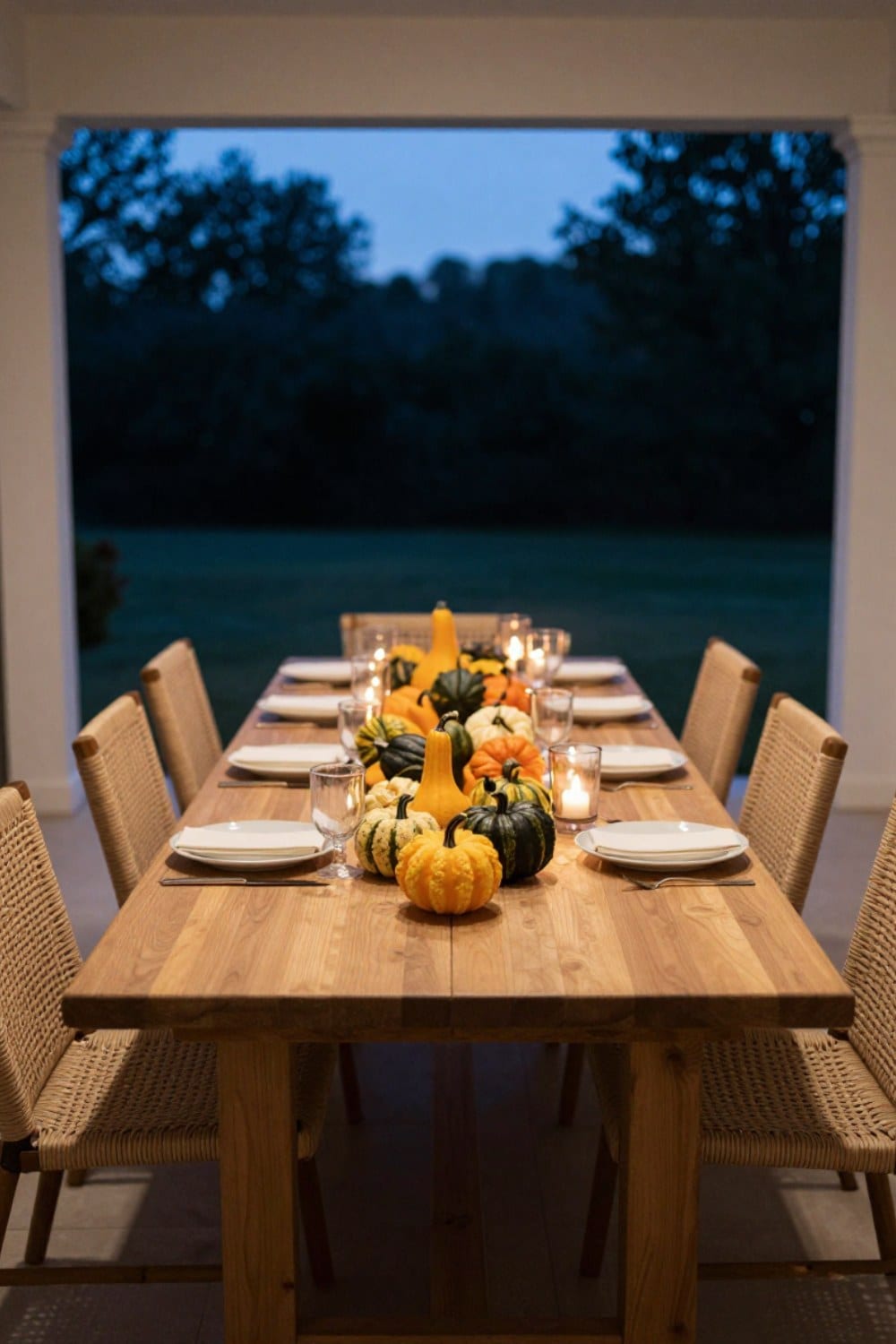
Every fall dinner I actually remember has the same shape. The food was good, sure -- but that isn't what I remember. I remember that nobody wanted to be the first one to say it was time to go back inside. That's the test I run now before I plan anything: not whether the meal turns out well, but whether the table can hold people an hour past when they meant to leave.
You get that hour back almost by accident once the table itself is right. Wide enough that elbows aren't negotiating for space over the platters. Chairs warm enough that no one's shifting their weight every few minutes. Light low and steady instead of one bright bulb doing all the work. None of it is complicated, and none of it happens by improvising once people are already seated -- it gets decided that afternoon, before the first car pulls in.
Dinner Outside Has Stopped Being "a Table Outside"
For most of the year, outdoor dining meant one thing: a table, four matching chairs, and a spot close enough to the grill to reach the tongs. That's not what an autumn evening asks for anymore. The dining space itself has become a full room -- layered textures, an oversized table built for lingering, seating that doesn't all come from the same box, low light instead of a single fixture doing all the work.
The shift away from matching sets is the part worth paying attention to. A patio set that arrived in one box, all finished the same way, reads as furniture. A table with a woven bench on one side and two upholstered chairs on the other, a runner that doesn't match the napkins, reads as a room somebody actually put together over time. The same instinct runs through styling a fall porch -- it was never really about matching. It's about belonging together.
Size the Table for Platters, Not for the Photo
Most patio tables sold as "dining for six" are sized for a photograph, not for six people eating a real fall dinner with a roasted vegetable dish, a bread board, and a pitcher all fighting for the same square foot. Anything under about forty inches wide starts to feel like elbows are in negotiation with the platters. Aim for at least forty-two inches if you're regularly seating four, and closer to forty-eight if six is the real number.
Length matters more than most people budget for. A table that seats six comfortably usually needs somewhere close to seventy-two inches of length, not sixty -- the difference is exactly the width of one more serving dish landing between two place settings without anyone leaning back to make room.
TeakSilvers evenly through a season of dinners outside -- the grey isn't a flaw, it's the table settling in.here's what actually happens →that's the whole story
Left alone, teak turns a soft silver-grey within a year — evenly, if it gets even light. This is oxidation of the surface only; the wood beneath is unchanged and its natural oils keep it from rotting. Oil it if you want the honey colour back, and understand you are then committed to oiling it every spring. Grade A (heartwood, tight grain, no knots) silvers evenly; lower grades go blotchy. Nothing about the greying shortens its life.
Upkeep: One afternoon a year, at most. None, if you like grey.
This is where I'd rather have one substantial table than two smaller ones pushed together. A single well-built teak or teak-look table reads as considered from every angle; two card tables shoved edge to edge reads as an overflow plan, no matter how good the tablecloth is. The materials library's teak page covers what to expect from the finish over several seasons, if you're deciding whether it's the table worth getting right once.
Chairs That Don't All Match, Seating That All Feels Warm
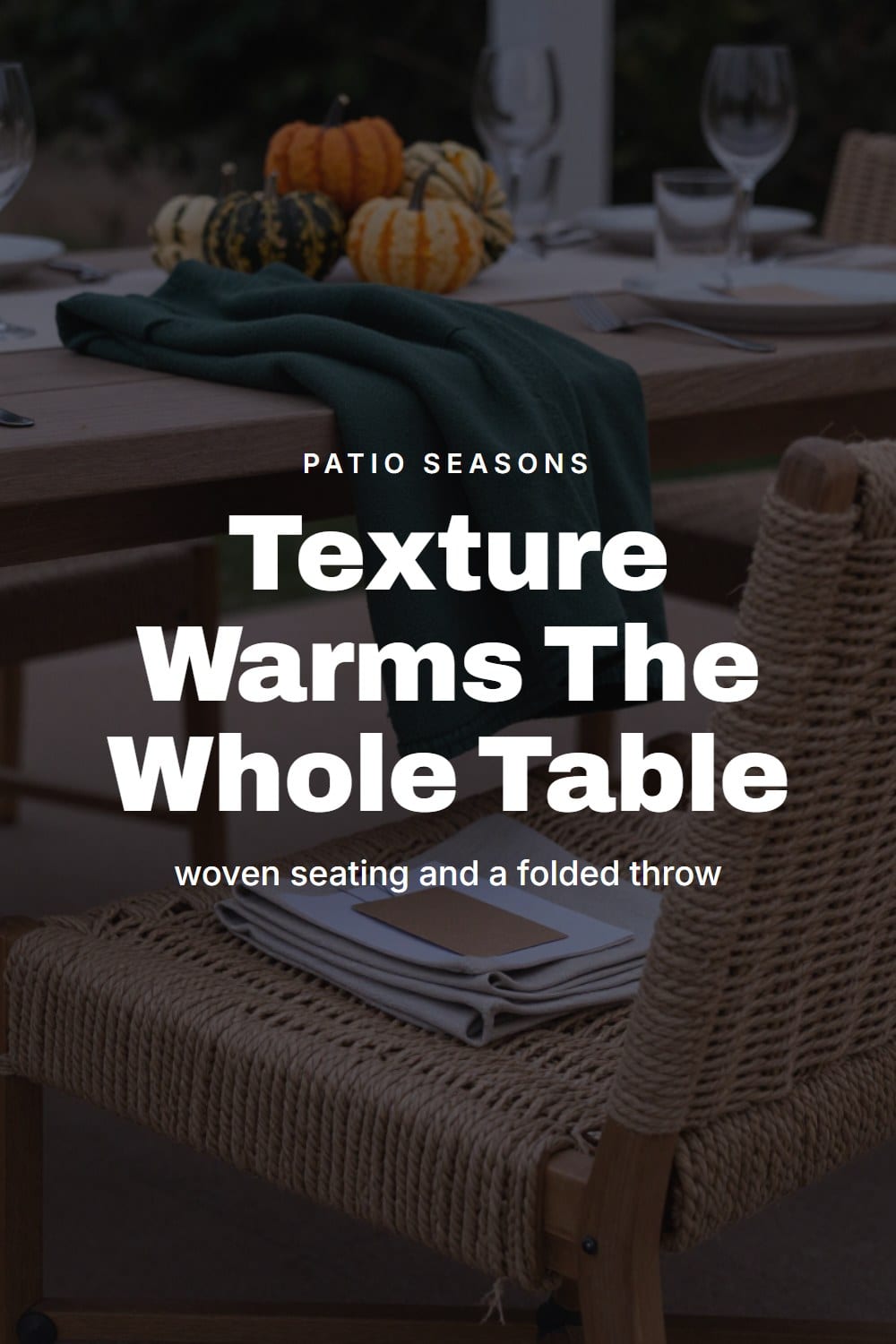
A dining set that arrived as one matching unit is the fastest way to make an outdoor room feel like inventory instead of a place people want to stay. Mix a woven bench on one long side with upholstered or cushioned chairs on the other, and the table starts to read like it was built up over a few years instead of ordered in one afternoon.
Rope-weave and all-weather wicker both hold their shape through a fall evening's damp air in a way plain painted wood chairs don't -- the weave breathes, so it doesn't go clammy the way a solid seat can once the temperature drops after dark.
Rope weaveHandles a cool, damp evening without going stiff or cold to sit on the way a hard seat does.here's what actually happens →that's the whole story
The olefin and polyester ropes used on good outdoor seating are UV-stable and will not rot. They do stiffen when cold and damp, and a rope chair left out through a wet winter feels like a different chair in March — it softens again as the weather turns. Real deterioration shows as fuzzing at the points where the rope crosses the frame. That is abrasion, not weather, and it is the thing to inspect.
Upkeep: Nothing, most years. Look at the crossing points each spring.
- A throw folded over the back of every other chair, set out before anyone arrives -- not offered only if someone looks cold
- A cushion with real loft under each place setting, not a thin liner that flattens by the second course
- One bench mixed with individual chairs so the table reads as gathered, not matched
- Seat height that lets feet sit flat near ground level, where the actual warmth is
Light at Seat Height, Not Overhead
The single biggest difference between a patio dinner that photographs well and one that people actually want to stay at is where the light comes from. Overhead string lights and one bright post lamp light the table from above, which flattens faces and makes everyone look like they're under an interrogation lamp instead of having dinner. Light set at seat height -- a low lantern, a cluster of candles at table level, a single warm bulb at shoulder height -- does the opposite. It makes the whole table look like it's glowing from inside itself.
Fall porch lighting done properly goes deeper into layering string lights with something lower and steadier, but the short version for a dining table is this: put at least one real light source at the height of a seated person's shoulders, and let anything overhead stay secondary. Once the sun's really down, get the heat source settled near the table, not off to the side -- the point of a fall dinner outside is that people forget it's cold, and that only happens if the warmth actually reaches their feet.
Set the Harvest Table Without Reaching for Orange Everything
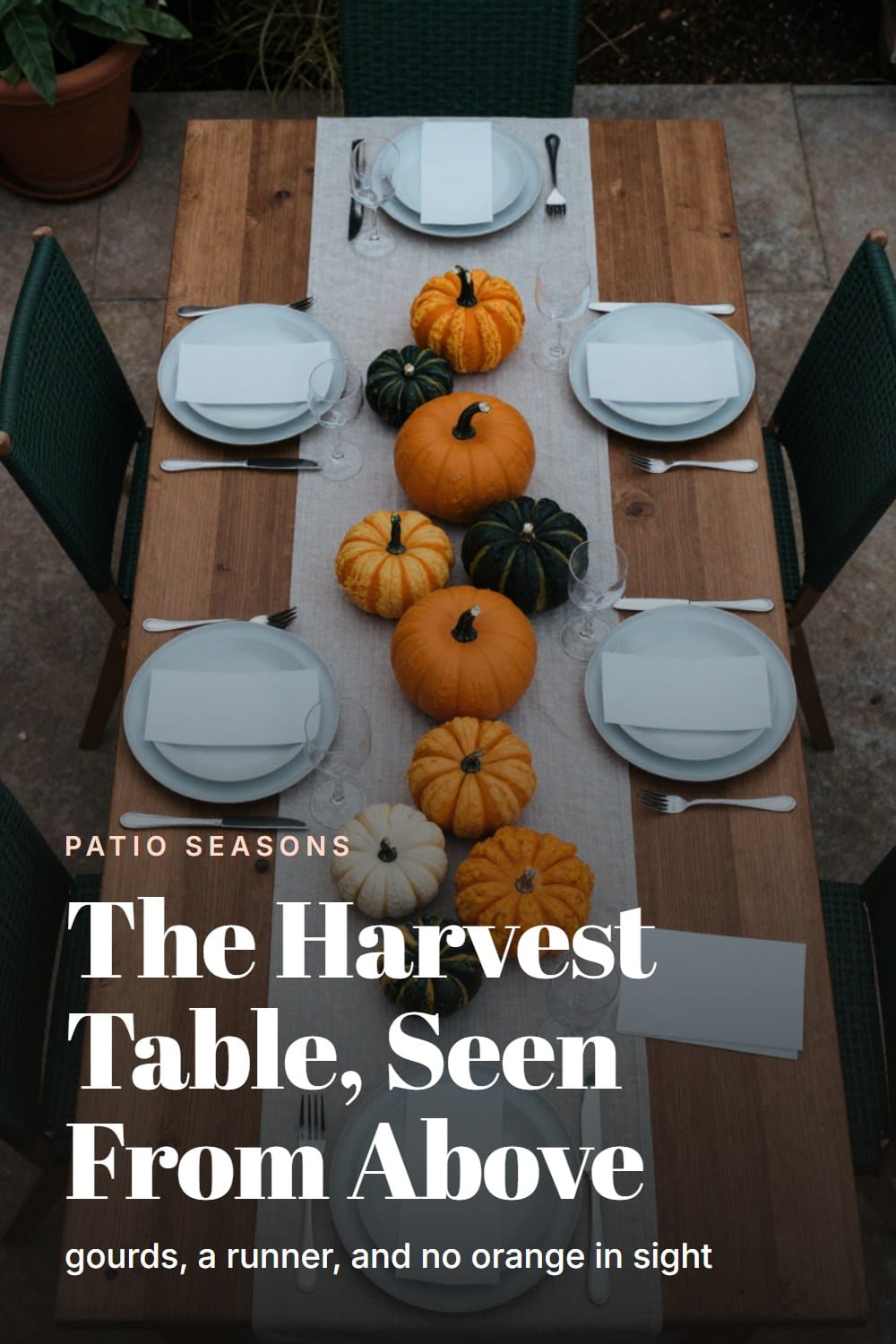
A table draped in every orange-and-black seasonal item from the same aisle reads like a costume display, not a dinner. Heirloom gourds -- the warty, striped, oddly colored ones, not the uniform pumpkin-patch orange -- do more work with less effort, because their color range already spans rust, cream, deep green, and a dusty blue-grey that plays well with almost any linen.
Layer instead of theming. A runner in a neutral weave, a scatter of gourds down the center instead of one centerpiece block, a few stems of real foliage -- dogwood, late hydrangea, dried grasses -- tucked in rather than arranged. The goal is a table that looks like it grew that way over the course of an afternoon, not one built from a single seasonal display kit.
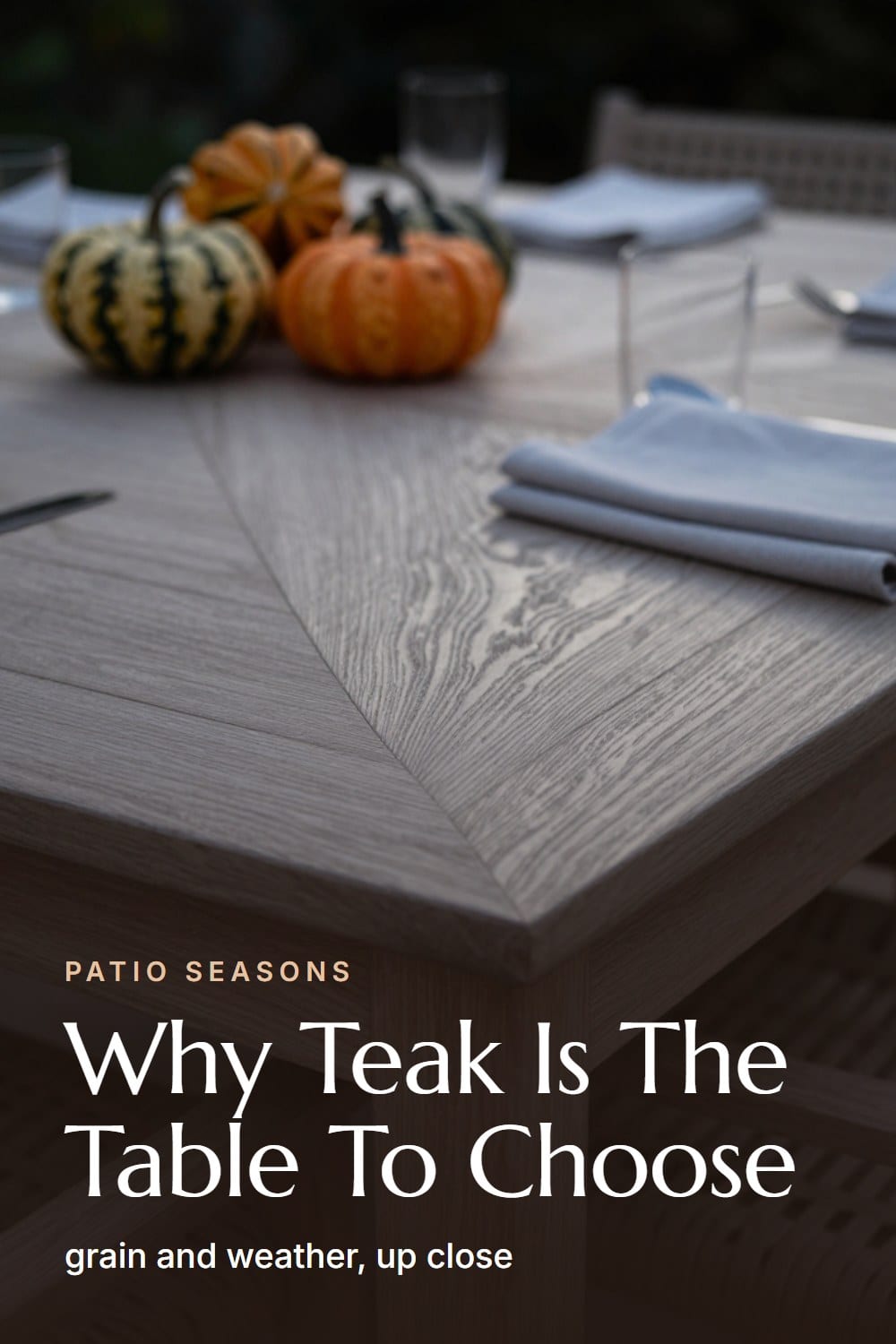
- Choose hard-shelled, oddly colored gourds over uniform orange pumpkins -- they last the whole dinner season and photograph with more depth
- Run the centerpiece low and long down the table's spine instead of one tall arrangement blocking sightlines across it
- Mix in something genuinely green -- a trailing vine, a few stems of boxwood -- so the table doesn't read as entirely dried out
- Leave gaps in the runner rather than covering every inch; a table fully covered in decor has nowhere left for the food
How to Set Up an Evening That Actually Runs Late
The order you do things in matters more than any single item on the table. Get the bones settled with hours to spare, and the last thirty minutes before guests arrive can go to the parts that actually need a fresh hand.
- Set the table wide first -- decide the full layout of platters and place settings before a single decorative item goes down, so nothing gets wedged in later
- Place the heat source near where feet will actually sit, not just near the table in general -- a fire feature two steps away from anyone's chair doesn't do its job
- Add low, seat-height light next -- lanterns or table candles before anything overhead
- Layer the gourds and foliage into the gaps that are left, not over the top of the place settings
- Fold a throw over the back of every other chair before the first guest arrives, so nobody has to ask
- Do a last check of the tabletop surface for a rough edge or a shallow crack -- better to notice it now than at the table, once wax and wine are in play
Transitioning the whole patio from summer to fall covers the wider seasonal changeover, if the dining table is only part of what needs resetting this time of year.
The Mistakes That Cut a Fall Dinner Short
Most disappointing fall dinners fail for the same handful of reasons, and none of them are about the food.
- Overhead lighting doing all the work, which flattens faces and makes the whole table look colder than it is
- A table sized for the furniture set it came with, not for the actual number of platters going on it
- Heat placed near the table instead of near people's feet, where the cold actually sets in first
- A fully matched set that reads as inventory instead of a room somebody put together over time
- Waiting until the week of the dinner to check whether the tabletop can handle a cold night, a spilled glass, and a dripped candle without complaint
What's Worth Investing In vs. What Reads the Same at the Table
Worth Getting Right Once
A solid teak or teak-look dining table sized for real platters
It's the one piece everyone's hands and elbows are actually on for the whole evening, and a well-built table only gets better-looking as the finish weathers in.
A well-made all-weather wicker chair set mixed in around it
The chairs get replaced far more often than the table does anyway, so a quality all-weather option reads just as considered without asking you to commit to it for a decade.
A fall dinner outside isn't measured by what was served. It's measured by how long after dessert everyone stayed in their chair.— Sarah Whitmore
The Autumn Table Timing Plan
The printable is being finished. It will live here, free, with no sign-up wall.
Frequently asked
How big should a patio dining table be for a fall dinner party?
What's the best lighting for an outdoor fall dinner table?
How do I decorate a fall table without it looking like a Halloween display?
Does patio furniture need to match for outdoor entertaining?
Sarah Whitmore
she keeps the teak, she oils it in spring
Sarah has furnished the same porch three times and finally stopped. She writes about what actually survives a decade outdoors — which wood silvers, which fabric fades, and which inexpensive piece quietly reads the same as the expensive one.
SarahMore from this corner
 Patio Living
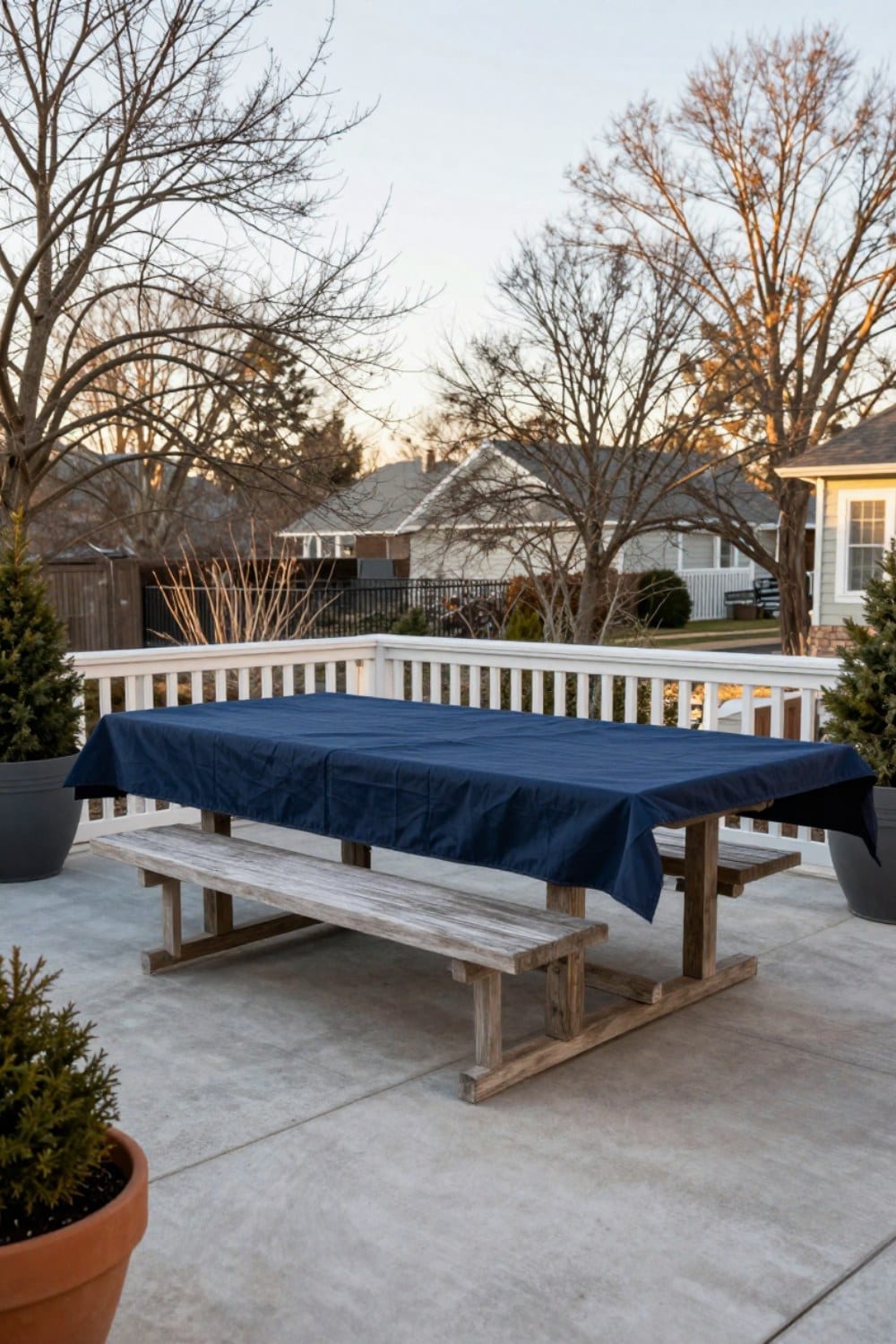
How to Protect Teak Furniture in Winter (What Actually Needs Doing — and What Doesn't)
Teak has a reputation as the fussy, high-maintenance wood on the patio. It's actually the opposite -- one of the only materials built to winter outside without a second thought, as long as you stop treating moisture and cold as the same threat.
Oct 30, 2026 · 10 min read
 Patio Living
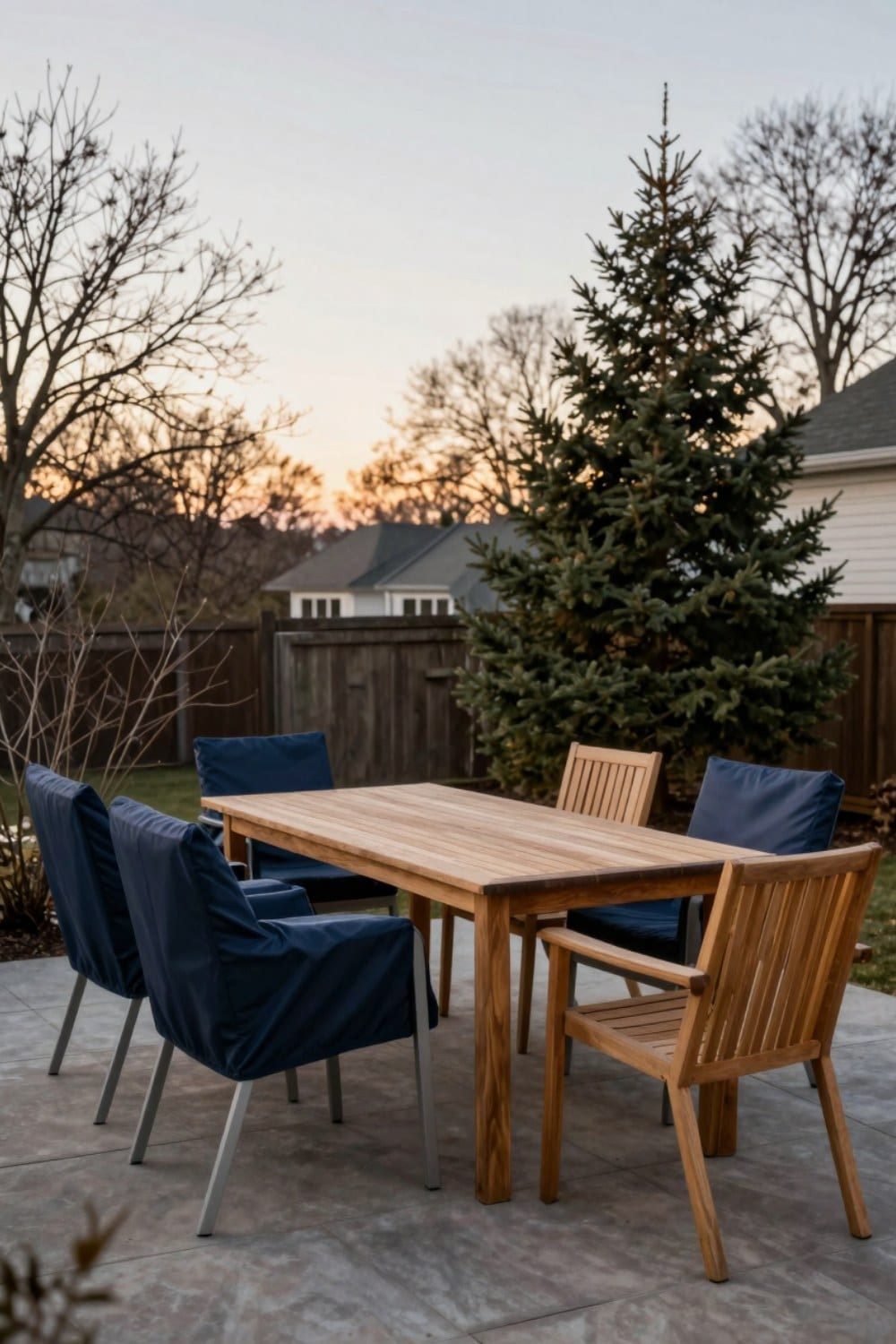
How to Winterize Patio Furniture the Right Way (So It Comes Out Perfect in Spring)
Winterizing patio furniture isn't complicated, but it does ask you to treat every material differently. Here's the material-by-material sequence -- clean, dry, cover or store, elevate -- that keeps teak, aluminium, and wicker looking right through to spring.
Jan 24, 2026 · 11 min read
 Patio Living
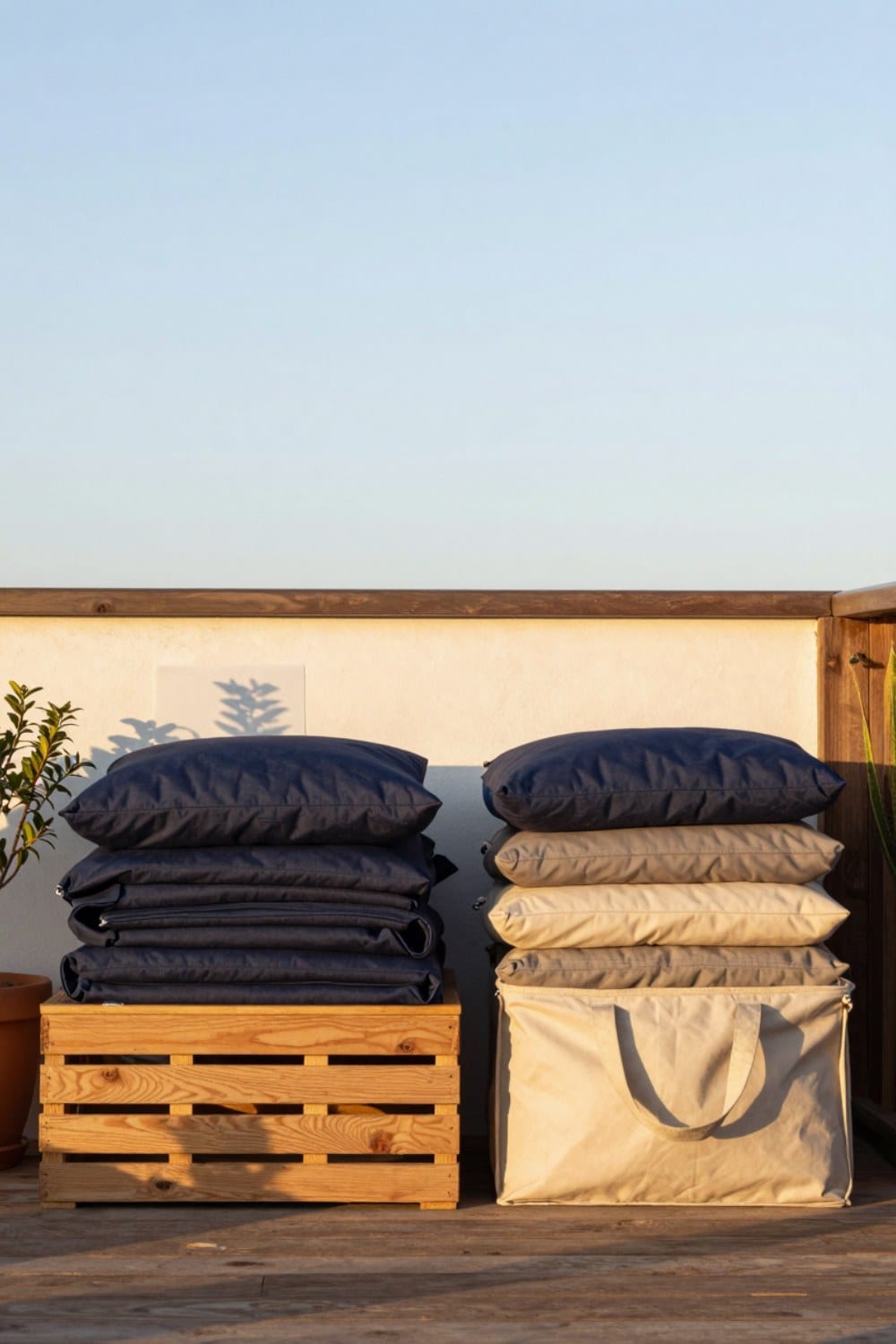
How to Store Outdoor Cushions for Winter So They Come Out Spotless
Mildew doesn't come from cold, it comes from moisture sealed inside the foam. Here's how to dry outdoor cushions completely and store them somewhere breathable, so they come out in spring looking like you just bought them.
Jan 15, 2026 · 9 min read