How to Choose Outdoor Cushions and Throws That Survive Fall
A buying guide to outdoor cushions and throws that actually survive a wet autumn -- how to judge fiber, fill, seams, and zips by hand before you spend on another set.


The cushion set that looked flawless on the showroom floor in April is very often the one you're carrying to the curb by the following October. Not because it was poorly made -- because nobody told you what fall actually does to outdoor fabric before it left the store.
I've replaced two full sets of patio cushions in this house, and pulled in three throws I regretted from the first cold, damp morning I left them outside. What follows isn't a shopping list. It's the handful of distinctions -- fiber, fill, seam, zip -- that separate a set going another five seasons from one already failing by Thanksgiving.
The One Distinction That Explains Most Disappointing Cushions
Almost every disappointing cushion traces back to the same unglamorous fact: how the color got into the fiber in the first place.
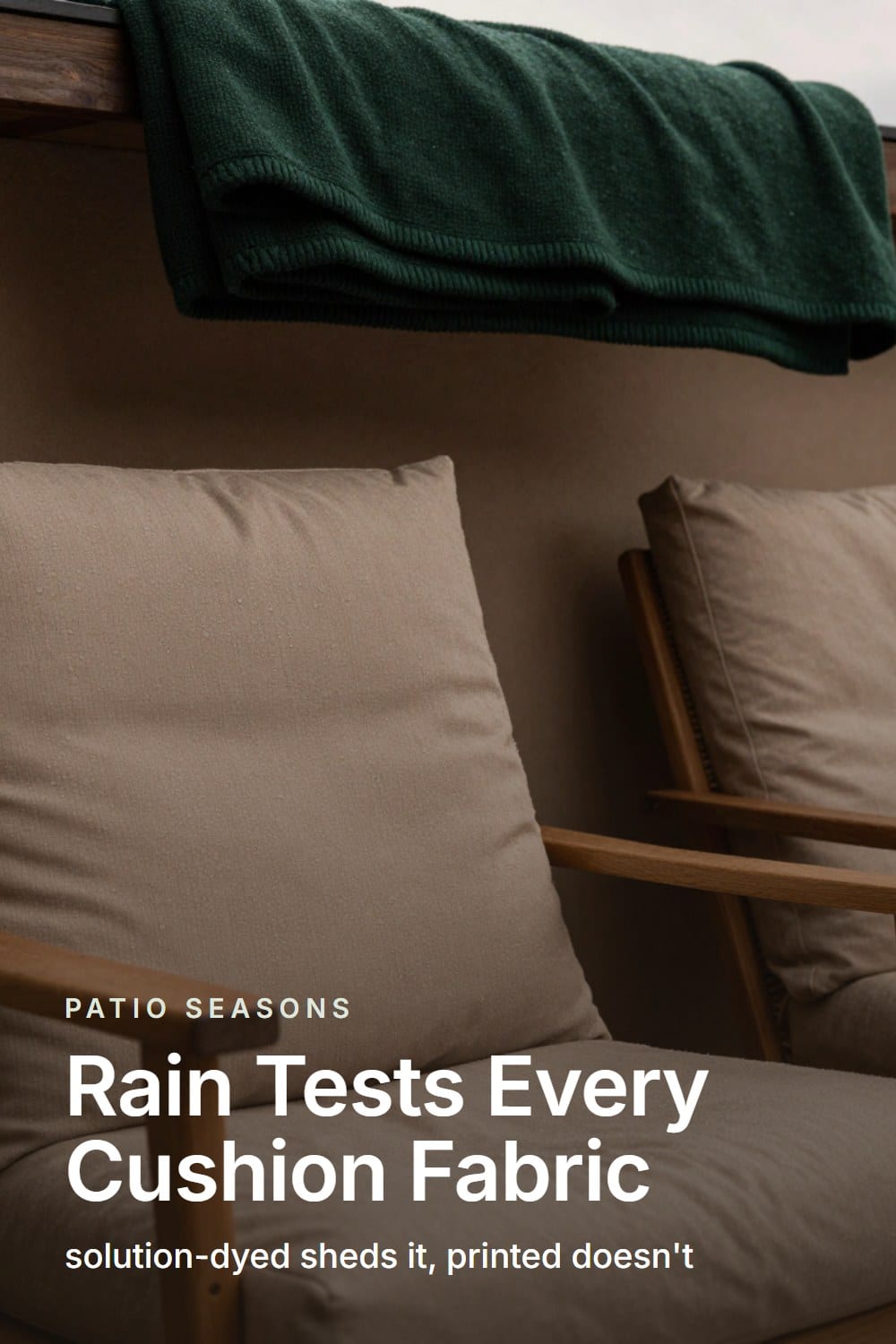
Solution-dyed acrylic has its color mixed into the liquid polymer before it's ever spun into a fiber, so the pigment runs all the way through every strand. As the sun works on it, the color fades slowly and evenly -- a softening of tone you'd need a photo from three summers back to really notice. Printed or piece-dyed polyester works the opposite way: the color sits on the surface of a finished fiber or is printed onto woven cloth after the fact. The sun-facing cushion on a two-seat bench goes chalky and blotchy while the shaded one beside it barely changes, and a pattern that looked crisp in the store starts looking like it's been left in a window too long -- because it has.
Here's the test to run before you look at anything else: check the underside of the fabric, or a spot tucked under a piping seam that's never seen light. If the color matches the face exactly, front to back, you're looking at a fiber dyed in solution. If the underside is noticeably paler, the color is sitting on top of the fiber, and it's only a matter of one hard season before that gap starts showing on the parts that actually see the sun.
Solution-dyed acrylicFades slowly and evenly because the color runs through the fiber -- the stitching and zip give out long before the fabric does.here's what actually happens →that's the whole story
Colour in solution-dyed acrylic goes all the way through the fibre rather than sitting on it, so it fades slowly and evenly instead of going patchy. Expect a gentle softening of tone over five or six seasons, which most people never notice. What ends a cushion is the stitching and the zip, both of which sit on the surface and take the full sun. Ask what the thread is made of; nobody does.
Upkeep: Brush them off. Bring them in when the season turns.
Fill Matters More Than the Cover
A handsome cover over the wrong fill will mildew from the inside while looking perfectly fine from across the patio.
Open-cell quick-dry foam and reticulated foam are built with connected air pockets that let water pass straight through and drain out the bottom -- sit on one five minutes after a shower and it's already mostly dry. Closed-cell foam and ordinary polyester wadding do the opposite: they absorb water and hold onto it, sealed inside a cover that dries on the outside while the inside stays wet for days. That's precisely the environment mildew needs, and by the time you can smell it, it's already established in the fill, not just on the cover you can see.
- Quick-dry open-cell foam -- drains fast, feels slightly firmer underhand, the standard for anything left outdoors year-round
- Reticulated foam -- an even more open structure, used in the better cushions built for constant weather exposure
- Closed-cell foam -- waterproof on the surface, but traps whatever water gets past a seam or a worn zip
- Polyester wadding -- soft and easy to manufacture, but holds moisture like a sponge once it's soaked through
Autumn Is the Fabric's Hardest Season, Not Summer
Summer is hard on color. Autumn is hard on everything else.
By October the sun sits low enough that a patio corner that got direct light all July is now in near-permanent shade, so anything sitting there stays damp for days instead of drying by noon. The nights get long and cool, which means heavier dew for longer. And there are leaves -- wet, half-decomposed leaves that land on a seat and sit there for a week if nobody's out to brush them off, releasing tannins a solution-dyed cushion shrugs off and a piece-dyed one holds onto as a stain. If you haven't already, transitioning the whole patio from summer to fall is worth doing before the textiles take the brunt of it.
Nothing rots in August. It rots in the damp weeks between the first genuinely cool night and the first hard frost, while most of the neighborhood is still thinking about the patio in summer terms. My own fall porch and patio routine starts with the furniture and the fabric, not the pumpkins, for exactly this reason.
The Throw Is the Highest-Leverage Object on the Patio
If you fix only one thing this fall, fix the throws before the cushions.
A good wool or heavy wool-blend throw takes on damp night air and gives it back by morning -- it doesn't feel wet to the touch, and it recovers its loft even after an accidental night left outside. An acrylic throw bought for softness alone does the opposite: it holds onto humidity, picks up the smell of a nearby fire pit and never quite lets it go, and starts pilling at every point of contact within a season. If evenings by the fire matter to your fall, pair good throws with a heat source that actually gets used, not just admired from the kitchen window.
A throw folded over the back of every other chair reads as an invitation, not a decoration -- it tells a guest the seat is meant to be used on a cool evening, not just photographed. That's worth more than another round of new cushions, honestly.
How to Judge One in Your Hands
You can tell most of what you need to know about a cushion before it ever leaves the store, if you know where to look.
- Run a finger along the seam -- it should be piped and double-stitched, not a single pass that frays the first time it flexes
- Check the zip -- nylon coil slides freely and shrugs off grit and salt air, while metal teeth seize the first time they meet any corrosion
- Look for tie-downs at the back corners -- a cushion that shifts in wind is a cushion that gets rained on sideways
- Ask whether the cover comes off entirely for washing, separate from the fill -- a cover you can't remove is a cover you'll eventually just replace
- Ask how long the fabric range has been in the line -- a color still sold three years running is a proxy for a range built to last, not a closeout
Solution-Dyed Acrylic or Rope Weave: What Actually Survives a Wet October
Cushion fabric and rope-weave seating behave differently once the weather turns -- neither one is wrong, but they ask different things of you.
| Solution-dyed cushions | Rope-weave seating | |
|---|---|---|
| Shedding water | Sheds surface moisture fast when paired with open-cell fill; the fabric itself doesn't absorb | Sheds water almost entirely on its own -- the woven rope has nowhere for water to pool |
| Drying time | Dry to the touch within an hour of a shower, given the right fill | Dries within minutes once the rain stops; there's no fill to hold moisture |
| Mildew risk | Real, but almost always a fill problem rather than a fabric problem | Very low -- UV-stable rope doesn't rot, though the frame beneath it can trap water if drainage is poor |
| Fading | Fades slowly and evenly if solution-dyed; badly if it isn't | Colorfast for years; the rope itself rarely fades noticeably |
| Feel on a cold evening | Warmer to sit on immediately, especially with a throw layered over it | Stiffens in cold, damp weather and takes a season to soften back up in spring |
| Upkeep | Brush off debris, bring covers in overnight once frost is close | Inspect the crossing points each spring for fuzzing; otherwise leave it alone |
The verdict: Rope weave is the lower-maintenance seat through a wet fall; solution-dyed cushions are the more comfortable one. Most patios I've seen do best with rope or wicker seating layered with genuinely good cushions and a wool throw -- letting each material do what it's actually good at.
Common Mistakes That Shorten a Cushion's Life
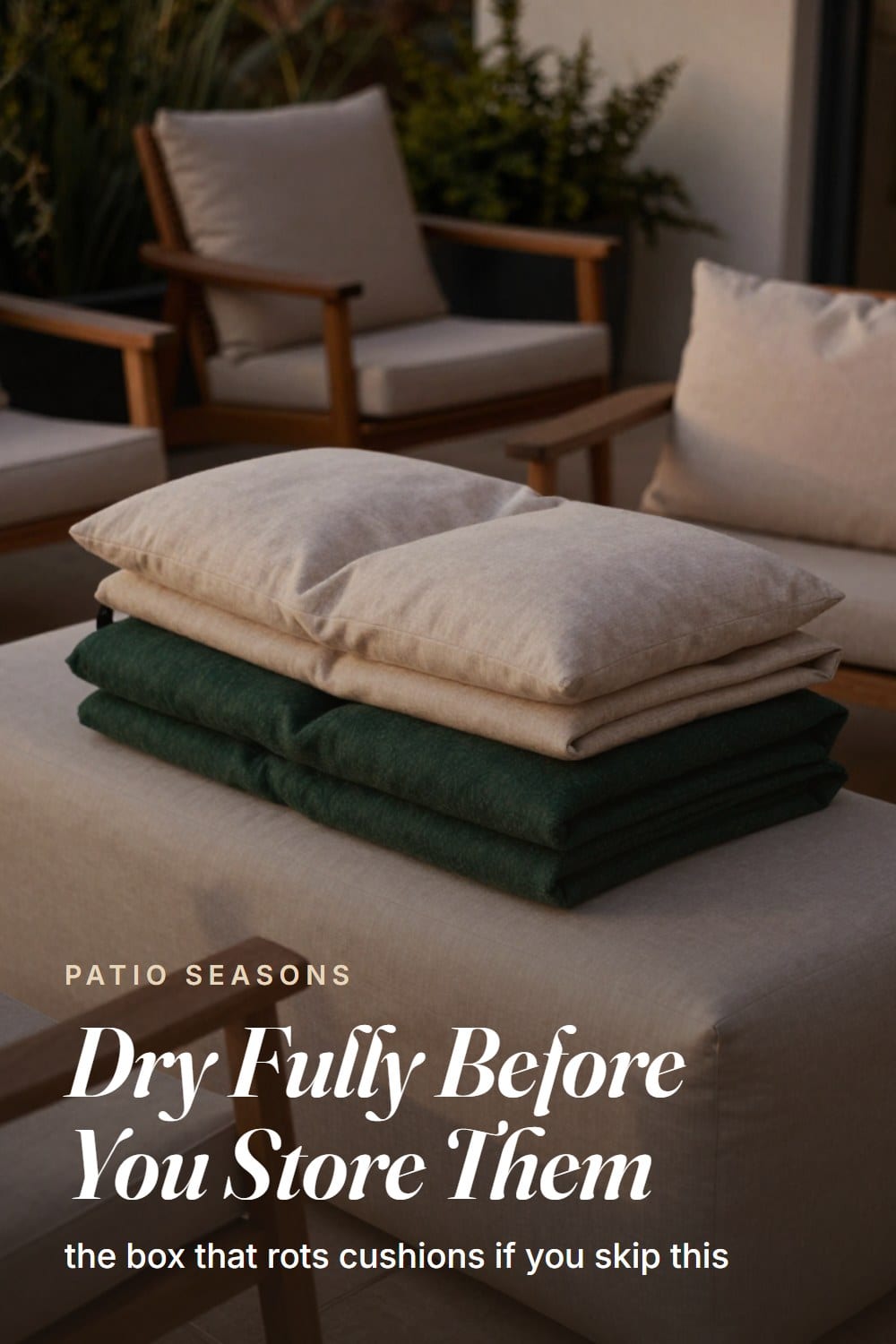
- Storing damp cushions in a sealed bin or cushion box -- the box becomes a slow-motion mildew chamber instead of protection
- Telling yourself 'just one more weekend' outside three weekends running, right through the wettest part of the season
- Washing covers with a heavy detergent or fabric softener that breaks down the water-repellent finish
- Stacking cushions flat on cold concrete or decking with no airflow underneath them
- Trusting a loose tarp over furniture without checking what's happening underneath it after a week of rain
Caring for Covers and Throws Through the Season
The furniture underneath asks for less than the textiles do. A teak frame that's been out all summer doesn't need protecting from an autumn soaking the way a cushion does -- it silvers further and keeps going. The materials library's teak page covers exactly how that happens, if you want to see the whole process before you worry about a single grey patch.

TeakSilvers further through a wet fall -- the grey is weather doing its job, not damage to fix.here's what actually happens →that's the whole story
Left alone, teak turns a soft silver-grey within a year — evenly, if it gets even light. This is oxidation of the surface only; the wood beneath is unchanged and its natural oils keep it from rotting. Oil it if you want the honey colour back, and understand you are then committed to oiling it every spring. Grade A (heartwood, tight grain, no knots) silvers evenly; lower grades go blotchy. Nothing about the greying shortens its life.
Upkeep: One afternoon a year, at most. None, if you like grey.
Worth Getting Right Once
A solution-dyed cushion set with a fully removable, washable cover
The color runs through the fiber and the cover comes apart from the fill entirely, so both age and clean the way they're supposed to, season after season.
A well-made polyester-blend cushion set with a snug zip cover
A tightly woven blend with a properly finished zip and seam holds up several seasons if you bring it in when the weather turns, even without a fully removable cover.
The Fabric Label Decoder
The printable is being finished. It will live here, free, with no sign-up wall.
Frequently asked
How can I tell if a cushion fabric is solution-dyed without asking the salesperson?
Do I need to bring cushions inside every night once fall arrives?
Is a wool throw really worth it over a soft acrylic one?
What's the biggest mistake people make storing cushions for winter?
Sarah Whitmore
she keeps the teak, she oils it in spring
Sarah has furnished the same porch three times and finally stopped. She writes about what actually survives a decade outdoors — which wood silvers, which fabric fades, and which inexpensive piece quietly reads the same as the expensive one.
SarahMore from this corner
 Patio Living
How to Protect Teak Furniture in Winter (What Actually Needs Doing — and What Doesn't)
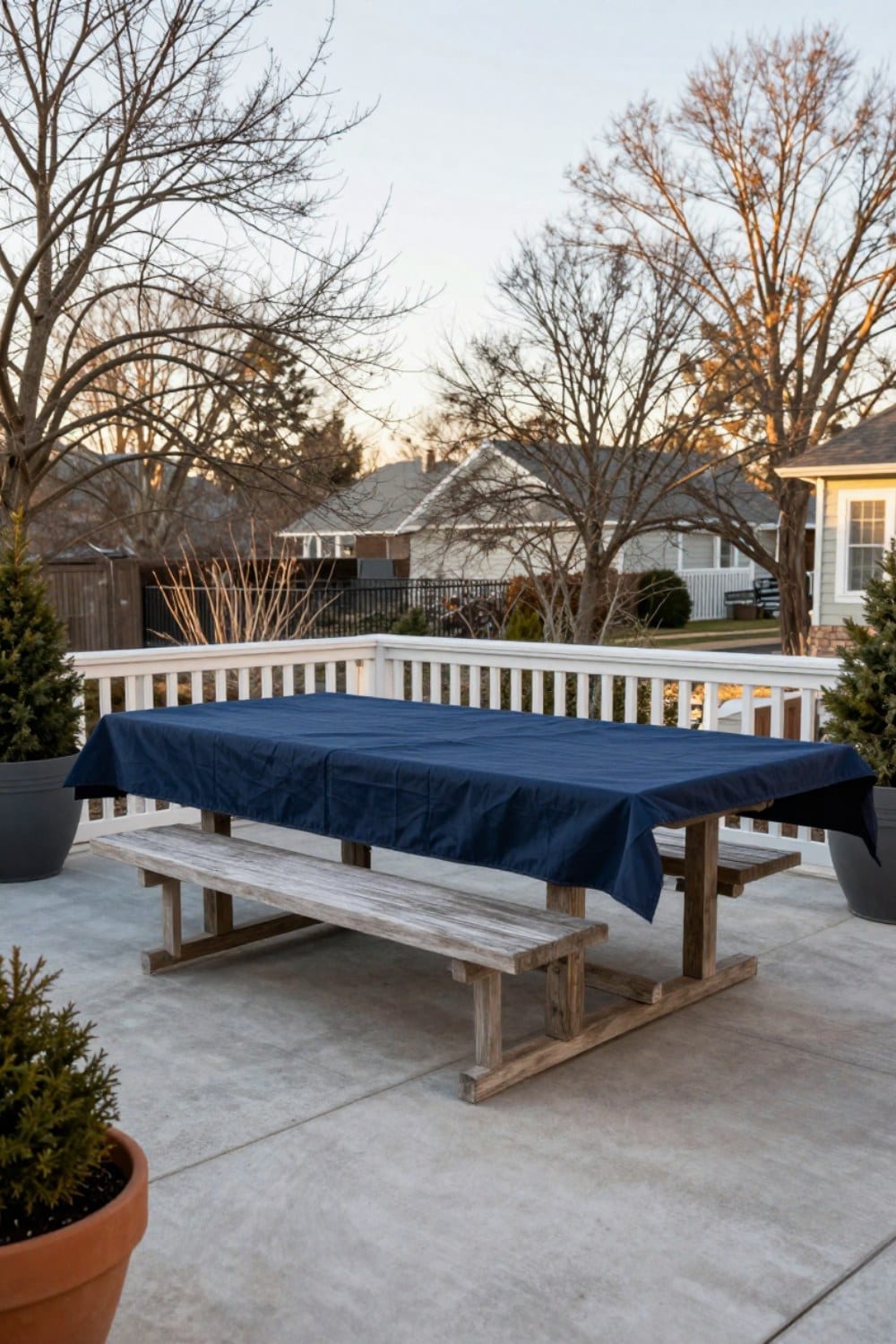
Teak has a reputation as the fussy, high-maintenance wood on the patio. It's actually the opposite -- one of the only materials built to winter outside without a second thought, as long as you stop treating moisture and cold as the same threat.
Oct 30, 2026 · 10 min read
 Patio Living
How to Winterize Patio Furniture the Right Way (So It Comes Out Perfect in Spring)
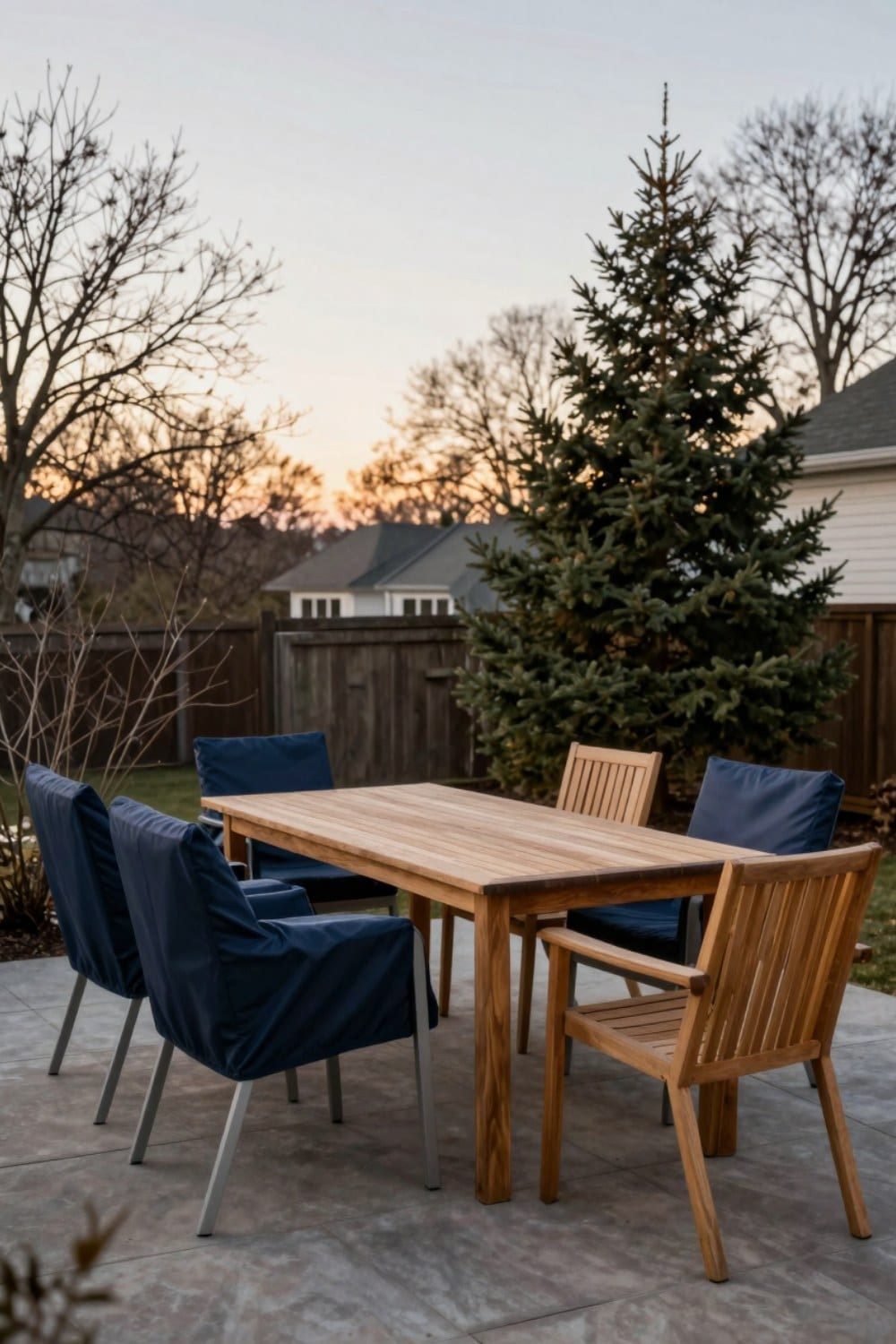
Winterizing patio furniture isn't complicated, but it does ask you to treat every material differently. Here's the material-by-material sequence -- clean, dry, cover or store, elevate -- that keeps teak, aluminium, and wicker looking right through to spring.
Jan 24, 2026 · 11 min read
 Patio Living
How to Store Outdoor Cushions for Winter So They Come Out Spotless
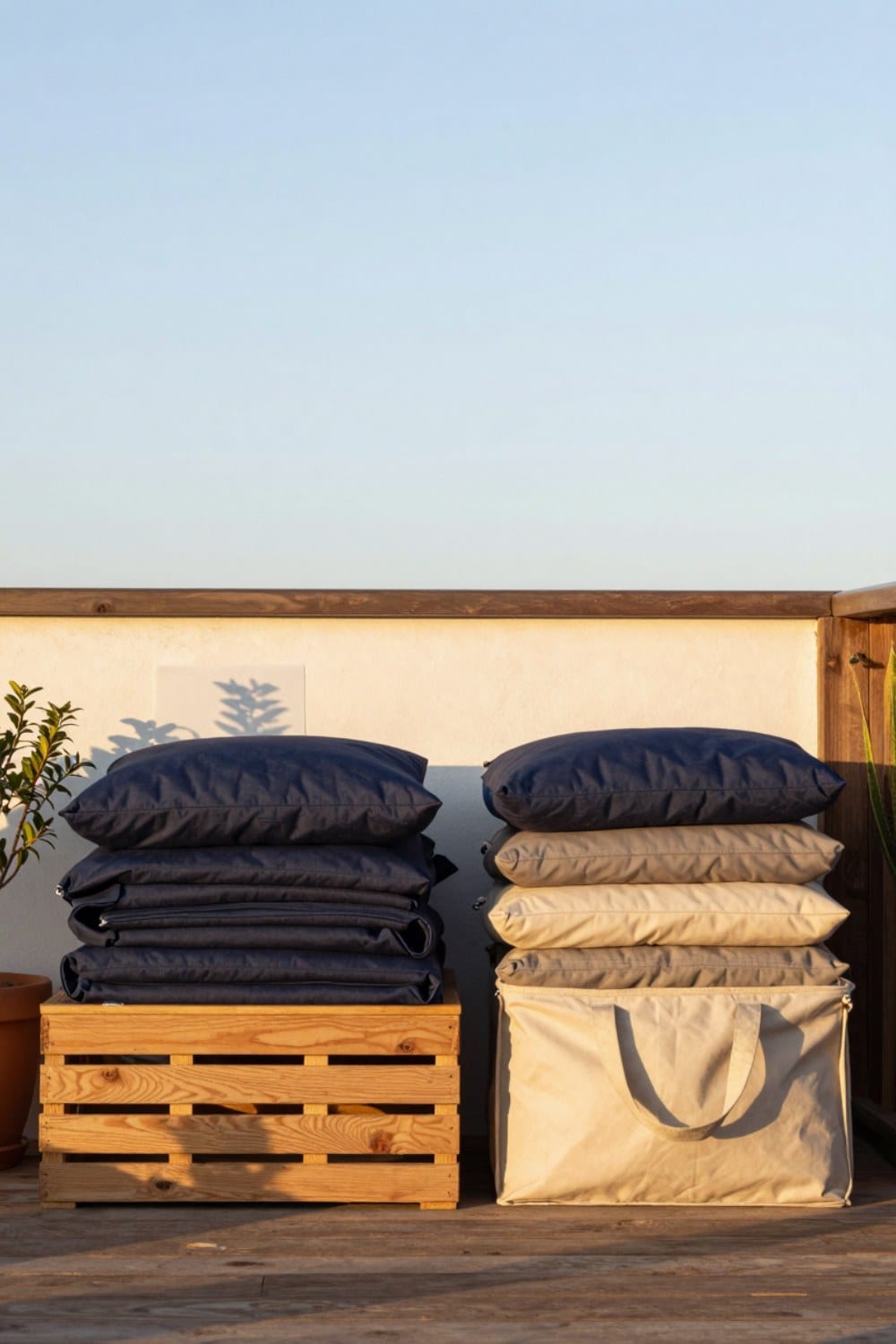
Mildew doesn't come from cold, it comes from moisture sealed inside the foam. Here's how to dry outdoor cushions completely and store them somewhere breathable, so they come out in spring looking like you just bought them.
Jan 15, 2026 · 9 min read