How to Plant Fall Porch Containers That Last Into November
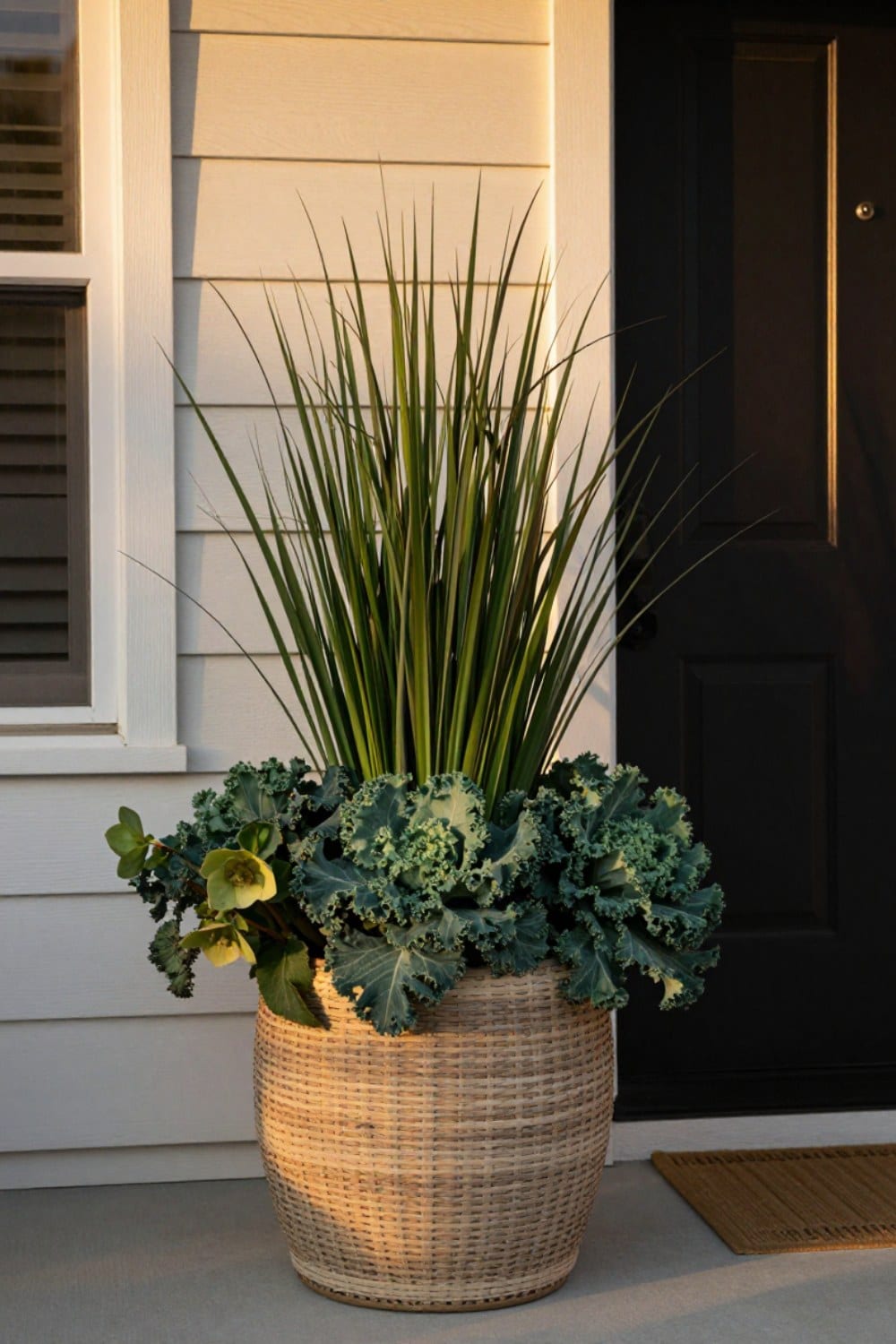
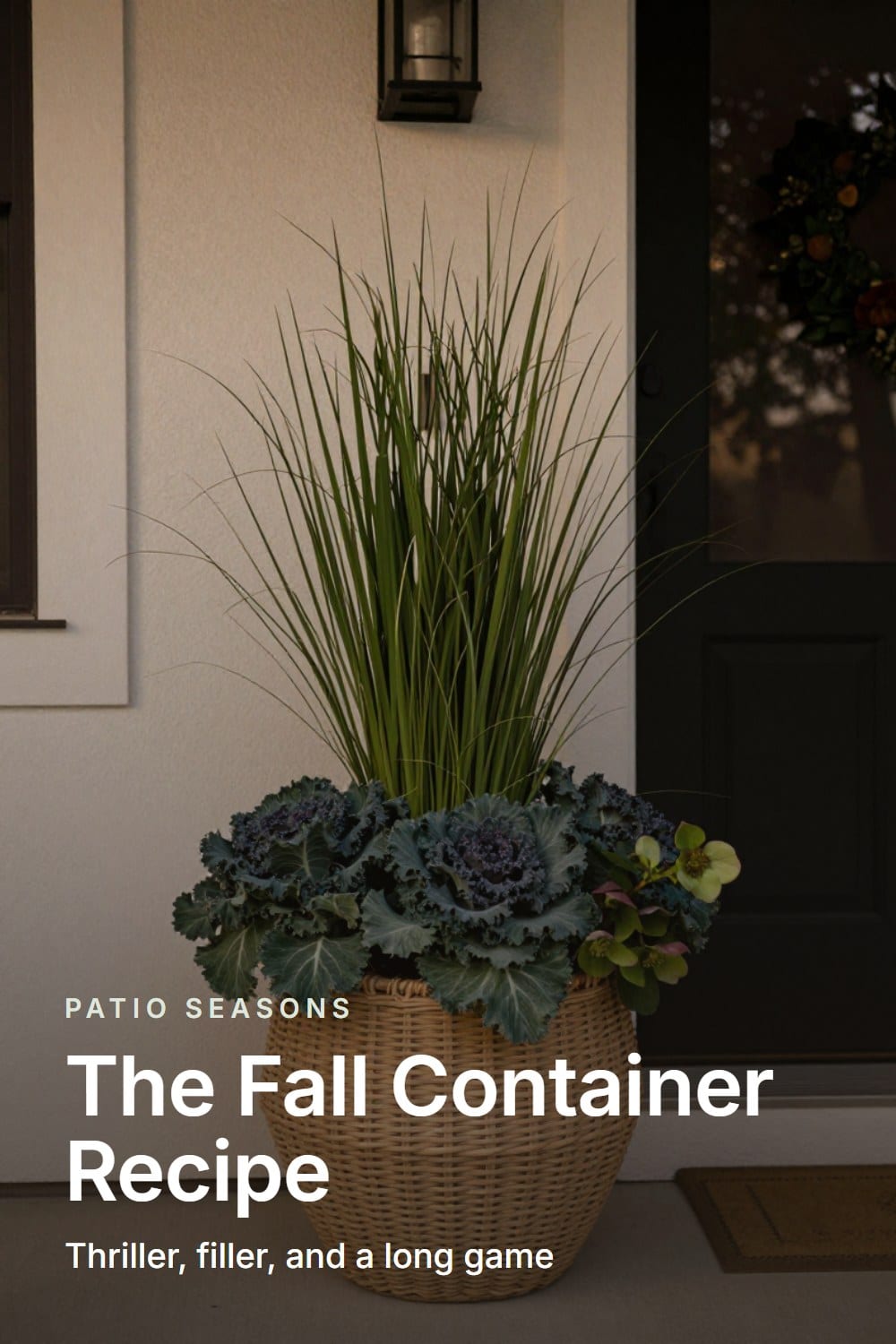
A fall container is a recipe, not a pile -- thriller grass, kale filler, and hellebores planted now for a payoff in late winter. Here's how to build one that still looks deliberate come November.

By the second week of October, most porches around here have gone through exactly one look: pumpkins arranged out front, mums tucked in wherever there was space, and maybe a container or two of whatever the garden center had stacked by the door that week. It photographs fine. It rarely survives past Halloween.
The porches that still look pulled-together in November didn't get there with more mums. They got there because someone treated the container like a recipe instead of a pile -- height, body, and something planted underneath for the season after this one. That's the entire difference, and it's a lot simpler to build than it looks once you've done it a single time.
A Fall Container Is a Recipe, Not a Pile
Every fall container that's still holding its shape in November is built from three things working together, not one showy plant surrounded by filler. A thriller for height. A second layer for body and color. And something planted now that isn't even the point yet -- it's there for late winter, long after the thriller has been pulled and composted.
Skip any one of the three and the container reads thin by mid-autumn, no matter how full it looked the day you planted it. Get all three in, and it keeps earning its spot on the step for months, not weeks.
If you came here for the styling side of the porch -- how to arrange pumpkins and mums so the whole thing reads as intentional rather than assembled -- that ground is already covered here. This is about what's actually growing in the container underneath all of it: the plants still doing their job once the mums are cut flowers running out a clock.
Start With the Thriller: a Tall Ornamental Grass
Don't reach for a mum as your tallest element. A mum is a mound, and a mound at the center of a container reads flat no matter how full it gets. The thriller's entire job is height and movement, and nothing through October and November does that better than a tall ornamental grass.
Fountain grass is the forgiving choice -- arching, soft-plumed, easy to find by late summer, and it holds its shape in the kind of wind that would flatten a stiffer stem. Ruby grass gives you the same movement in a warmer burgundy-red that plays beautifully against kale's blue-green. Maiden grass and Indian grass grow taller and more upright, and they're worth the reach in a larger container where you actually want height, not just texture at knee level.
None of these grasses are hardy where the ground genuinely freezes, so plan on the grass as a seasonal player. It carries the container through fall and comes out with the rest of the seasonal planting once real winter arrives -- it isn't meant to overwinter in the pot.
The Filler That Reads as a Second Thriller: Kale and Cabbage
Ornamental kale and cabbage do two different jobs depending on which type you buy, and most people only ever plant the one they recognize.
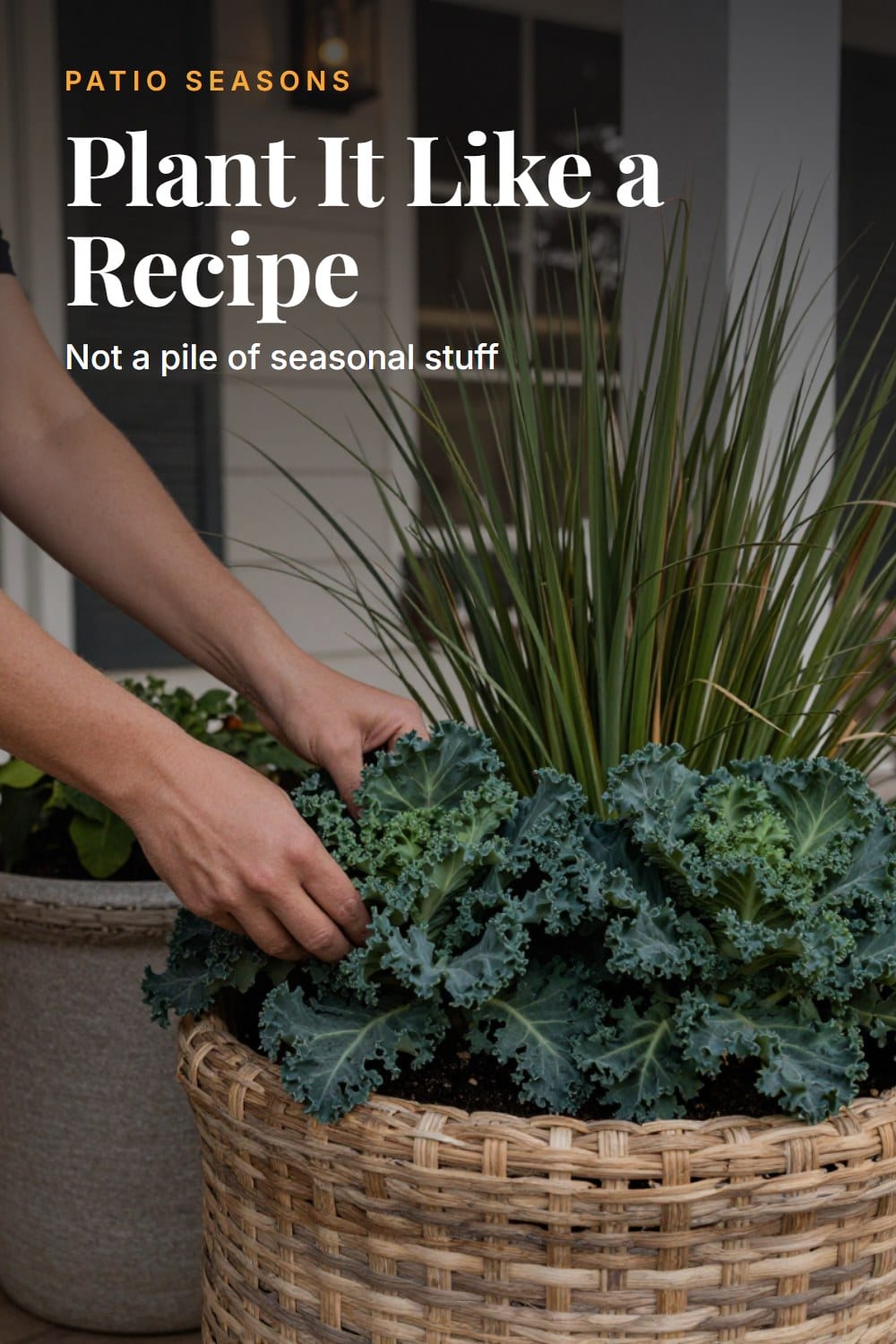
Upright varieties -- look for 'Redbor' by name at the nursery -- grow tall and deeply ruffled, almost fern-like, closer to a second thriller than a filler. Planted across the container from the grass, they give you two centers of height instead of one, which is what actually makes a container look full instead of crowded.
Rosette types are what most people picture when they hear ornamental kale: the low, tight rosette in white, pink, or deep purple. These are your true filler, and they get more interesting as the nights cool, since the color in kale and cabbage deepens with cold instead of fading from it. Both forms shrug off a mild frost without any protection -- more than you can say for most of what was in the container back in September.
Planting the Container, Step by Step
Once you've got the grass, the kale, and a couple of hellebores in hand, the planting itself takes less time than choosing which pot to use. Here's the order that actually holds up.
Check the drainage before you plant anything
Set the grass off-center, not in the middle
Ring the base with upright and rosette kale together
Tuck hellebores into the same container for the long game
Water it in deeply, then place it where you'll actually see it
Design Principle: Contrast Texture, Not Just Color
The single biggest upgrade in fall container design has nothing to do with color and everything to do with contrast in leaf size, shape, and texture. Plants that differ from each other in all three read as composed. Plants that only differ in color read as matchy, and matchy reads as try-hard from porch distance.
This is exactly why cabbage next to grass works as well as it does: a broad, still, rosette-shaped leaf sitting beside a fine, moving, blade-shaped one. Neither is competing with the other for the same visual job, so the eye reads the pairing as considered rather than repetitive.
- Broad and still (cabbage or kale) beside fine and moving (any ornamental grass)
- Glossy (a small evergreen sprig, if you're tucking one in) beside matte (hellebore foliage)
- Upright ('Redbor' kale, tall grass) beside low and spreading (rosette kale)
Cast aluminiumA cast-aluminium planter won't crack the way glazed ceramic can when water freezes inside it overnight -- worth the switch if you're planting before the ground has finished cooling.here's what actually happens →that's the whole story
Aluminium cannot rust, which removes the failure that ends most metal furniture. What it does instead is chalk: the finish oxidises to a fine white powder that comes off on your hand and dulls the colour. A wash and a coat of automotive wax restores it. It is also light — genuinely light — which is a virtue on a deck and a liability in a gale.
Upkeep: A wash and a wax each spring. Something to tie it down.
Common Mistakes That Undo a Good Fall Container
Most fall containers don't fail from neglect. They fail from a handful of small, repeatable choices made at the garden center or on planting day.
- Choosing color first and texture never -- three plants in three shades of the same tone still reads as one flat note from the sidewalk
- Planting hellebores as an afterthought in November, once the ground has already started to cool and the roots don't have time to settle before real cold arrives
- Skipping the drainage check because the container 'always drains fine' -- until a fall storm proves otherwise
- Assuming rain is doing the watering for a container that actually sits under a roof overhang all season
Where to Place Them So the Season Doesn't Fight You
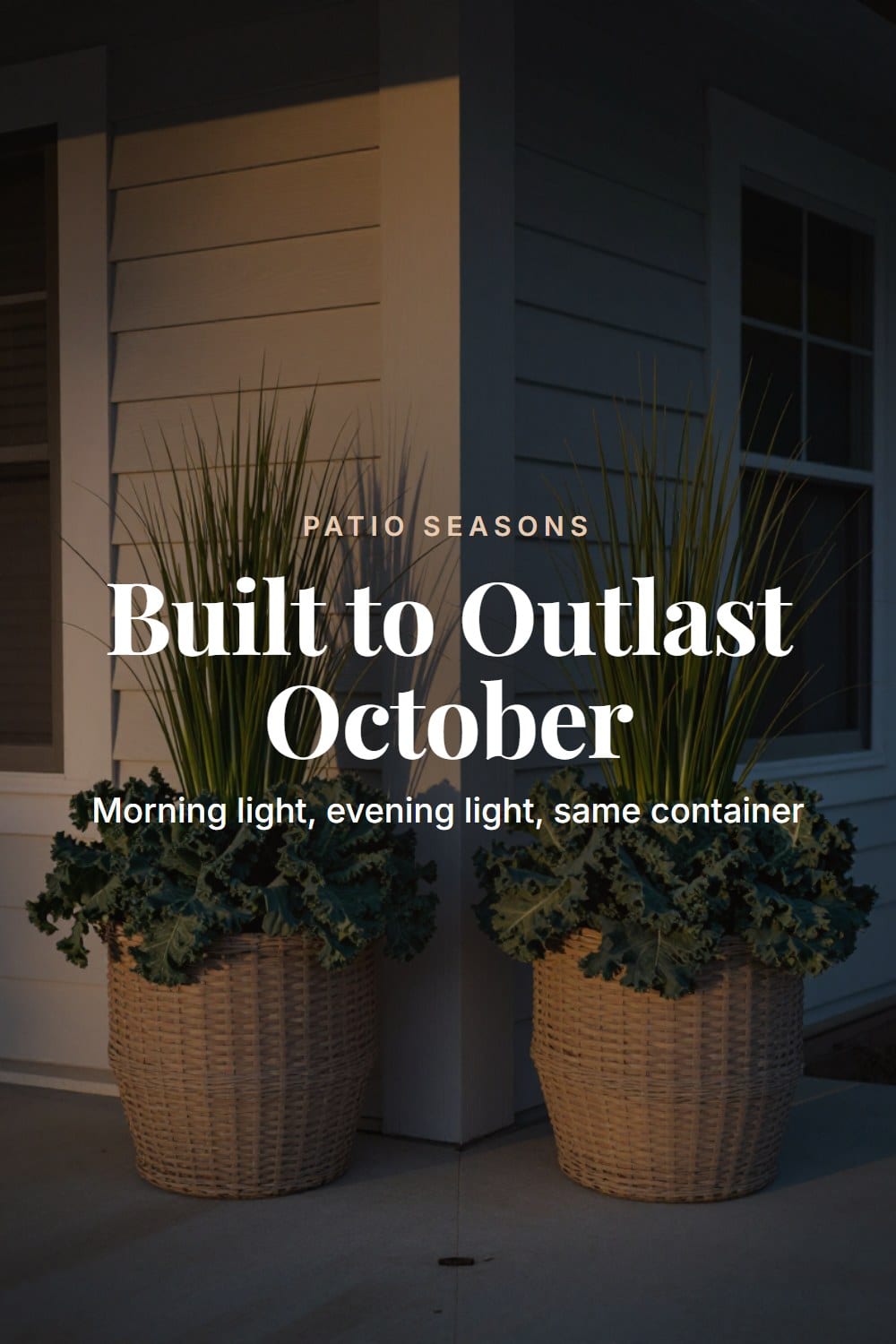
A container built like this earns its keep by being seen, so give it a spot you actually pass -- flanking the front door, at the top of the steps, somewhere in the sightline from where you already sit in the evening. The rest of the porch's fall styling should build around the containers, not compete with them; treat the planting as the one element that doesn't get swapped out with the season.
If you're moving the whole space over from a summer setup, the containers are one of the few things that should already be in place before you touch anything else. Transitioning a patio from summer to fall works best when the planting is settled first and the seasonal styling gets layered in around it, not the other way around.
The care calendar
The same container, tracked from planting to its second act.
- October
Plant the thriller grass, kale or cabbage filler, and hellebores together. Water in deeply and place it where you'll pass it daily.
- November
Watch for the first hard freeze. Pull the grass once it's gone from crisp to collapsed; leave the kale, cabbage, and hellebores in place -- all three tolerate real cold.
- December-January
Check weekly for dry soil, especially under eaves or a porch roof. Kale and cabbage color keeps deepening through the cold; hellebore foliage stays put and unremarkable.
- February-March
The hellebores bloom -- the payoff for planting in October instead of waiting. Little else on the block is flowering yet.
The Fall Container Recipe Card
The printable is being finished. It will live here, free, with no sign-up wall.
The Long Game: What You're Actually Planting For
It's worth saying plainly: in October, the hellebores tucked into the container are the least impressive thing in it. They'll sit there, modest and green, doing nothing while the grass moves and the kale colors up around them.
That's exactly the trade you're making. By the time the grass has been pulled and the kale has finally given out to a real freeze, the hellebores are just getting started -- and they'll be blooming in late winter, in the same container, when almost nothing else outside your door is doing anything at all. Plant for November and you get a good fall porch. Plant for February too, and the same container is doing two jobs for a single planting.
Frequently asked
How cold can ornamental kale and cabbage actually tolerate?
When should I plant hellebores if I want them blooming in late winter?
Do fall containers need regular watering if it's raining?
Can I still use mums somewhere in the same container?
Sarah Whitmore
she keeps the teak, she oils it in spring
Sarah has furnished the same porch three times and finally stopped. She writes about what actually survives a decade outdoors — which wood silvers, which fabric fades, and which inexpensive piece quietly reads the same as the expensive one.
SarahMore from this corner
 Patio Living
How to Protect Teak Furniture in Winter (What Actually Needs Doing — and What Doesn't)
Teak has a reputation as the fussy, high-maintenance wood on the patio. It's actually the opposite -- one of the only materials built to winter outside without a second thought, as long as you stop treating moisture and cold as the same threat.
Oct 30, 2026 · 10 min read
 Patio Living
How to Winterize Patio Furniture the Right Way (So It Comes Out Perfect in Spring)
Winterizing patio furniture isn't complicated, but it does ask you to treat every material differently. Here's the material-by-material sequence -- clean, dry, cover or store, elevate -- that keeps teak, aluminium, and wicker looking right through to spring.
Jan 24, 2026 · 11 min read
 Patio Living
How to Store Outdoor Cushions for Winter So They Come Out Spotless
Mildew doesn't come from cold, it comes from moisture sealed inside the foam. Here's how to dry outdoor cushions completely and store them somewhere breathable, so they come out in spring looking like you just bought them.
Jan 15, 2026 · 9 min read