Dark Green Bedroom Ideas: Going Forest Green Without Losing the Light
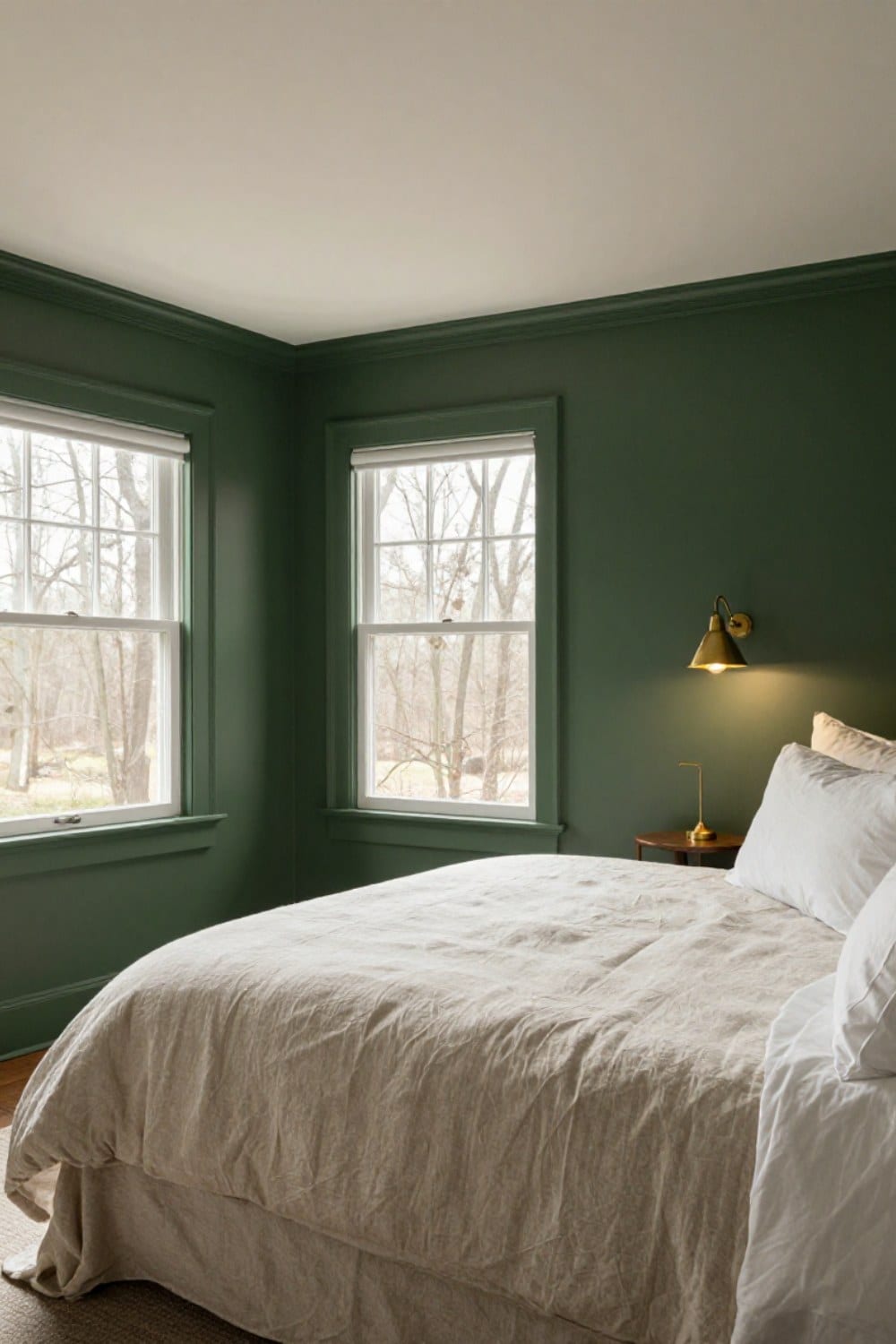
Forest, bottle and hunter green can make a bedroom feel wrapped and calm instead of gloomy. Drenching versus one dark wall, the right sheen, lamps at 2700K and what goes on the bed.

This post contains affiliate links. As an Amazon Associate we earn from qualifying purchases — at no extra cost to you.
Dark green bedroom ideas usually start with a worry, not a color. You love the forest-floor mood in the photos. Then you picture your own room at 4 p.m. in February and wonder if you're about to paint yourself into a cave.
I had the same worry before I painted our guest room. Two winters later it's the room visitors ask for. The green wasn't the secret. A handful of decisions about drenching, sheen and lamps did the work, and they're all below.
This is the moody end of the green family: forest, bottle and hunter. If you'd rather start softer, the sage green bedroom guide is the calmer place to begin.
Does a dark green bedroom feel smaller?
Sometimes it reads smaller. More often it reads cozier, and the reason is the corners.
A pale wall tells you exactly where the room stops. You see the line at the ceiling, the seam in every corner, the whole box. Deep green softens those edges until they sink into shadow. Your eye quits measuring, and an eleven-by-twelve-foot guest room starts to feel like somewhere you're tucked into rather than somewhere with four walls.
The catch is light. A north-facing room with one window and a stark white ceiling can feel like a box with the lid on. Every section below is aimed at that one problem.
Our guest room has a single window, and in January the light through it is the color of dishwater. After the first coat dried patchy I was sure I'd made a mistake. By the third coat I'd stopped worrying. By the first lamp-lit evening I was a convert.
Pick the green by its undertone
Forest, bottle and hunter get used as if they were one color. They aren't. Forest leans toward black with a breath of blue, like a spruce standing in shade. Bottle is warmer and a little glassy, with brown tucked in. Hunter is the most saturated of the three and the most traditional, closer to a library wall or a good riding jacket.
Let your wood and floors decide. Oak, walnut and cherry furniture glow against a green with some warmth in it. Cool gray floors and white painted furniture sit better with a blue-leaning forest. If the green you keep pinning looks yellow-brown in the photos, you may really want olive. If it looks bright and a touch blue, that's closer to jade, the shade Pinterest's 2026 palette names, softer than emerald and richer than sage, part of a wider move from muted minimalism toward nature greens.
I don't name specific paints here. The sampling method in the sage paint roundup works the same way for dark greens. Paint a sample at least two feet square on two different walls, then look at it in morning light, at 4 p.m. and with the lamps on at night. A dark green changes more across a day than any other color I've lived with.
Drench the whole room or paint one dark wall
Color drenching means the walls, trim, baseboards, ceiling and often the door all get the same green, or the ceiling goes one shade darker. With no contrast line anywhere, the room becomes one continuous shape. That's the cocoon effect, and it's why drenched bedrooms photograph so well.
One dark wall, usually behind the bed, is the gentler version. The ceiling stays bright, daylight bounces around as usual, and you still get drama where you look most. The tradeoff is that the room feels less wrapped, and a single wall can read like a stage backdrop if nothing else in the room picks up the color. The green accent wall guide covers paint, limewash, panelling and wallpaper for that route.
My rule is simple. Drench a room you mostly sleep in. Choose one wall if the room doubles as an office, or if you need daylight to read by. And if you can't face painting a ceiling, drench the walls and trim, then take the ceiling a step lighter, a green-tinted cream. It still hushes the corners.
Matte walls and eggshell trim do the quiet work
Sheen matters more with dark colors than with white. A glossy dark wall shows every roller mark, every patched nail hole and a bright smear of reflection from each lamp. A matte wall swallows all of that and gives you the velvety surface that makes deep green look rich.
So go flat or matte on the walls, flat on the ceiling, and eggshell or satin on the trim and doors. Using the same color in a different sheen is what keeps a drenched room from looking like one flat slab. The trim catches a little light, the walls absorb it, and you get depth without a single contrasting color.
Matte does mark. The wall behind a headboard will show where pillows and shoulders rub. Look for a scrubbable matte formula, keep a labeled jar of leftover paint for touch-ups, and stick felt pads on the back of the headboard so it stops scuffing the wall.
How to light a dark green bedroom
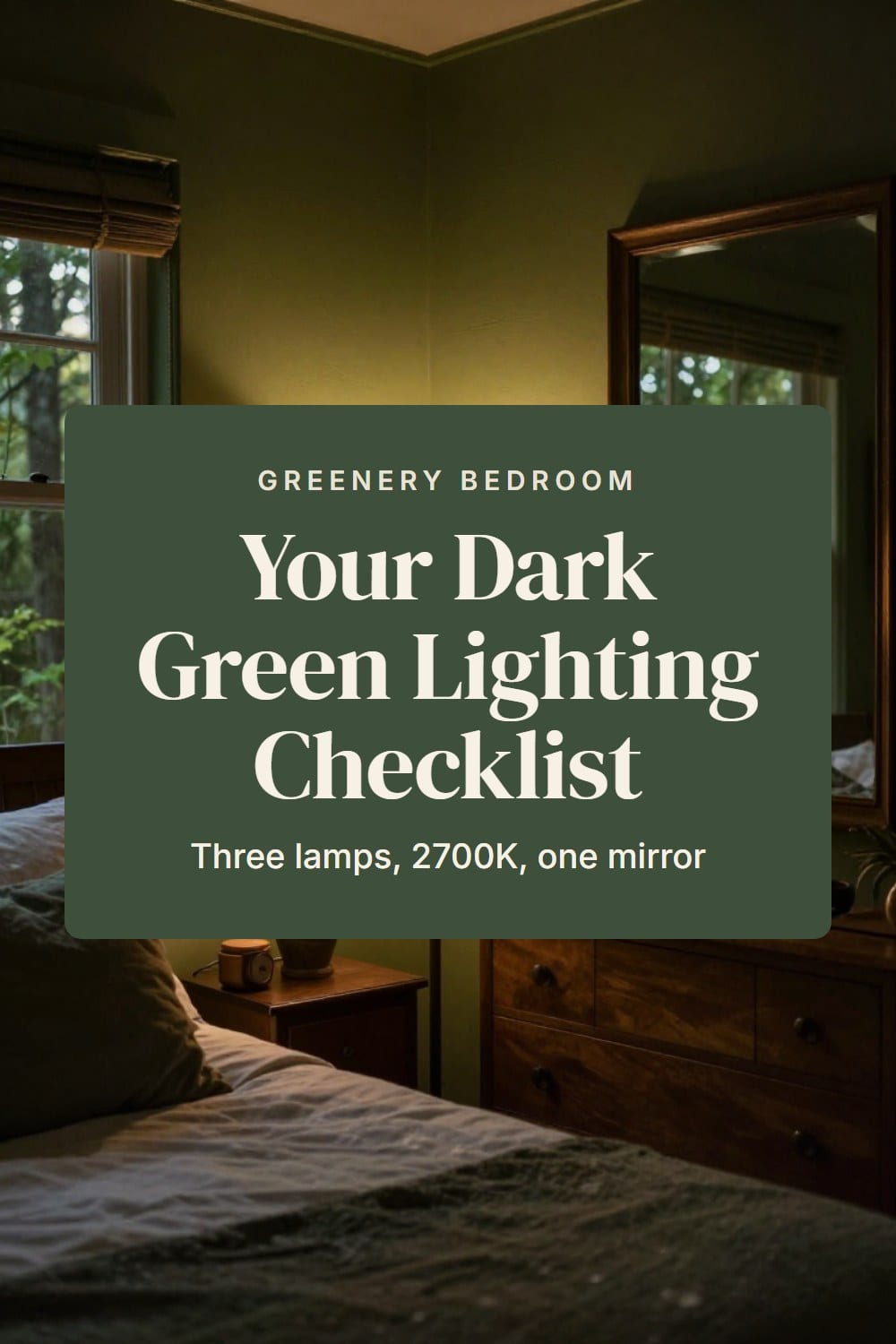
Plan on three lamps, and don't count the ceiling light. A single overhead fixture turns a dark room into a waiting room. Lamps at different heights make pools of light, and a deep green wall drinks those pools in and glows.
My setup is a lamp on each nightstand and a third, a little taller, on the dresser. Linen or cream shades, because dark shades swallow half the light. I use 800-lumen bulbs in the bedside pair and a softer 450-lumen in the third.
Bulb temperature matters more than brightness. Keep every bulb at 2700K. Warm light pulls a dark green toward something rich and a little mossy. Anything at 4000K or above turns it flat, bluish and slightly institutional.
Then the mirror. Hang a big one on the wall opposite the window, angled away from the bed, and it doubles the daylight coming in. An aged brass or gilt frame earns double duty against the green. A plug-in dimmer on one lamp lets you drop the room from reading to sleeping without touching a switch.
What goes on the bed
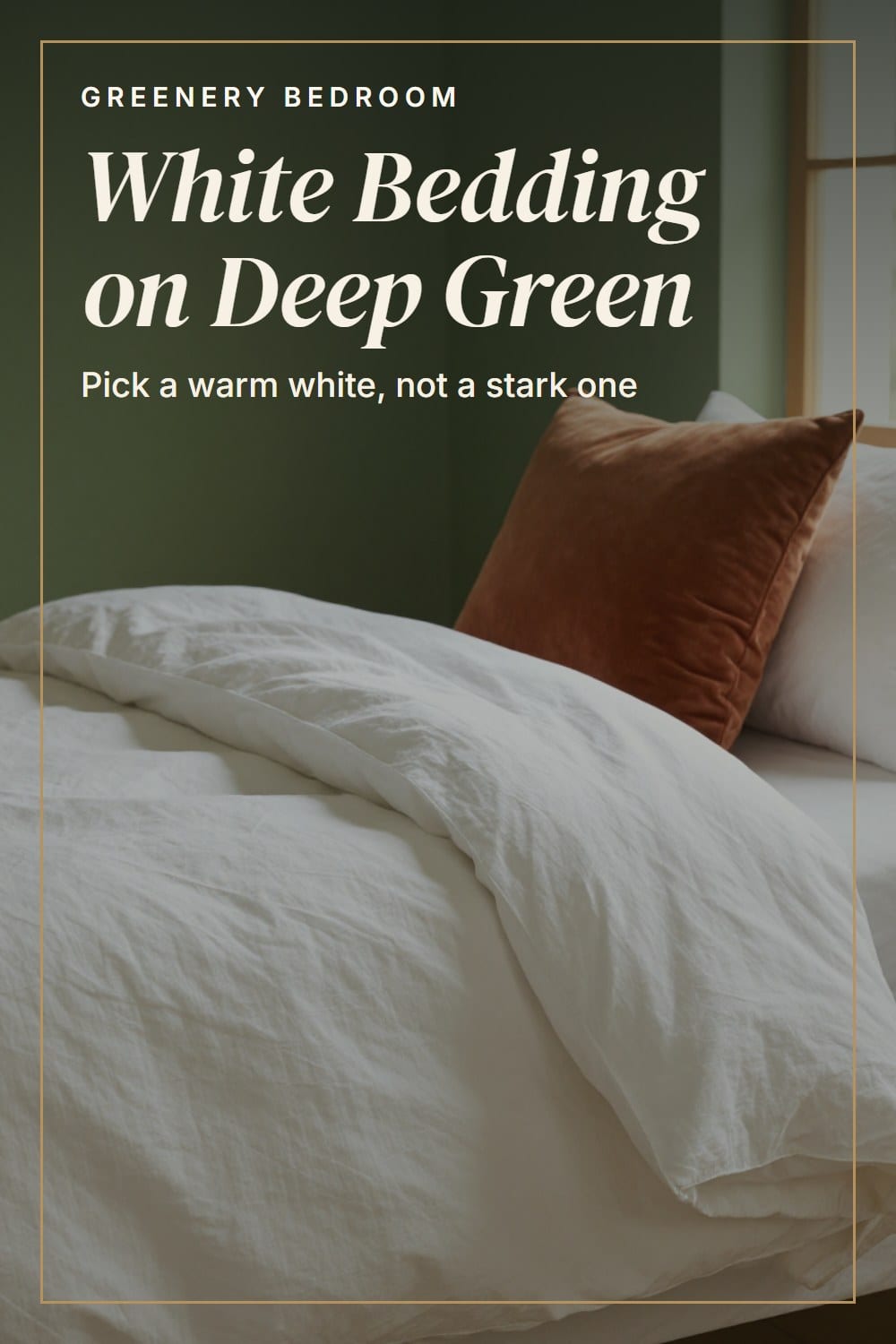
White is the classic, and it still works. Crisp white sheets and a white duvet against forest green look deliberate and a little hotel-like. Pick a warm white, though. A stark optical white looks cold next to the green and shows every shadow.
Oatmeal is my everyday pick. It's softer, closer in value to the walls, and the room feels relaxed instead of staged. Washed linen in the 150 to 185 GSM range gets those slept-in creases that make green look lived-in.
Then add warmth. A rust or burnt-orange throw across the foot of the bed, a camel velvet pillow, an ivory quilt folded in thirds. Rust sits across the color wheel from green, so it brings life without shouting. It's the same logic as the sage green and terracotta bedroom, only deeper. If you'd rather go fully crisp, the green and white bedroom post takes the lighter route.
Keep patterns to two. One stripe or check, one solid. Dark green already has plenty to say.
Wood, brass and the rest of the room
Warm wood is the best friend of a dark green room. Walnut, oak or cherry nightstands glow against it. Black painted or very dark furniture just disappears, and the room loses its edges in a way that stops being cozy.
For metal, choose aged brass, unlacquered if you like patina. Matte black hardware sinks into the green. On the floor, a cream or oatmeal wool rug with a low pattern lifts the whole room. A dark rug under a dark bed in a dark room is where the cave worry comes true.
Curtains are a real choice. Panels in the wall color make the window vanish, a lovely drenched effect when the view is nothing special. In a one-window room I'd rather hang ivory or natural linen and let them catch whatever daylight shows up.
A trailing plant on the dresser looks right against deep green. It won't clean your air or help you sleep, though. The NASA study people quote was run in a sealed chamber, and a 2019 review from Drexel found you'd need roughly 100 to 1,000 plants per square meter to match ordinary ventilation. Keep it because it's pretty.
How to paint a bedroom dark green
Dark colors punish shortcuts. This is the order that has worked for me, over a weekend and a half.
- Patch and sand. Fill nail holes, sand the patches smooth and wipe off the dust. Deep color shows every flaw.
- Prime with a tinted primer. Have the store tint it toward gray or toward your green. It saves a coat and stops the final color going patchy.
- Ceiling first, then corners, then walls. Cut in the edges with a brush, then roll with a 3/8-inch nap.
- Two to three coats of matte. Wait the full recoat time on the can, usually about four hours, and keep a wet edge.
- Trim last, in eggshell. Pull the tape while the paint is still slightly tacky so the line stays clean.
- Leave it alone for two weeks. No scrubbing, no taping art up, no judging the color yet.
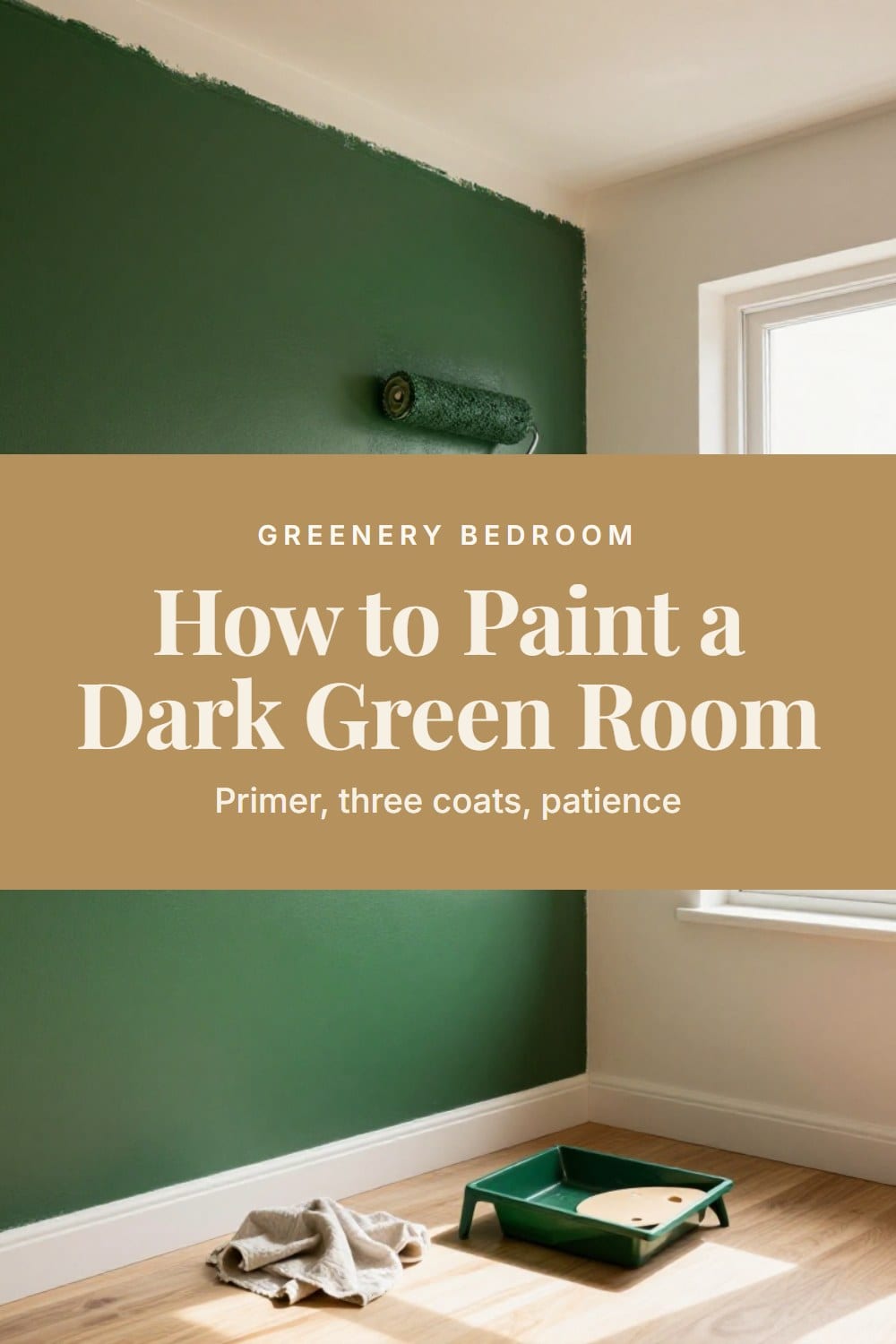
Plan a full second day for the ceiling alone. It's the slowest part and the one that makes the room feel finished.
If the room still feels too dark
Give it two weeks. A new dark room always feels darker than it will in a month, because you're still comparing it to the white room it used to be. If it's heavy after that, work through this order: add the third lamp, swap every bulb for a warmer, brighter one, hang the mirror opposite the window, trade dark curtains for ivory, and lighten the rug. Those five usually do it.
The last resort is the ceiling. Repainting it two steps lighter than the walls opens the room without losing the mood. I haven't needed to. A friend did, and she says it took one afternoon.
Dark green isn't a winter-only color, either. It looks as good with the windows open in July as it does in December. If you want the holiday version, the green Christmas bedroom decor ideas keep the same calm.
A dark green wall does its best work with soft, tonal layers around it. These two pieces bring in texture and light control while keeping the room calm.
Dark Green Velvet Pillow Covers, 18 x 18 Inch, Set of 2
Tonal texture on the bedVelvet in a deep green sits close to the wall color and adds the soft surface a matte wall needs beside it.
Olive Green Linen Blackout Curtains, 96 Inch
Tall windows and light controlOlive linen keeps the window in the green family, and the blackout construction helps in a room that gets early morning light.
The Green Bedroom Color Planner
The printable is being finished. It will live here, free, with no sign-up wall.
Dark green bedroom ideas, answered
Frequently asked
Will dark green make my bedroom look smaller?
Should I paint the ceiling dark green too?
What color bedding looks best with dark green walls?
What sheen should dark green paint be?
Sarah Whitmore
she keeps the teak, she oils it in spring
Sarah has furnished the same porch three times and finally stopped. She writes about what actually survives a decade outdoors — which wood silvers, which fabric fades, and which inexpensive piece quietly reads the same as the expensive one.
SarahTimeless Manor is a participant in the Amazon Services LLC Associates Program, an affiliate advertising program designed to provide a means for sites to earn advertising fees by advertising and linking to Amazon.com. As an Amazon Associate we earn from qualifying purchases. This means if you click a link and buy something, we may receive a small commission at no additional cost to you. We recommend pieces we believe will still be on your patio in a decade — never on commission.
More from this corner
 Bedroom Sanctuary
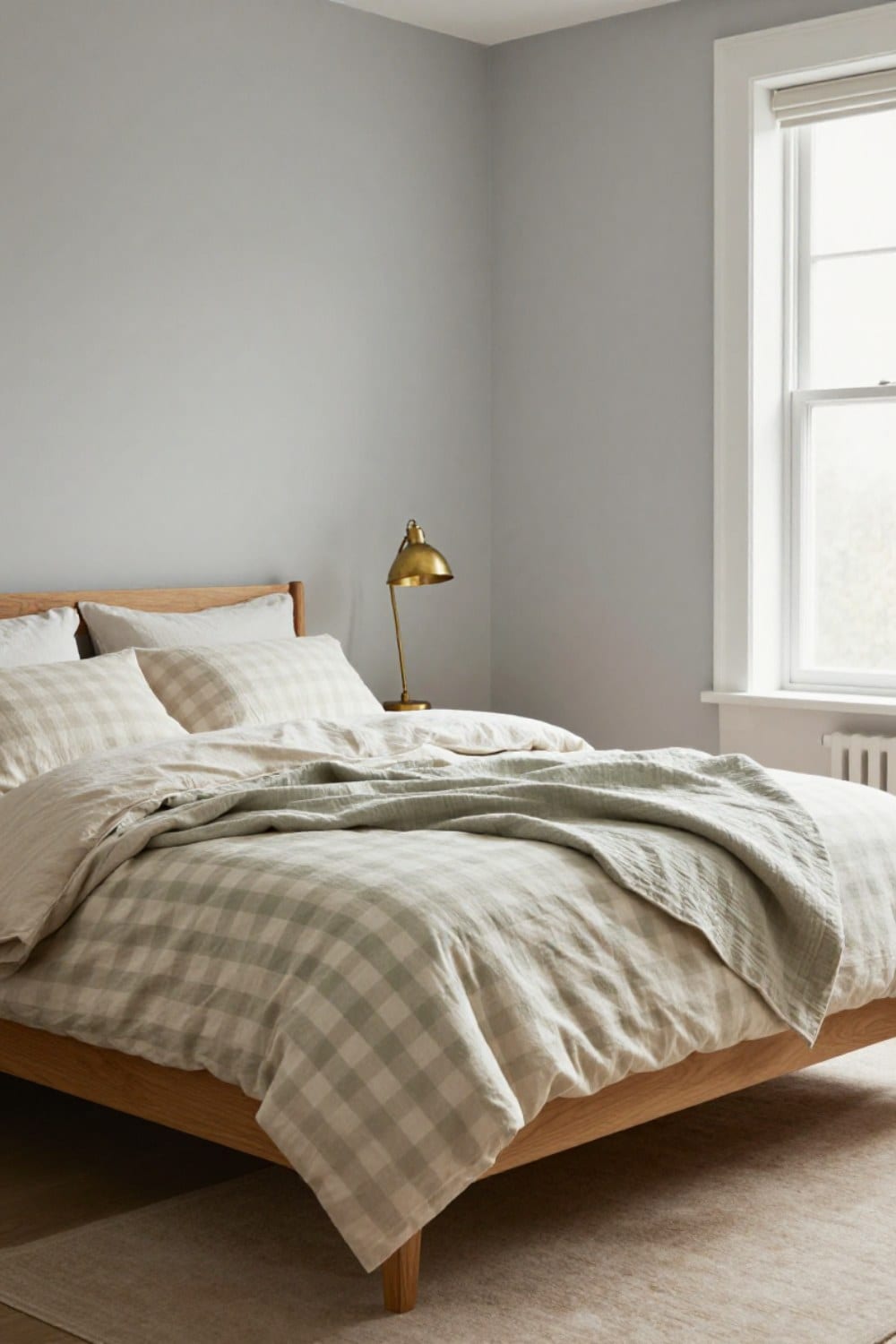
Green Gingham Bedding: How to Style It So It Looks Grown-Up
Green gingham bedding can look calm and collected instead of nursery. Here is how to choose the check size, keep it to one layer, mix it with other patterns and pair it with wood so the bed looks grown-up.
Oct 25, 2026 · 10 min read
 Bedroom Sanctuary
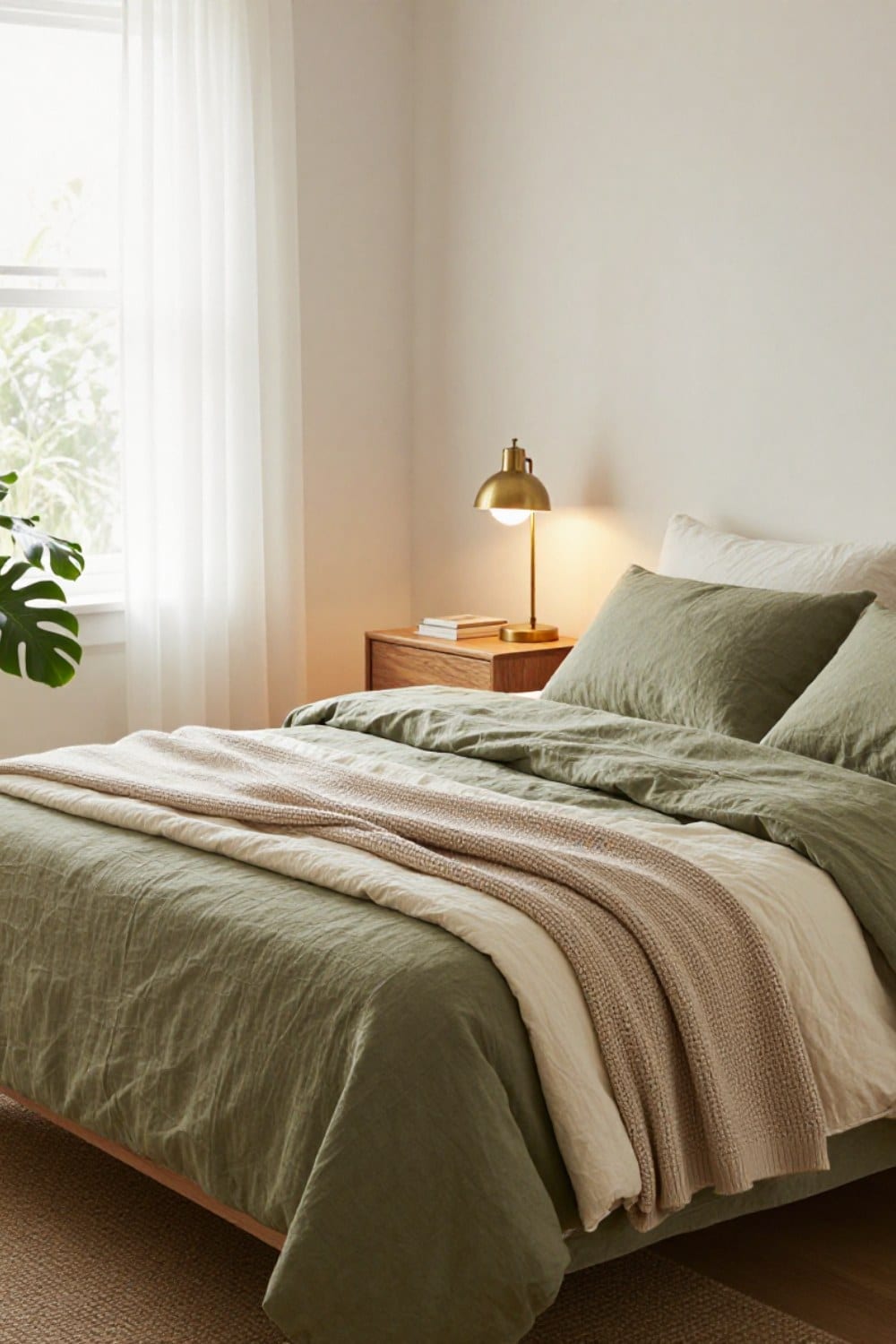
Olive Green Bedding Ideas: How to Make a Green Bed Look Collected
Olive green bedding ideas that make a bed look collected instead of matched: the three-tone rule, the fabrics that read expensive in green, what goes on top, and what belongs on the walls behind it.
Oct 22, 2026 · 11 min read
 Bedroom Sanctuary
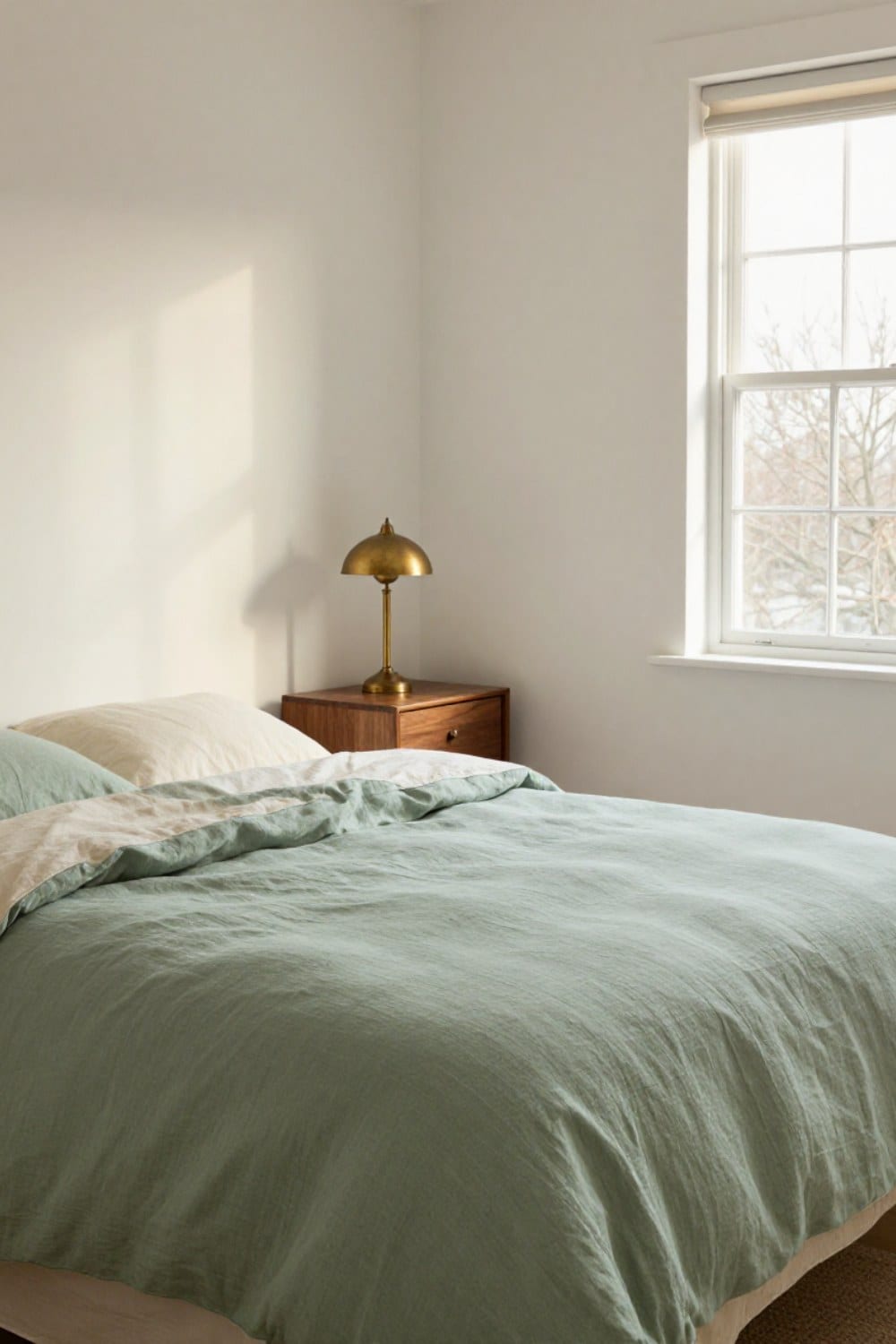
What Color Walls Go With Green Bedding? Six Pairings That Work
Six wall colors that make green bedding look chosen on purpose: warm white, greige, soft plaster pink, taupe, pale sage and deep chocolate or charcoal. Each one comes with the green it suits, how your light changes it, and the wood that ties it together.
Oct 20, 2026 · 11 min read