Green and White Bedroom Ideas That Look Crisp, Not Clinical
Twelve green and white bedroom ideas, from ticking stripes and a green headboard to the warm-versus-cool white choice that keeps the room crisp instead of cold.

This post contains affiliate links. As an Amazon Associate we earn from qualifying purchases — at no extra cost to you.
I've saved a lot of green and white bedroom ideas over the years, and most of them sound easy on paper. Then you try one and the room comes out looking like a dentist's waiting room.
The colors aren't the problem. Green and white is about as friendly a pair as there is. What goes wrong is temperature and texture: a cool, bright white pushed against a blue-leaning green, a flat bed, a bare floor, and a ceiling bulb that glows at 4000K. I did exactly that in our last house, and I spent three weeks wondering why I didn't want to be in my own bedroom.
Pinterest's 2026 palette names jade and points away from muted minimalism toward greens that feel more like nature. That means this pairing is only going to get more common. White is its best partner because it lets the green be the point. The twelve ideas below are the ways I've seen it done well, in my own house and in a few friends' houses, each with the reason it works.
You don't need all twelve. Most good green and white rooms use two or three, and they run about two-thirds white by eye. Pick one big move, one small repeat of it, and then warm the whole thing up. That last part is ideas eleven and twelve, and it's the part people skip.
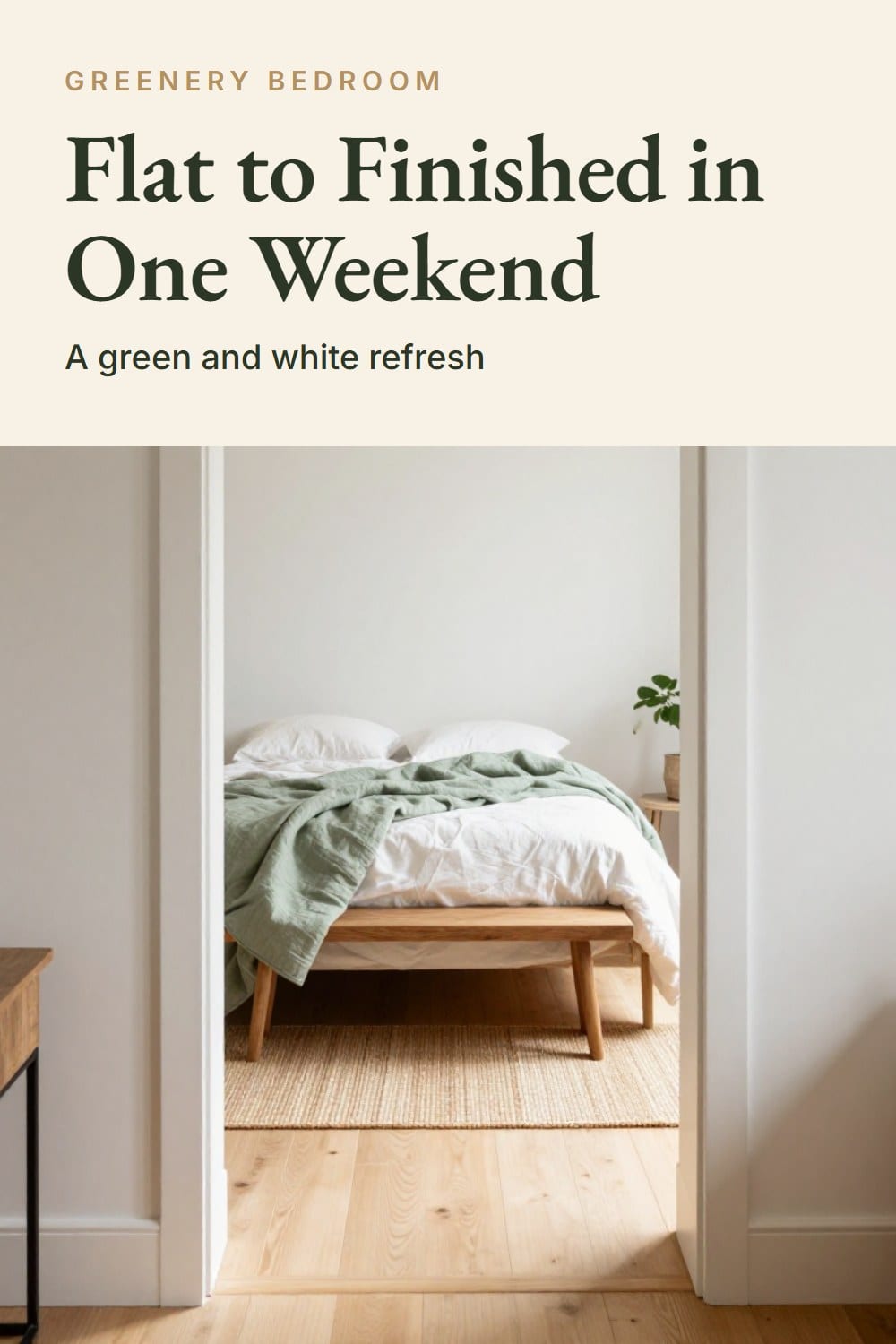
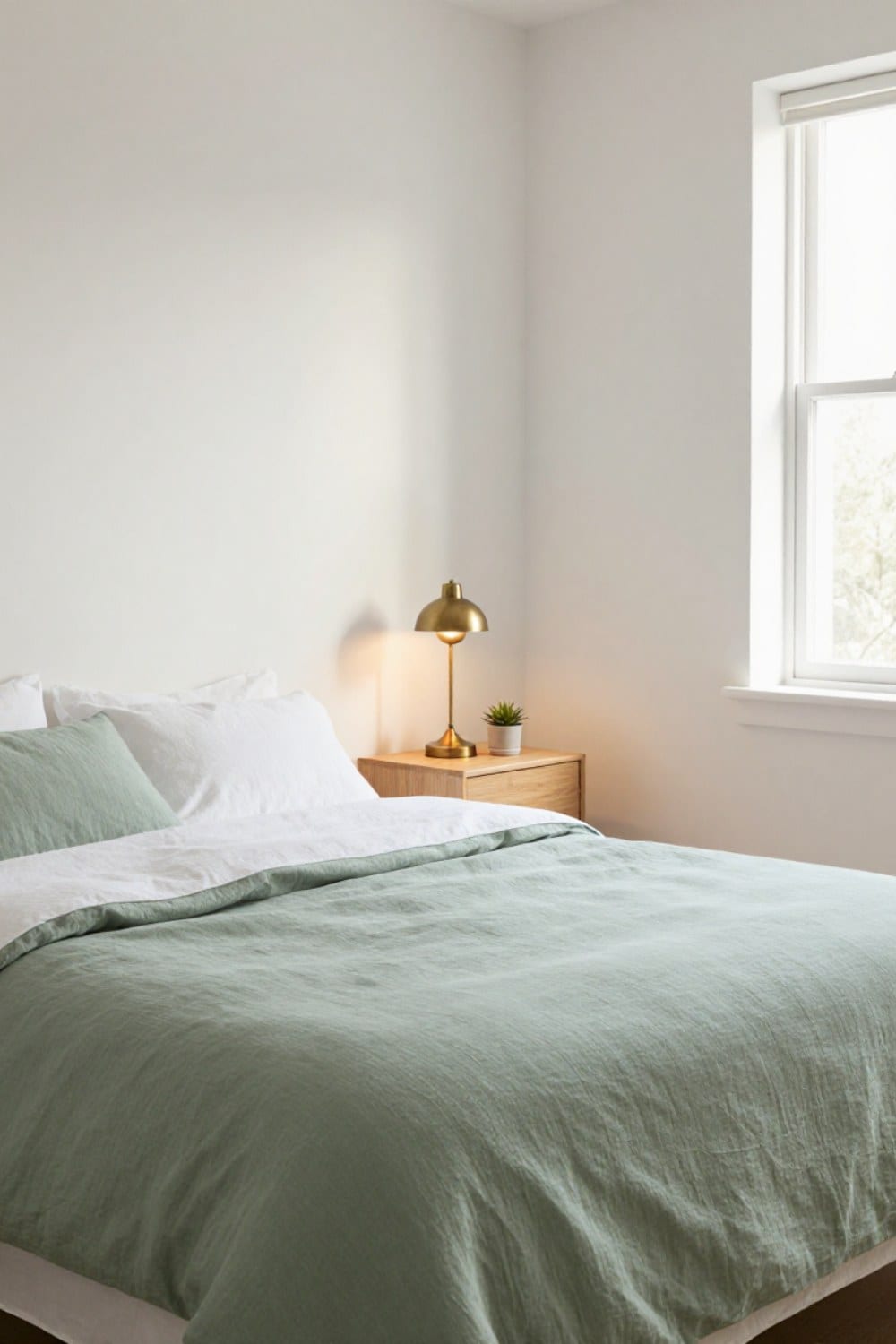
1. Keep the walls white and let the bed go green
This is the fastest version, and the one I'd try first if your walls are already white. A queen mattress is 60 by 80 inches, which is a lot of green, so the fabric matters more than the shade.
Look for washed linen or stonewashed cotton in a mid-tone green. It creases, and the creases break up the color so it reads soft instead of loud. My first green duvet was a sateen with a sheen to it. Under the ceiling light it looked like a pool table.
Keep the sheets and shams white, then add one green lumbar pillow in a slightly different shade from the duvet. Two greens that almost match look deliberate. Two that match exactly look like a set from a box. If you lean toward the gray-green end, the sage green bedroom guide goes deeper on which fabrics hold that color best.
2. Paint the walls green and keep the bed white
Now flip it. The green lives on the walls and the bed stays white. It's the classic, and it works because the bedding gets to be the brightest thing in the room.
Don't let the white go flat, though. I layer white percale sheets, a waffle-weave blanket and a heavier white quilt, so three different surfaces are catching the light. One plain white duvet against a green wall looks like a hospital bed. Mine did.
Choose a matte or eggshell finish for the walls. Glossier paint shows every roller mark and bounces light around in a way that makes green look harder. And test the color on the wall at 4 pm in winter before you commit. Our guest room turned from soft green to gray-blue the second the sun dropped. If you only want green behind the bed, the green accent wall guide compares paint, limewash, panelling and wallpaper, and the sage paint roundup shows real shades in real light.
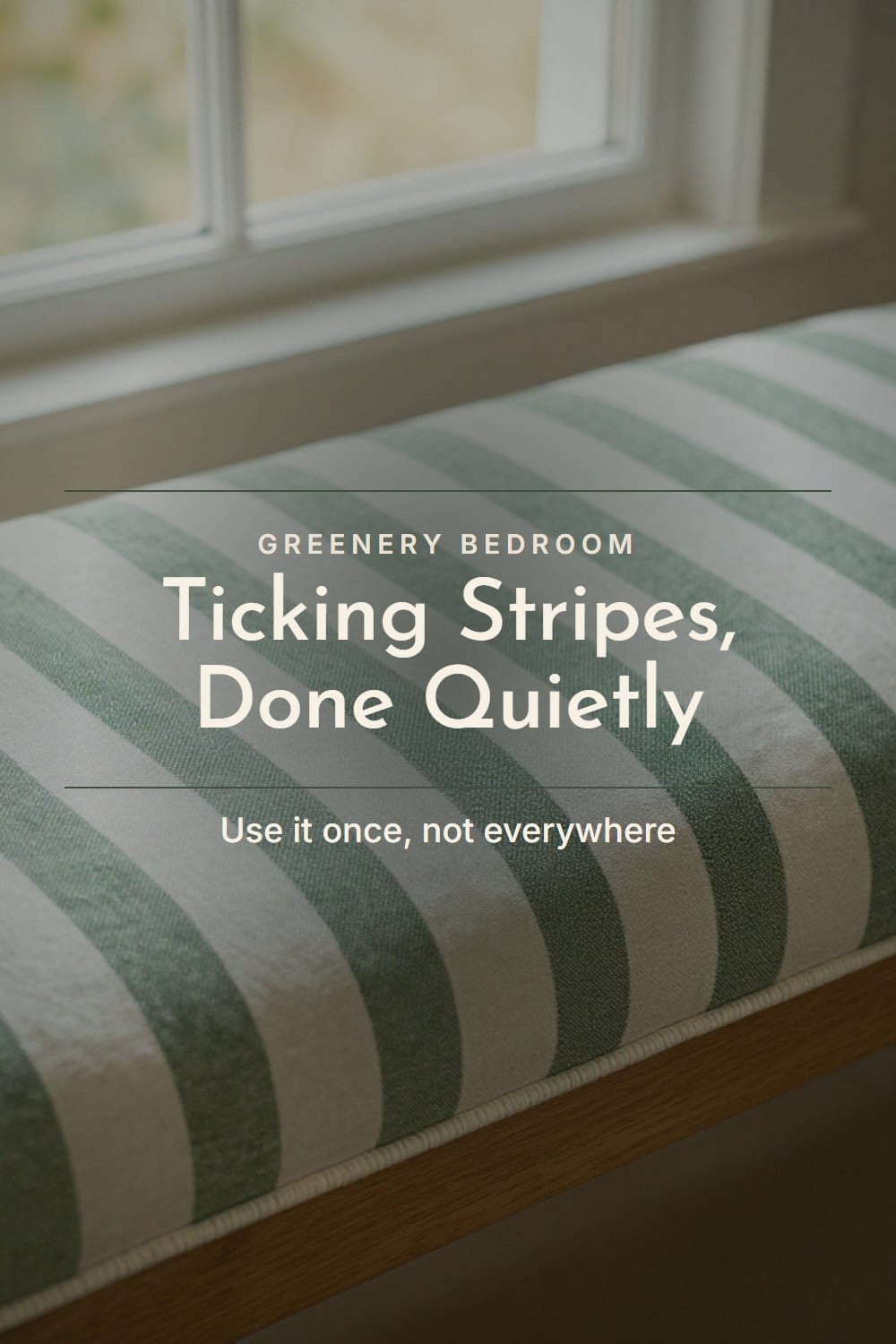
3. Use green and white ticking stripes once
Ticking is the narrow woven stripe that used to cover mattresses, usually about a quarter inch wide. In green and white it looks like a country house, in the best way.
Use it in one place. A bench cushion at the foot of the bed, a lampshade, or a duvet cover over plain white sheets. From across the room a stripe that narrow reads as texture, not pattern, which is why it sits so calmly next to solid linen.
I once put ticking on the curtains, the bench and a pillow in the same week. It looked like a row of deck chairs. Pick one and let it be the pattern.
4. Upholster the headboard in green
A green upholstered headboard is a focal point without a drop of paint on the wall. Against white walls it does the job an accent wall does, and you can reupholster it in ten years if your taste moves.
Make it 4 to 6 inches wider than the mattress on each side, and tall enough to still show above two pillows, so 48 inches from the floor or more. A headboard that stops at the mattress width looks like it shrank in the wash.
Velvet in a deep green catches lamplight and looks rich. Linen in a softer green is quieter and shows less. I went with a tight-weave performance linen because the dog sleeps on our bed, and it has held up for three years.
5. Add white linen with green piping
This is the gentlest way to bring green in. A white duvet cover and shams with a thin green cord sewn into the seam, usually about a quarter inch, so the bed gets an outline.
On white bedding against white walls, that single line is what makes the room look tailored instead of unfinished. Dark green piping reads graphic. A softer sage reads romantic. Either is right. It depends on how tailored you want the bed to look.
Look for a cotton-linen blend or stonewashed linen around 170 GSM. Lighter than that and the piping puckers. Heavier and the cover stays stiff for the first ten washes.
6. Hang one big botanical print on a white wall
A single large botanical print is the cleanest way to bring green in with no paint and no fabric. A fern study, a ginkgo branch, a eucalyptus drawing. Look for the older, drawn-from-life kind with a soft off-white mat.
Go bigger than you think. One print about two-thirds the width of your headboard, hung 6 to 8 inches above it, looks intentional. A scatter of small ones looks like a gift shop. I had eleven little prints over our bed at the old house, and it took me two years to admit I was just making noise.
A plain oak or walnut frame and a wide white mat keep it quiet. Choose glass over acrylic if you can, since acrylic scratches and pulls dust.
7. Do white panelling below and green above
If you own the place and want a room that looks built instead of decorated, this is the one. White painted panelling on the lower wall, green above. Board and batten, a simple picture rail, or flat panels all work.
Bring the panelling up to the top of the headboard or just above it, around 48 to 54 inches. Lower than that and the line disappears behind the bed. The green above can be anything from soft sage to deep forest. If you go deep, the dark green bedroom guide covers keeping the light in the room.
The white below keeps the bottom half of the room bright, and that's where the bed, the nightstands and the lamps live. One wall takes a weekend if you're handy. Hire it out if you're not, because crooked battens are obvious in a room you look at every night.
8. Paint the trim or a door green
Leave the walls white and paint the window casings, the baseboard or the closet door green. It's a small amount of paint doing a lot of work, because your eye follows those lines around the room.
Use satin or semi-gloss, since trim gets bumped and wiped. I painted the inside of a closet door a deep green one Saturday, and it's the thing visitors ask about. Not the sage quilt I thought was the main event.
A color that deep on trim gives you the dark-green look without giving a whole room to it.
9. Put one real plant in a white pot
A leaf shows up better against white than against any other color, which is why a plant in a white glazed pot belongs in this palette. A trailing pothos on a shelf, a rubber plant in the corner, a five-foot olive tree by the window.
Let me be straight about what plants don't do. They don't clean your bedroom air. The 1989 NASA study behind that idea was run in a sealed chamber, and a 2019 review from Drexel University found you'd need somewhere between 100 and 1,000 plants per square meter to match ordinary ventilation. Open a window instead. Keep the plant because it's lovely and watering it is a nice small routine.
Check it against your pets, too. The ASPCA lists pothos as toxic to cats and dogs, so if yours chew leaves, choose a plant they can't reach.
10. Pick the right white for your green
This one fixes more rooms than any other. White isn't one color. It leans warm (cream, ivory, a touch of yellow) or cool (a bit of blue or gray), and next to green the lean gets loud.
Yellow-based greens, like the ones in the olive green bedroom guide, want a warm white. A cool white beside them looks gray and tired. Blue-leaning greens like jade can take a cleaner white, but go too icy and the room turns cold. Gray-green sage sits happily with a soft white that's only barely warm.
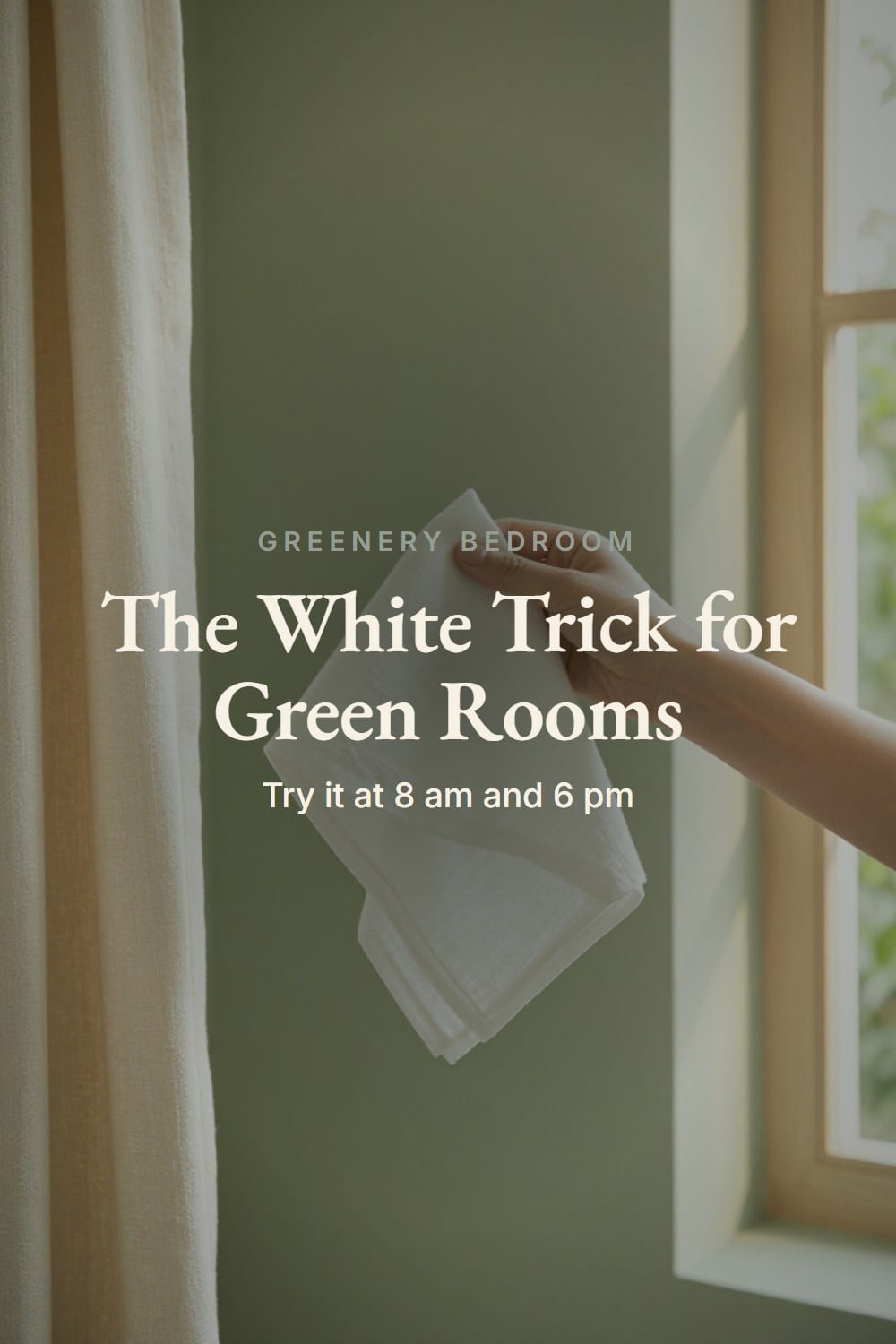
Here's the trick I use. Hold a plain white towel against the green wall in daylight. If the wall looks muddy next to it, the white is too bright. If the wall looks bluish, the towel's too cool. Check again at 8 in the morning and at 6 in the evening, because the answer changes.
11. Add wood, texture and one warm metal
Here's where crisp stops turning clinical. Painted walls and a made bed are both smooth and cool, so they need something to push back. That something is wood, texture and a single warm metal.
- Wood you can see, like an oak or walnut nightstand with the grain showing instead of painted white.
- Three textures at least: linen, wool, and something woven like jute, rattan or seagrass.
- One warm metal, repeated. Aged brass on the lamp, the curtain rod and the drawer pulls, and nothing else gold-toned.
- One thing that's old or looks it, such as a vintage bench or a spotted mirror.
I stick to one metal because three finishes in a bedroom starts to look like a lighting department. Aged brass is forgiving and it gets better as it dulls.
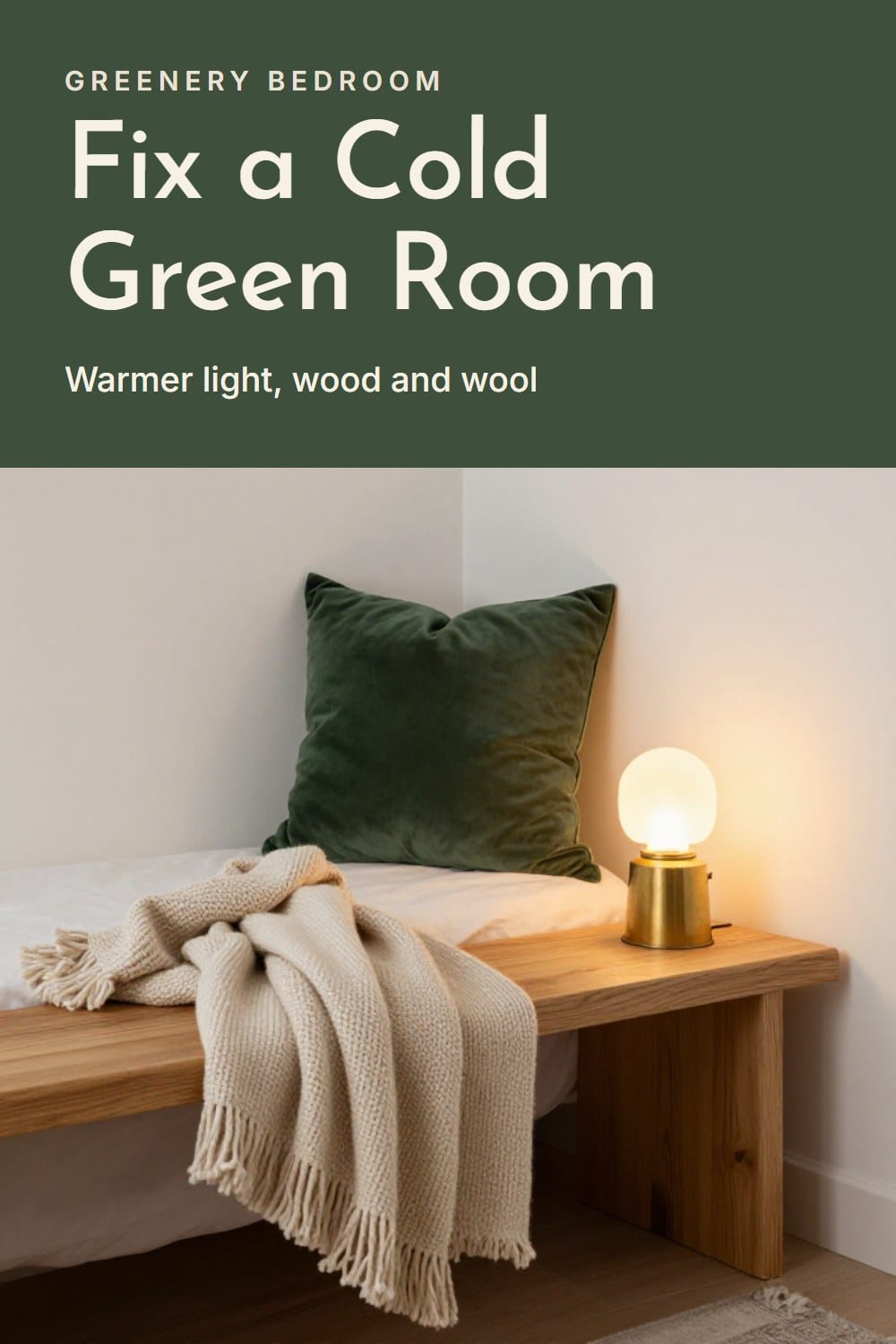
12. Warm the light to 2700K
Light bulbs sort a room more than paint does. Bulbs sold as bright white or daylight run 4000K to 5000K, and under them a white wall goes blue-gray and a green wall goes sharp. Switch every bulb in the bedroom to 2700K and the same room looks like a different house.
Use lamps, not only the ceiling fixture. Two bedside lamps with linen shades, ideally dimmable, around 800 lumens each at full. The linen filters the light into a warm glow. I swapped our 3500K bulbs for 2700K on a Sunday afternoon, and the walls went from clinical to creamy in about the time it took to climb the ladder.
Where to start with these green and white bedroom ideas
Change the bulbs first. It takes ten minutes and it shows you immediately how much of the clinical feeling was just light.
Then choose one big move from the first eight and live with it for a week. Look at the room at 7 pm, with the lamps on, before you buy anything else. If it feels crisp and you want to stay in it, you're done. If it feels cold, it's almost always the white or the wood, not the green.
Stripes, gingham and a soft sage curtain are the quickest way to try the pairing before you paint anything. Here are three pieces that follow the ideas above.
Green and White Stripe Pillow Covers, 18 x 18 in, Pair
Crisp stripe on the bedA pair of covers that puts the green and white pairing on the bed in one small step.
Andency Green Gingham Cotton Duvet Cover Set, Queen
Gingham for a relaxed lookCotton in a green gingham check, sized for a queen bed.
SimpleHome Light Sage Green Linen Curtains, 84 in
Soft sage at the windowLight sage linen panels, 84 inches long, that let the green read gently against white walls.
The Green and White Bedroom Color Planner
The printable is being finished. It will live here, free, with no sign-up wall.
Questions I get about green and white bedrooms
Frequently asked
Does a green and white bedroom feel cold?
What shade of white goes with sage green?
Should I paint the walls green or keep them white?
Can I use two different greens together?
Sarah Whitmore
she keeps the teak, she oils it in spring
Sarah has furnished the same porch three times and finally stopped. She writes about what actually survives a decade outdoors — which wood silvers, which fabric fades, and which inexpensive piece quietly reads the same as the expensive one.
SarahTimeless Manor is a participant in the Amazon Services LLC Associates Program, an affiliate advertising program designed to provide a means for sites to earn advertising fees by advertising and linking to Amazon.com. As an Amazon Associate we earn from qualifying purchases. This means if you click a link and buy something, we may receive a small commission at no additional cost to you. We recommend pieces we believe will still be on your patio in a decade — never on commission.
More from this corner
 Bedroom Sanctuary
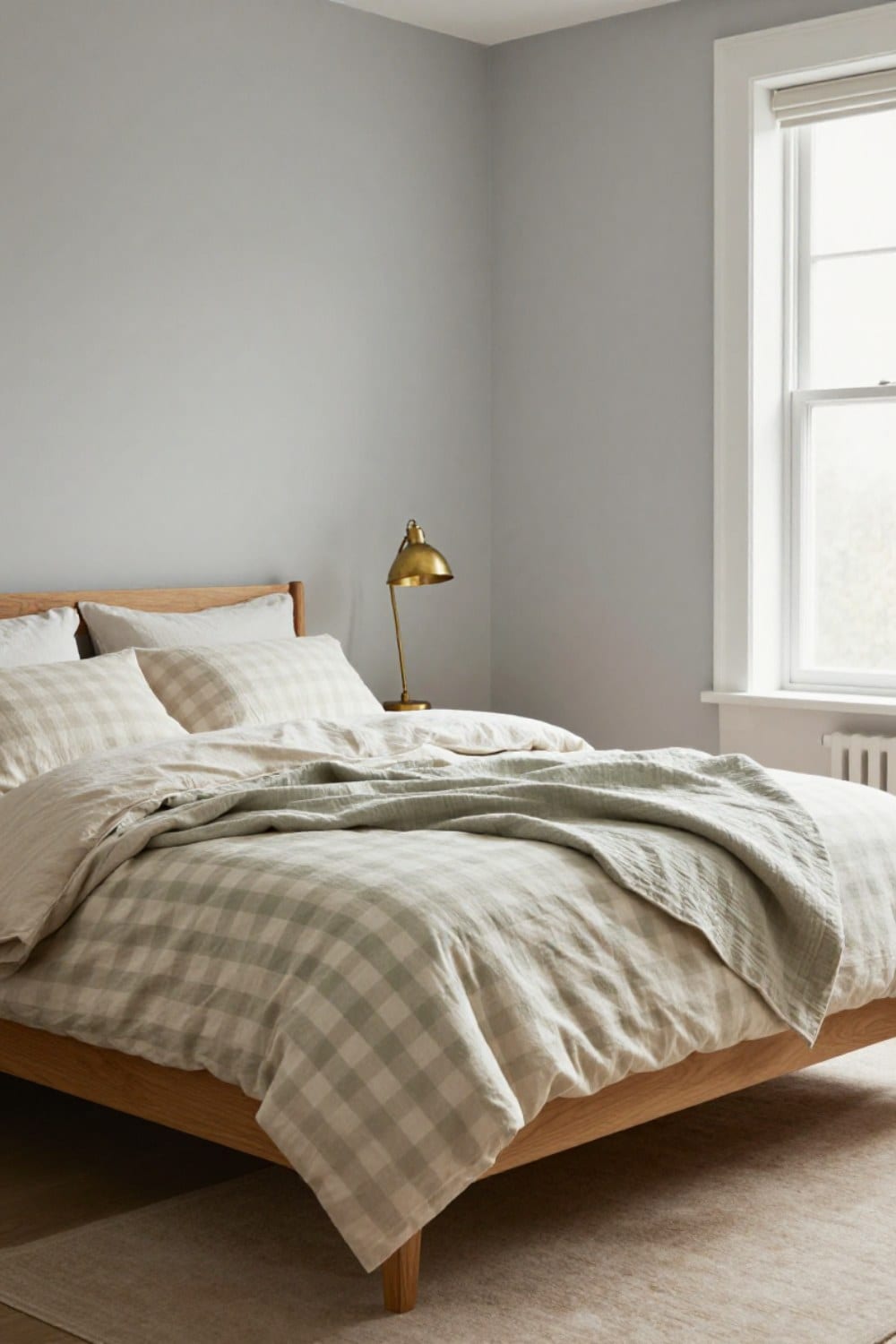
Green Gingham Bedding: How to Style It So It Looks Grown-Up
Green gingham bedding can look calm and collected instead of nursery. Here is how to choose the check size, keep it to one layer, mix it with other patterns and pair it with wood so the bed looks grown-up.
Oct 25, 2026 · 10 min read
 Bedroom Sanctuary
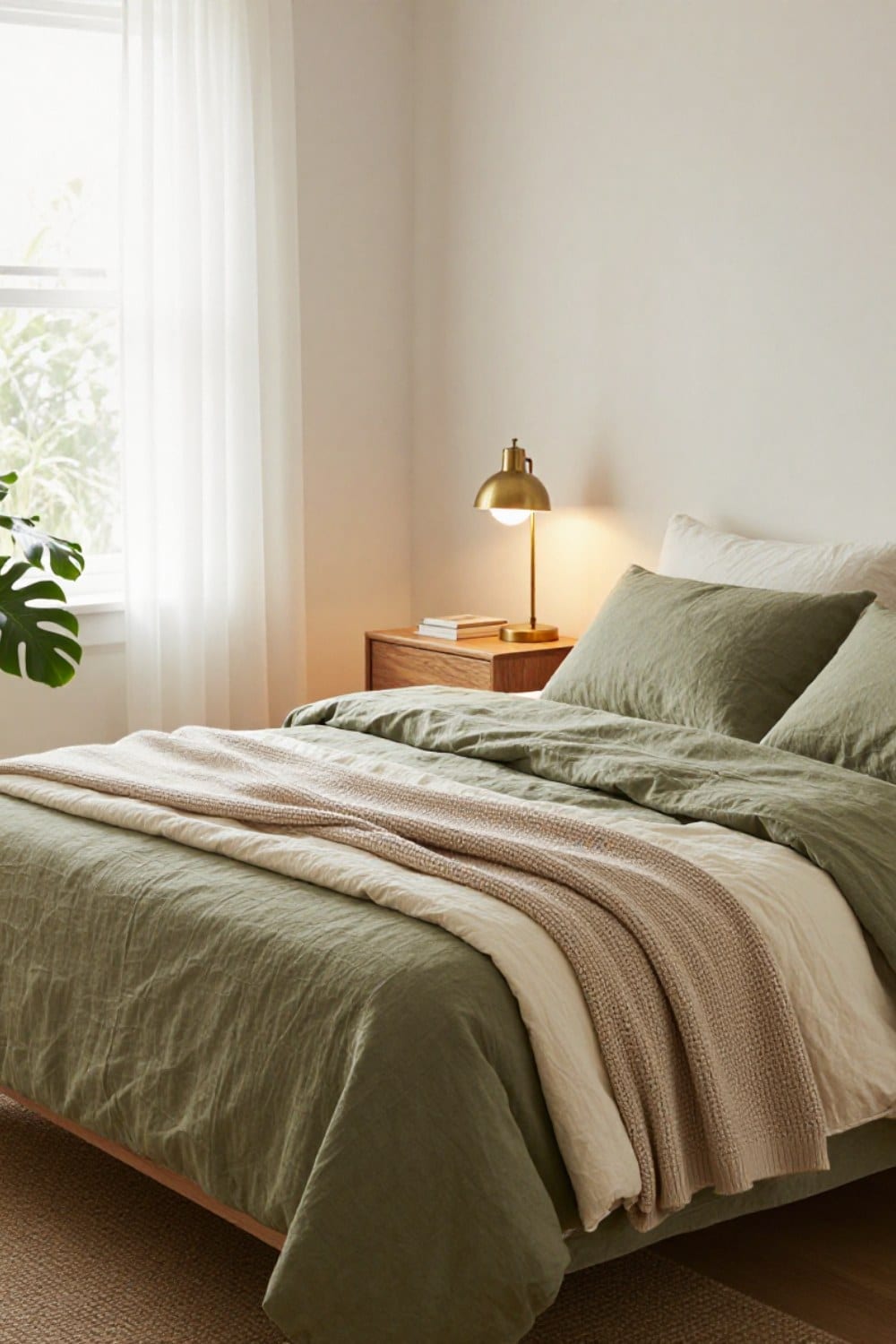
Olive Green Bedding Ideas: How to Make a Green Bed Look Collected
Olive green bedding ideas that make a bed look collected instead of matched: the three-tone rule, the fabrics that read expensive in green, what goes on top, and what belongs on the walls behind it.
Oct 22, 2026 · 11 min read
 Bedroom Sanctuary
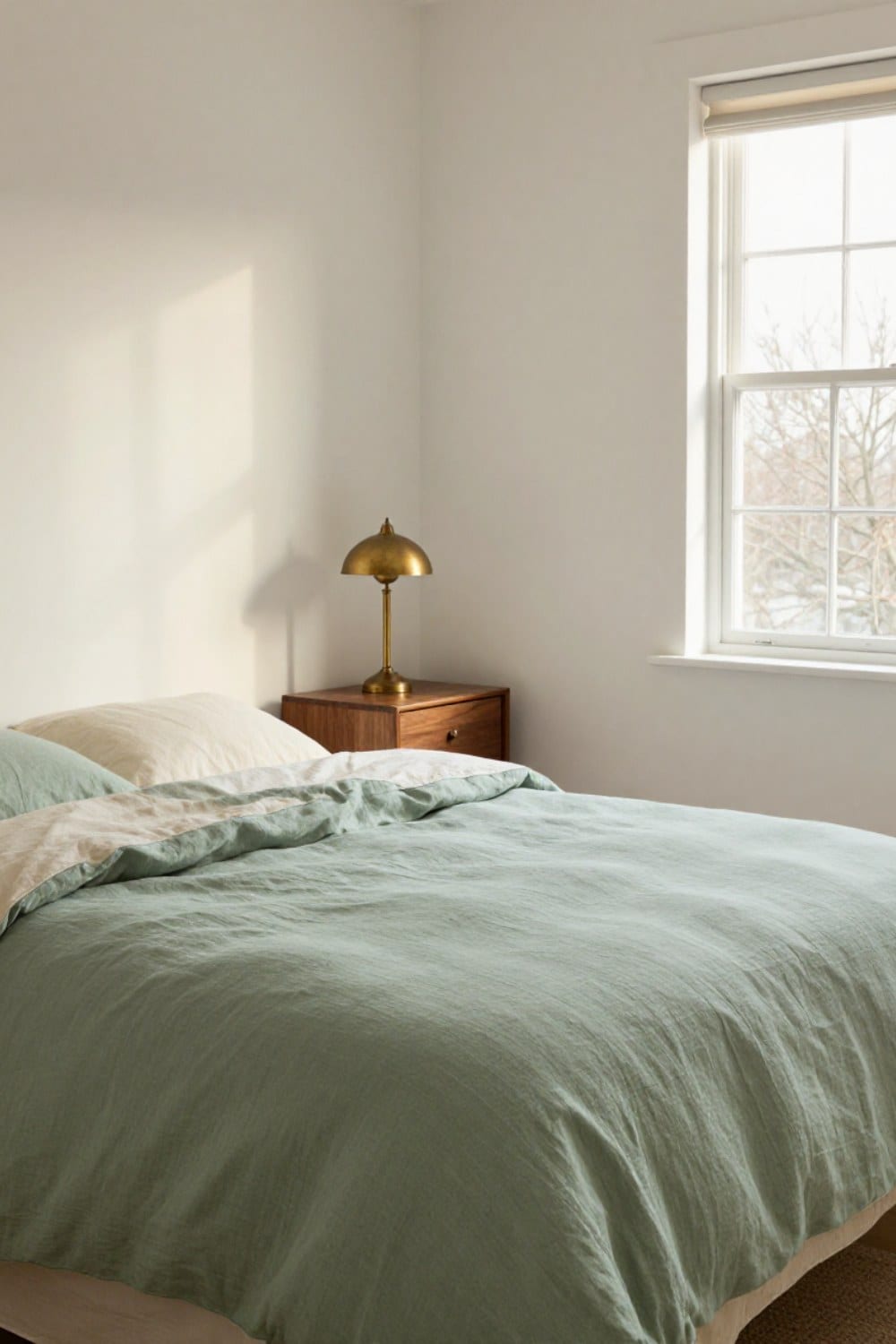
What Color Walls Go With Green Bedding? Six Pairings That Work
Six wall colors that make green bedding look chosen on purpose: warm white, greige, soft plaster pink, taupe, pale sage and deep chocolate or charcoal. Each one comes with the green it suits, how your light changes it, and the wood that ties it together.
Oct 20, 2026 · 11 min read