A Green Accent Wall Behind the Bed: Paint, Limewash, Paneling or Wallpaper
Four ways to put green on the wall behind your bed, what each one asks of you, how big the wall should be, and the full steps for a painted picture-frame wall.

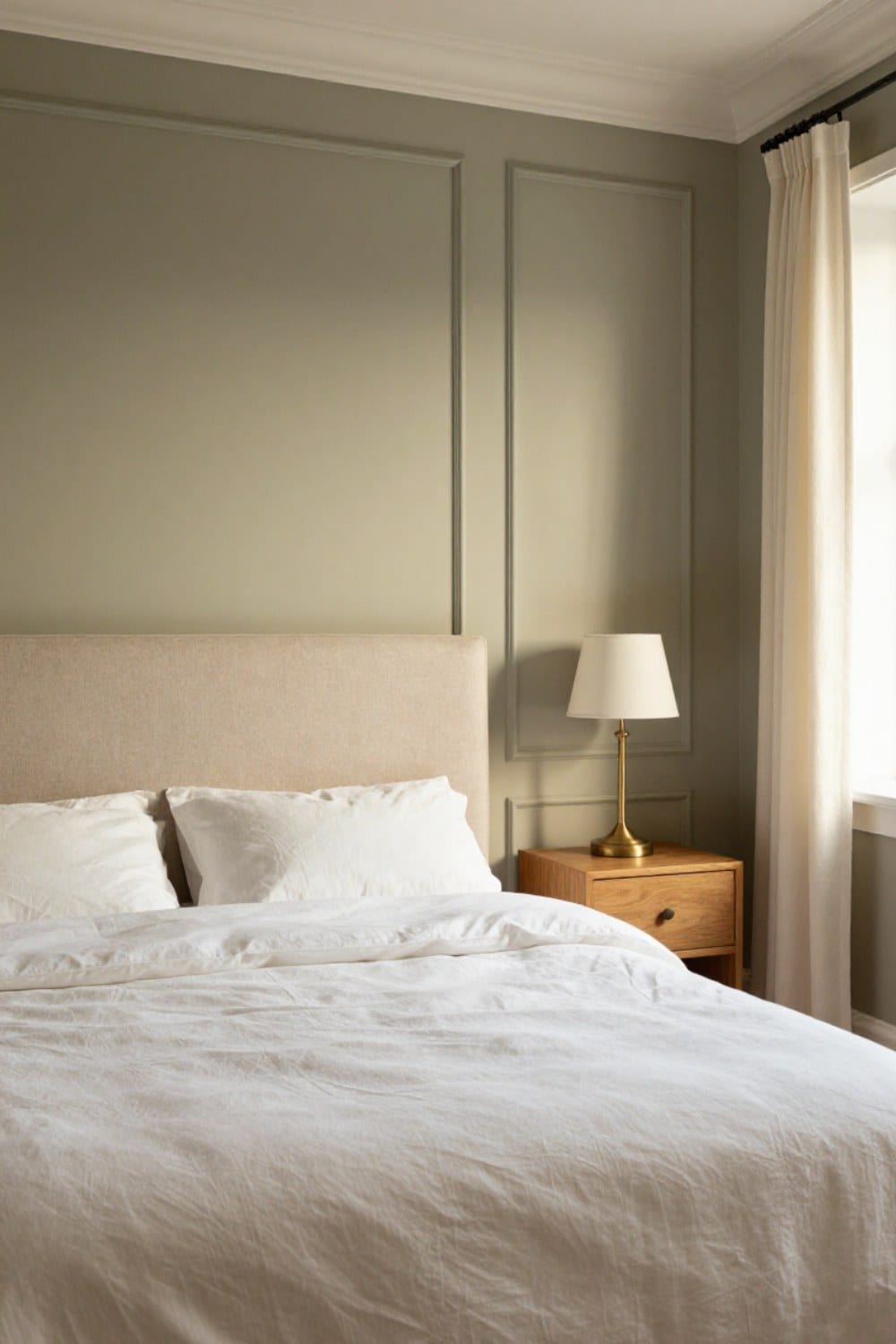
The wall behind your bed is the one you see from the hallway, from the doorway, and from the pillow at six in the morning. A green accent wall behind the bed gives the whole room somewhere to rest its eyes, and it's the one decision I'd make before buying a throw pillow.
Pinterest's 2026 palette names jade, a green softer than emerald and richer than sage, and the mood has moved away from muted minimalism toward greens that feel like they came in from the garden. You don't need jade to join in. A quiet gray-green behind a linen headboard does the job beautifully, and it will still look right in ten years.
The part that trips people up is the finish. Paint, limewash, paneling and wallpaper all make a green wall, and they behave nothing alike. So here's the version I'd give a friend standing in her bedroom with a paint chip in one hand: what each finish asks of you, how big the wall should be, and the full steps for a painted picture-frame wall, which I've built twice. My sage green bedroom ideas guide covers the rest of the room. This one is only about the headboard wall.
Should the accent wall go behind the bed?
Usually, yes. The bed is the biggest thing in the room, and the headboard wall is where every eye lands first. Color there looks chosen. Color on the wall beside the dresser looks like a leftover.
There's a practical side too. The headboard wall is normally the one with no window and no door, which hands you one clean, uninterrupted surface. A window wall fights the color for attention. A door wall chops it into pieces.
The exception is a bed tucked under a window, which happens a lot in older houses. Then I'd either keep that wall quiet and put the green on the wall you face from the pillow, or carry one green around the whole room. A half-painted compromise tends to look nervous.
How big a green accent wall behind the bed should be
Size matters more than most people expect. The color should run wide enough that the bed looks set into it, not stuck in front of it. A queen mattress is about 60 inches across and a king is about 76, so a patch of paint only as wide as the headboard reads like a sticker. Take the color to the corners.
If you're building paneling rather than painting the whole wall, let the paneled area run at least 12 inches past each side of the headboard. On an 8-foot wall (96 inches), I like frames that reach nearly to the ceiling, with a margin of about 4 inches at the top. Paneling that stops halfway up looks like an unfinished wainscot, and a tall headboard will fight it.
Four ways to get green behind the bed
Each gives the room a different personality, and each asks something different of you.
Flat paint
The simplest and the most forgiving. Two coats of eggshell, a roller, one afternoon. I choose eggshell over dead matte here because headboards and pillows rub this wall every day, and eggshell wipes clean.
The catch is that one painted wall can look like a color swatch instead of a finished room. If yours feels a little flat after painting, it isn't the green. It's the lack of shadow and texture, and that's exactly what the next three finishes add.
Limewash
Limewash is a mineral wash made from slaked lime and pigment. It goes on thin with a wide brush in crisscross strokes and dries lighter and chalkier than it looks wet. The result is soft, cloudy movement, a bit like old plaster, and that variation is the whole appeal.
It's a medium-skill job. Strokes don't have to be tidy, since the movement is the point, but you do need to keep a wet edge and commit. Test a patch first, because the color shifts as it dries, and check the maker's instructions for the primer they want over painted drywall. Know too that limewash is porous, so it marks more easily than paint. That matters behind a headboard.
Painted paneling
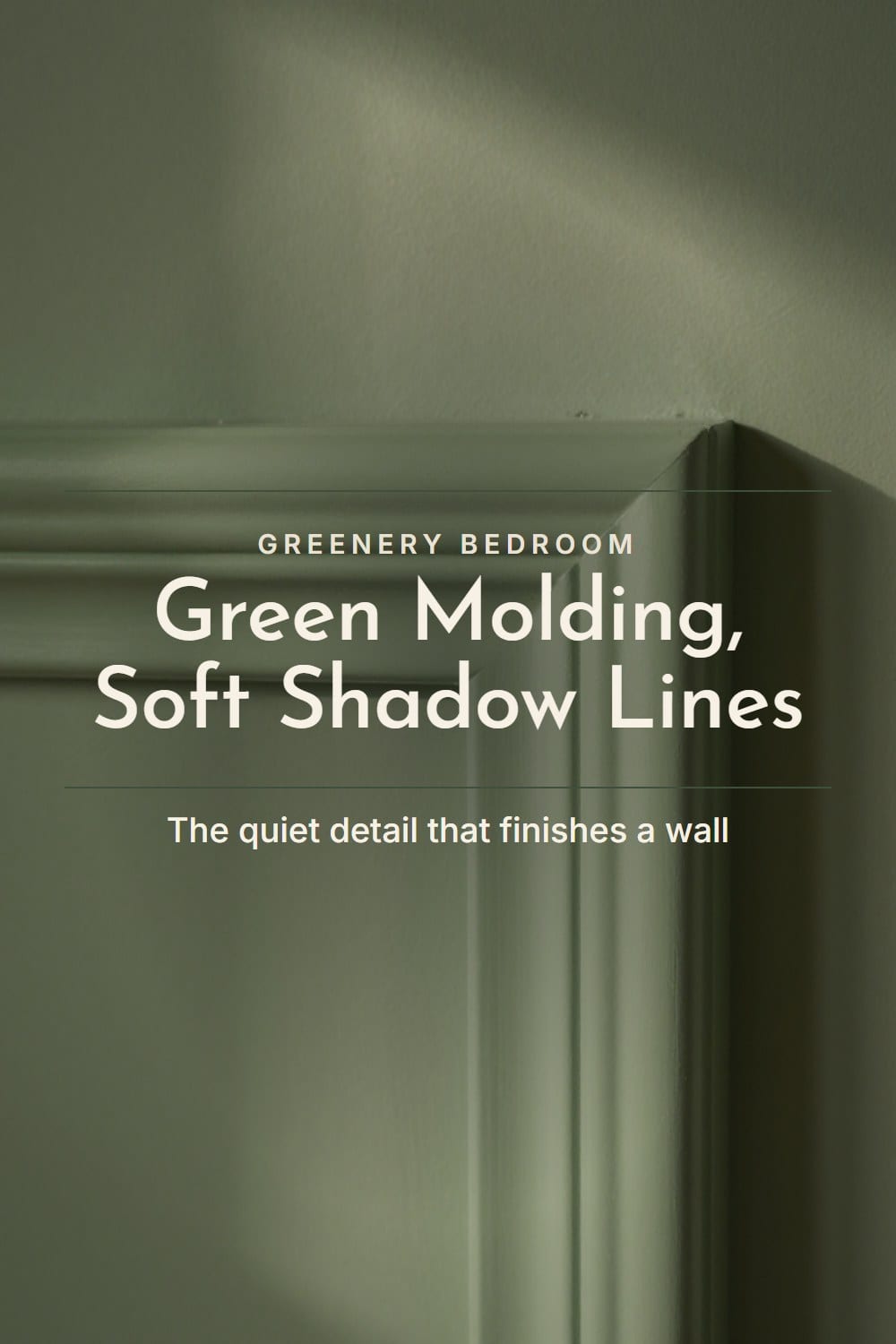
Picture-frame molding or board-and-batten, painted the same green as the wall. The shadow lines do the work, and you end up with a wall that looks like the house always had it. Picture-frame suits a classic bedroom best. Board-and-batten, with its tall vertical strips, leans more country.
This one asks for patience, not talent: measuring, a level, and a lot of caulk. Plan on a weekend with drying time between steps. It's the finish I'd pick for a bedroom meant to look expensive without announcing it.
Grasscloth or botanical wallpaper
Grasscloth is woven natural fiber on a backing, with slight color changes from strip to strip and seams that show a little, by design. Botanical wallpaper is the pattern option: leaves and branches in an old-fashioned garden print. Both are paste-the-wall jobs with matched seams, and this is the finish where I hire a professional. I won't pretend otherwise.
Grasscloth doesn't love water or scrubbing, and it picks up oils from skin and hair. A headboard that sits a hair off the wall, or a wide upholstered one that covers the zone where heads touch, protects it.
Which finish suits your weekend
If you're stuck between them, this is how I'd sort it.
- Flat paint: one afternoon, beginner skill, clean and modern. It shows every dent, so fill them first.
- Limewash: one to two days, a little practice, soft and plaster-like. It marks more easily than paint.
- Painted paneling: a weekend, patience over skill, classic and layered. The most dimension for the effort.
- Grasscloth or botanical wallpaper: a professional for grasscloth, a skilled weekend for a pattern. The richest texture, and it needs to stay dry.
My own rule: if the room has good light and a plain wall, build paneling. If the walls are already a bit wavy, limewash forgives them. If the bed is the only thing you can change this month, flat paint and a good headboard get you most of the way.
Choosing the green itself
Undertone matters more than the name on the chip. A warm gray-green sits quietly with wood and linen. A blue-leaning green, the jade side, feels crisper and looks best with white bedding and brass. A yellow-based olive is the warmest and flatters lamplight in the evening. If you're pulled toward something deeper, dark green can stay light with the right bedding, and olive is easier to live with than it looks on a screen.
Light changes everything. North light turns green cooler and grayer, south light warms it, and a 2700K bulb pulls it toward yellow. Paint a 2-foot square of sample onto poster board, tape it behind the bed for three days, and look at it in the morning, at noon and at night. When you're ready for actual paint names, I put the ones I trust through real light in The Best Sage Green Paint Colors for a Bedroom. And if you're leaning toward the 2026 favorite, jade green bedroom ideas shows how to use it without it shouting.
How to build a painted picture-frame wall behind the bed
This is the project I've done twice, once in the guest room and once in our own bedroom. For a queen bed on a 12-foot wall, plan one weekend, with drying time built in. Here's what to have on hand.
- Flat-profile picture-frame molding, about 1 1/2 inches wide, in primed MDF or poplar
- A 4-foot level, a tape measure and a stud finder
- Painter's tape and a pencil
- A miter saw, or a miter box and a fine-tooth hand saw
- Construction adhesive and an 18-gauge brad nailer (or a hammer and finish nails)
- Paintable acrylic caulk, wood filler and a damp rag
- Primer, your green, a small roller and an angled brush
Measure and sketch
Tape out the layout
Cut the molding
Glue and nail
Fill and caulk
Prime
Paint it all one green
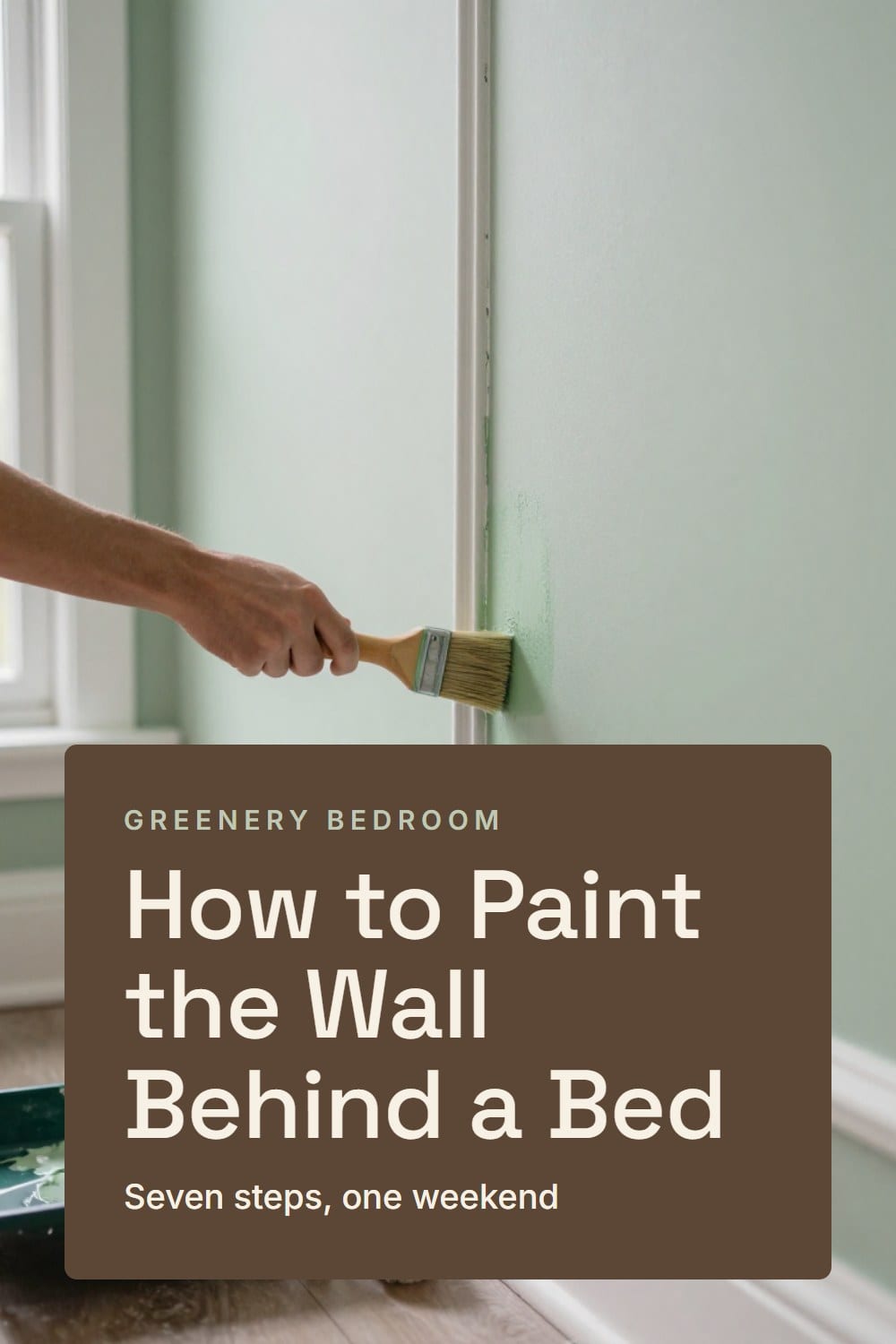
Mistakes worth skipping
A few things I've seen go wrong, mine included.
- Choosing the color from a chip under store lights, then meeting it on a gray November morning
- Matching the headboard to the wall exactly, so the bed disappears. Oatmeal linen, wood or a deeper tone all hold their own
- Stopping the paneling at an odd height that lines up with nothing else in the room
- Skipping primer on raw molding
- Hanging a crowd of art over paneling. Let the wall be the art and add a pair of lamps or sconces instead
What goes with it
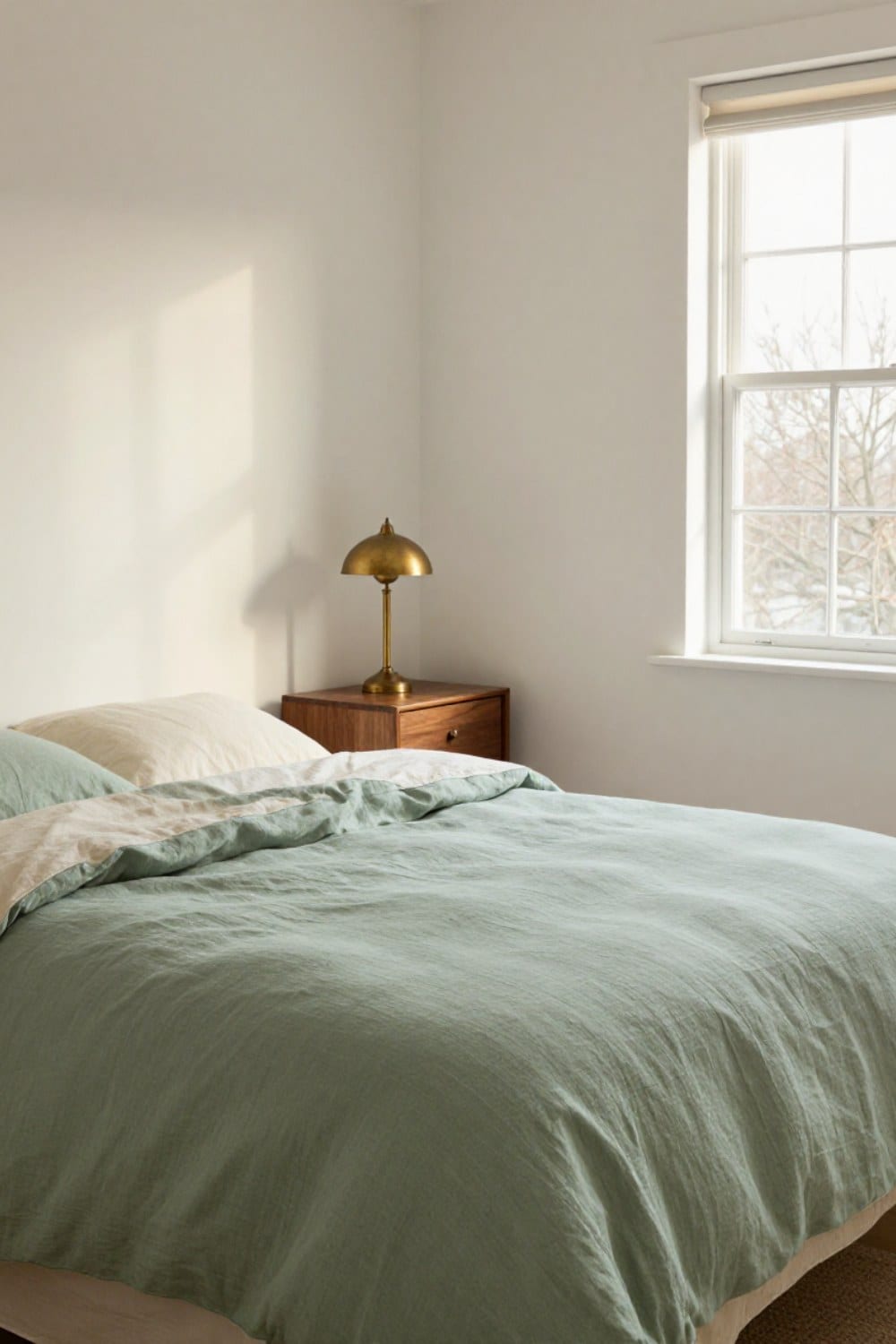
Once the wall is done, keep the rest of the room quiet. White or cream bedding with a few soft creases, a wood nightstand, a brass lamp. If you want to see how crisp that can look, green and white bedroom ideas has room-by-room examples.
The Green Accent Wall Planner
The printable is being finished. It will live here, free, with no sign-up wall.
Frequently asked
Should an accent wall be behind the bed?
Can I limewash over a wall that's already painted?
How wide should picture-frame molding be?
Will a dark green accent wall make the bedroom feel smaller?
Sarah Whitmore
she keeps the teak, she oils it in spring
Sarah has furnished the same porch three times and finally stopped. She writes about what actually survives a decade outdoors — which wood silvers, which fabric fades, and which inexpensive piece quietly reads the same as the expensive one.
SarahMore from this corner
 Bedroom Sanctuary
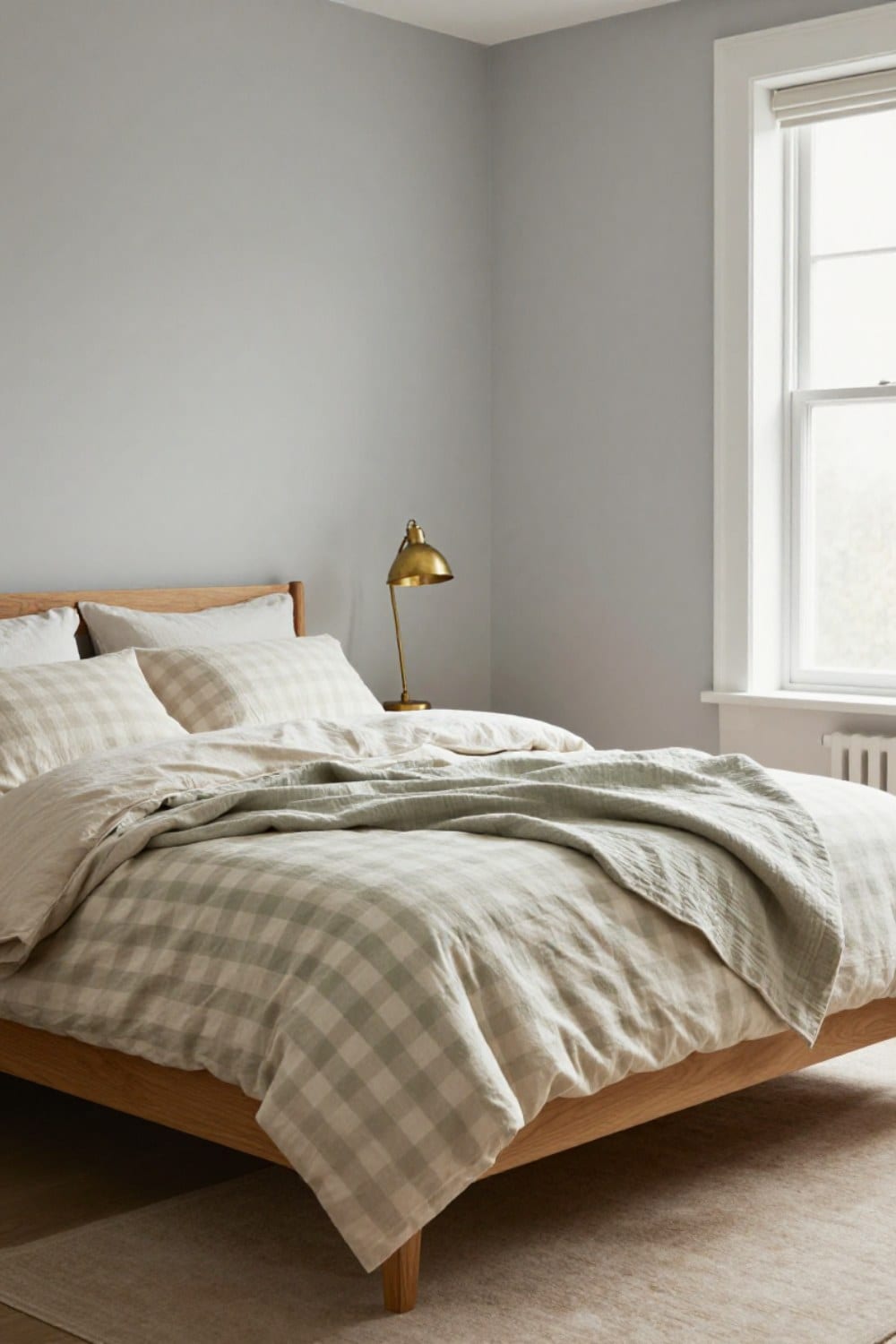
Green Gingham Bedding: How to Style It So It Looks Grown-Up
Green gingham bedding can look calm and collected instead of nursery. Here is how to choose the check size, keep it to one layer, mix it with other patterns and pair it with wood so the bed looks grown-up.
Oct 25, 2026 · 10 min read
 Bedroom Sanctuary
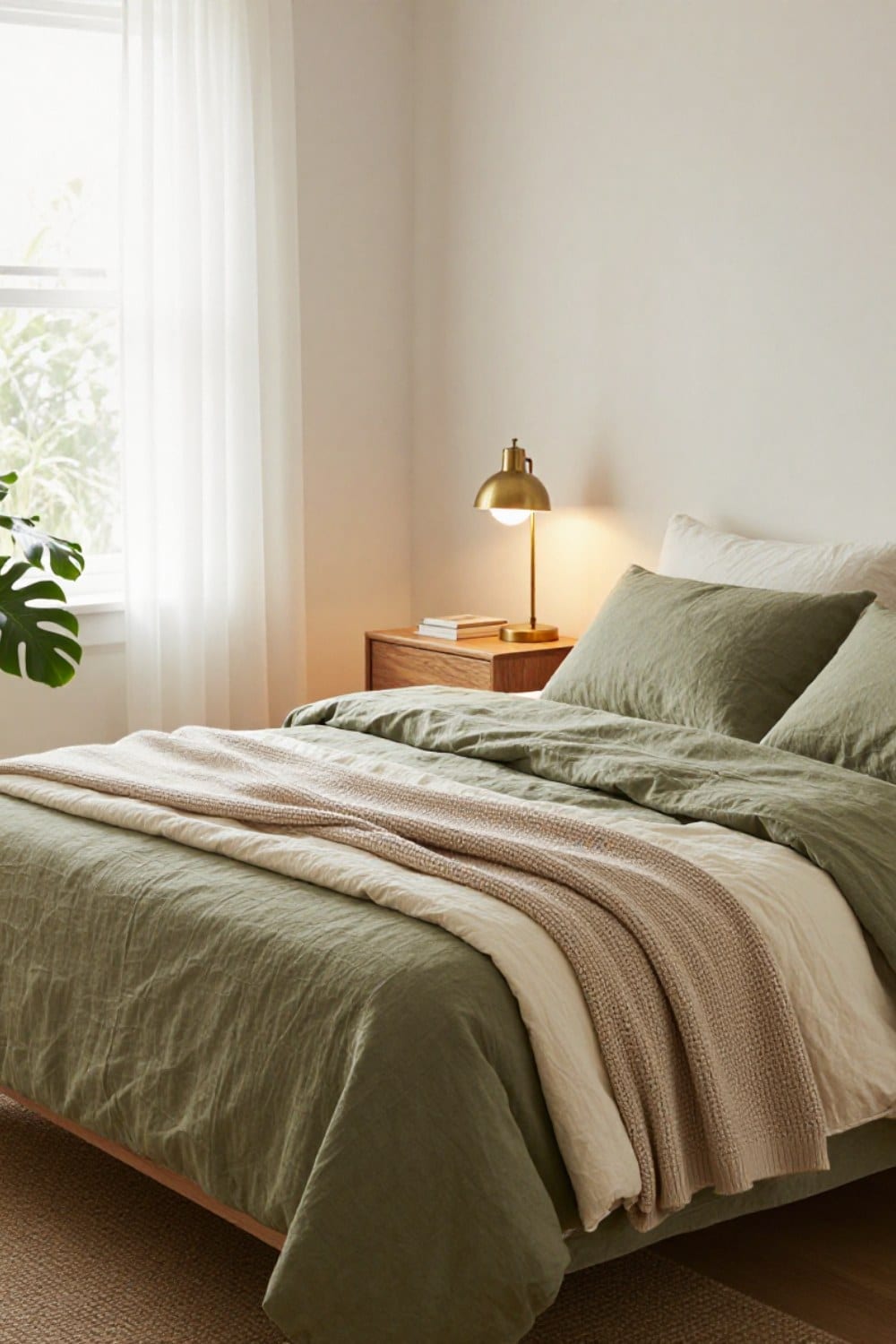
Olive Green Bedding Ideas: How to Make a Green Bed Look Collected
Olive green bedding ideas that make a bed look collected instead of matched: the three-tone rule, the fabrics that read expensive in green, what goes on top, and what belongs on the walls behind it.
Oct 22, 2026 · 11 min read
 Bedroom Sanctuary
What Color Walls Go With Green Bedding? Six Pairings That Work
Six wall colors that make green bedding look chosen on purpose: warm white, greige, soft plaster pink, taupe, pale sage and deep chocolate or charcoal. Each one comes with the green it suits, how your light changes it, and the wood that ties it together.
Oct 20, 2026 · 11 min read