A Sage Green Christmas Bedroom: Soft Green, Cream and a Little Brass
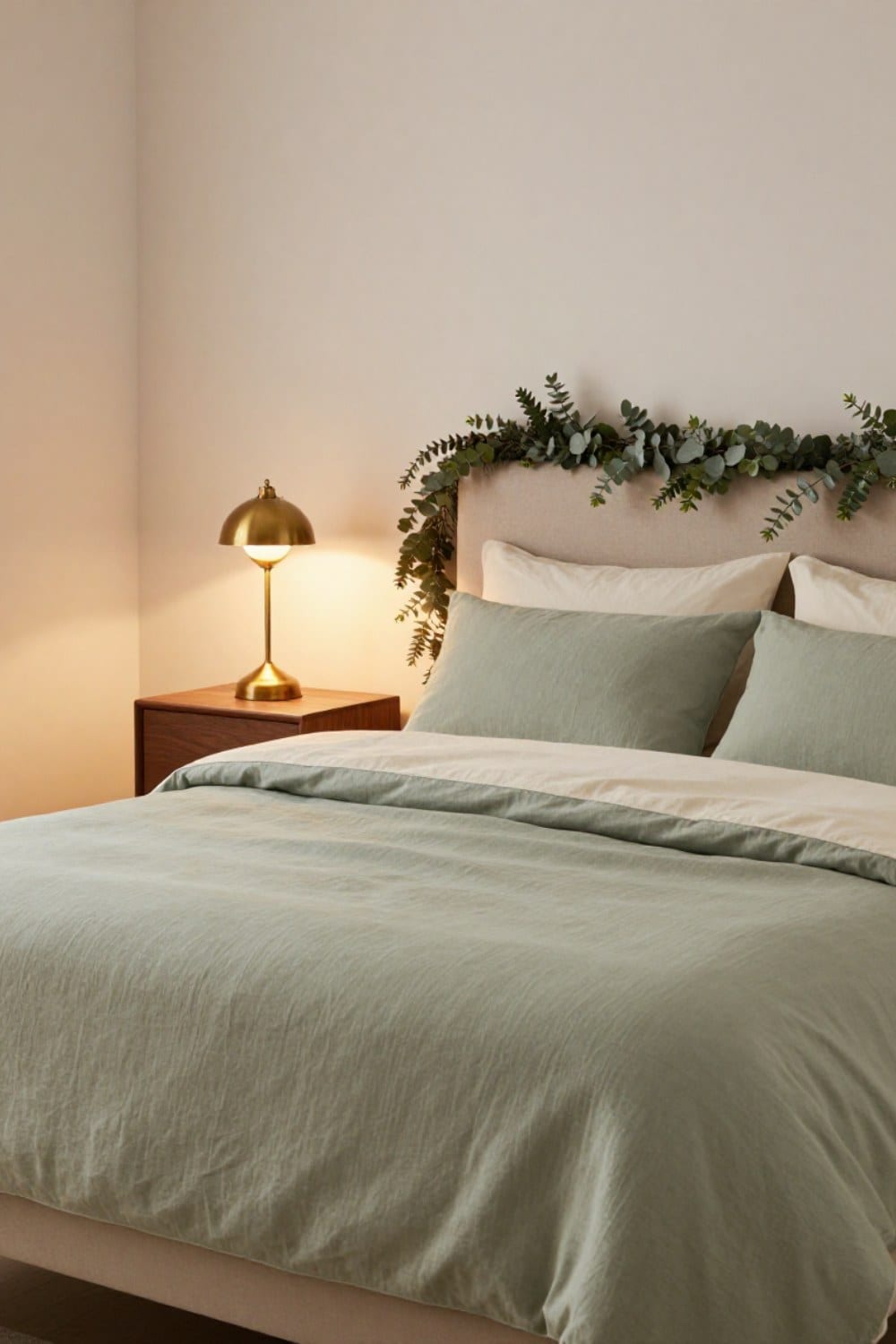
Sage can look like the calmest Christmas color there is, or like a cold hospital corridor. The difference is the company it keeps: cream, warm white, aged brass, natural wood and one honest 2700K bulb.

This post contains affiliate links. As an Amazon Associate we earn from qualifying purchases — at no extra cost to you.
A sage green Christmas bedroom sounds like a risky idea until you see one at nine at night, lamp on low, the whole room gone soft. Green is the oldest Christmas color there is. Sage just turns the volume down.
The catch is that sage is a gray-leaning, slightly dusty green, and that makes it fussy. Put it beside the wrong white or under the wrong bulb and it turns minty, or cold, or a little like a clinic hallway. I've managed all three. This is the palette I settled on after three Decembers in our guest room: sage, cream, warm white, aged brass and natural wood, roughly in that order of importance.
This is the palette post. For the garland, the headboard, the tree and the rest of the room, start with the series hub, Green Christmas Bedroom Decor: 15 Ideas That Feel Calm, Not Kitschy. Here we're only getting the color right.
Does sage green actually work for Christmas?
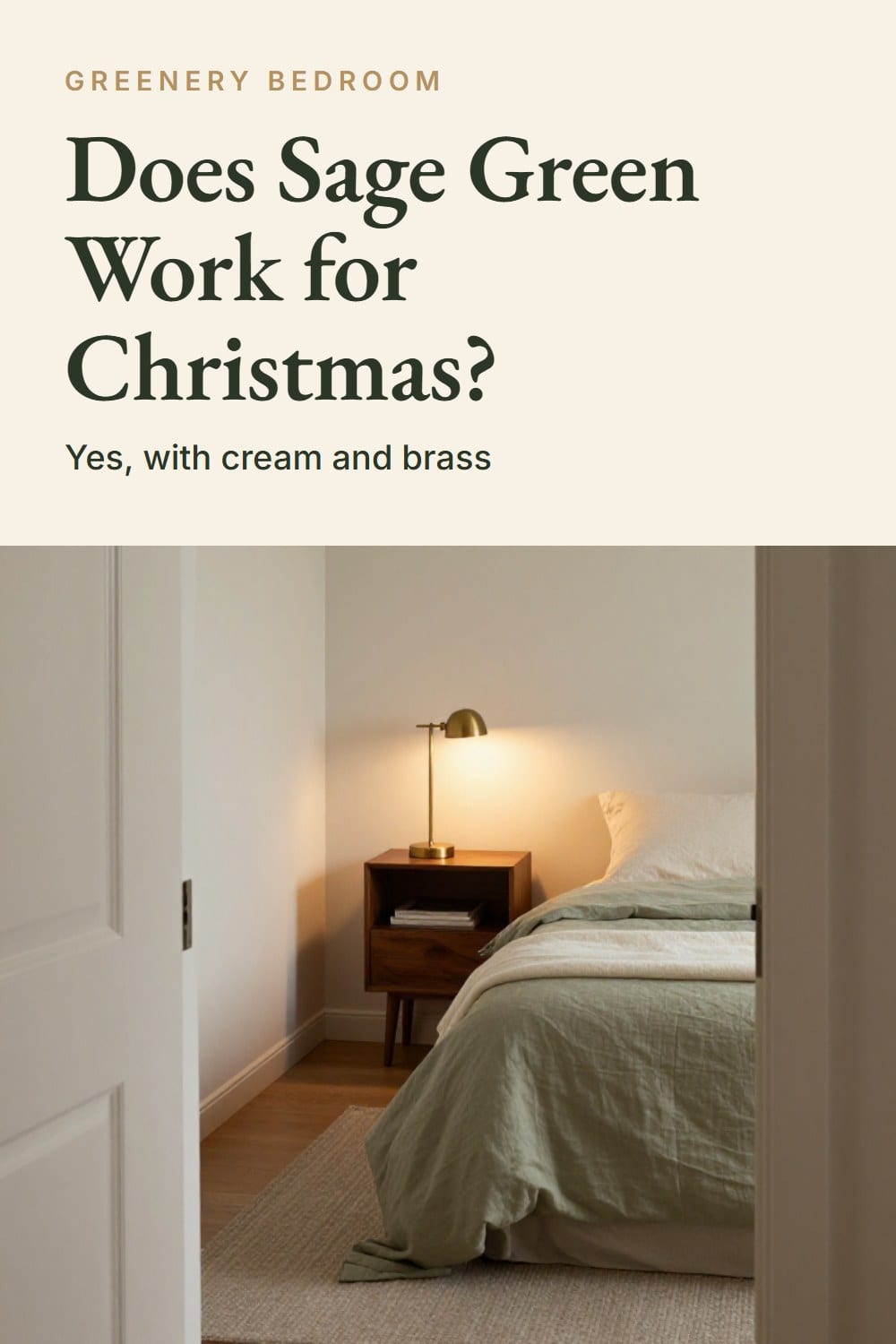
Yes, with one condition. Classic Christmas green is a saturated, blue-leaning pine, and it sits happily next to red and gold because all three are loud. Sage isn't loud. It's grayed down, which means it can't hold its own against hard contrast. It needs warm things around it.
Give it cream and brass and it looks like a room in an old house at the end of a long December day. Give it stark white and chrome and it looks like a spa that forgot the holiday.
My first try was a sage duvet cover over bright white sheets with a silver-toned garland on the headboard. It looked like a dentist's waiting room. I took the silver off and swapped the sheets for cream that same night, and the room came back to life.
Red can stay, but only as a tiny accent. One berry stem, one velvet ribbon end. Past that, sage starts to look like the supporting actor in a different room.
The palette, and the ratio that keeps it calm
Five colors, each with a job. Hold to these and the room almost styles itself.
- Sage is the lead. Duvet or throw, ribbon, a handful of ornaments. It carries the mood.
- Cream and oatmeal are the support. Sheets, pillowcases, a chunky knit, linen curtains. They keep the green from going cold.
- Warm white is the highlight, used sparingly: a taper candle, a ceramic dish, the string lights themselves.
- Aged brass is the glow. A lamp base, candlesticks, a small tray, a picture frame.
- Natural wood grounds it. Walnut or oak on the nightstand, a bread-board tray, a wooden bench at the foot of the bed.
As a rough ratio, aim for about half sage and green, a third cream and oatmeal, and the last sliver split between brass, wood and warm white. Squint at the bed. If you see a soft green blur with cream edges and a few gold sparks, you're there.
Add one darker green, olive or forest, in a single place so the sage has something to be lighter than. That tonal step is what makes a one-color room look layered instead of flat. A velvet throw is the easiest spot, and olive velvet bedding for winter goes through how to keep it rich instead of heavy.
Why sage and aged brass get along
Sage is gray-green and cool at heart. Brass is warm yellow-gold. Each one fixes the other's weak spot: brass warms the gray out of sage, and sage settles brass down so it never reads showy.
The finish matters. Aged, brushed or unlacquered brass has a soft, slightly brown-gold glow. Mirror-polished brass throws hot white highlights straight back from your bulbs and looks shiny and new, which is the opposite of the feel you're after.
I don't buy brass for Christmas. I move the brass I own into the middle of the room: the lamp from the hall console, a pair of candlesticks from the dining room, a small tray for the nightstand. Brass hooks on ornaments count too. Three or four pieces is plenty.
A quick test before you commit: hold the piece against your sage fabric near a window. If it looks orange or pinkish, it's too coppery for this palette. If it looks like warm brown-gold, it belongs.
Start with the bed: sage linen, cream and oatmeal
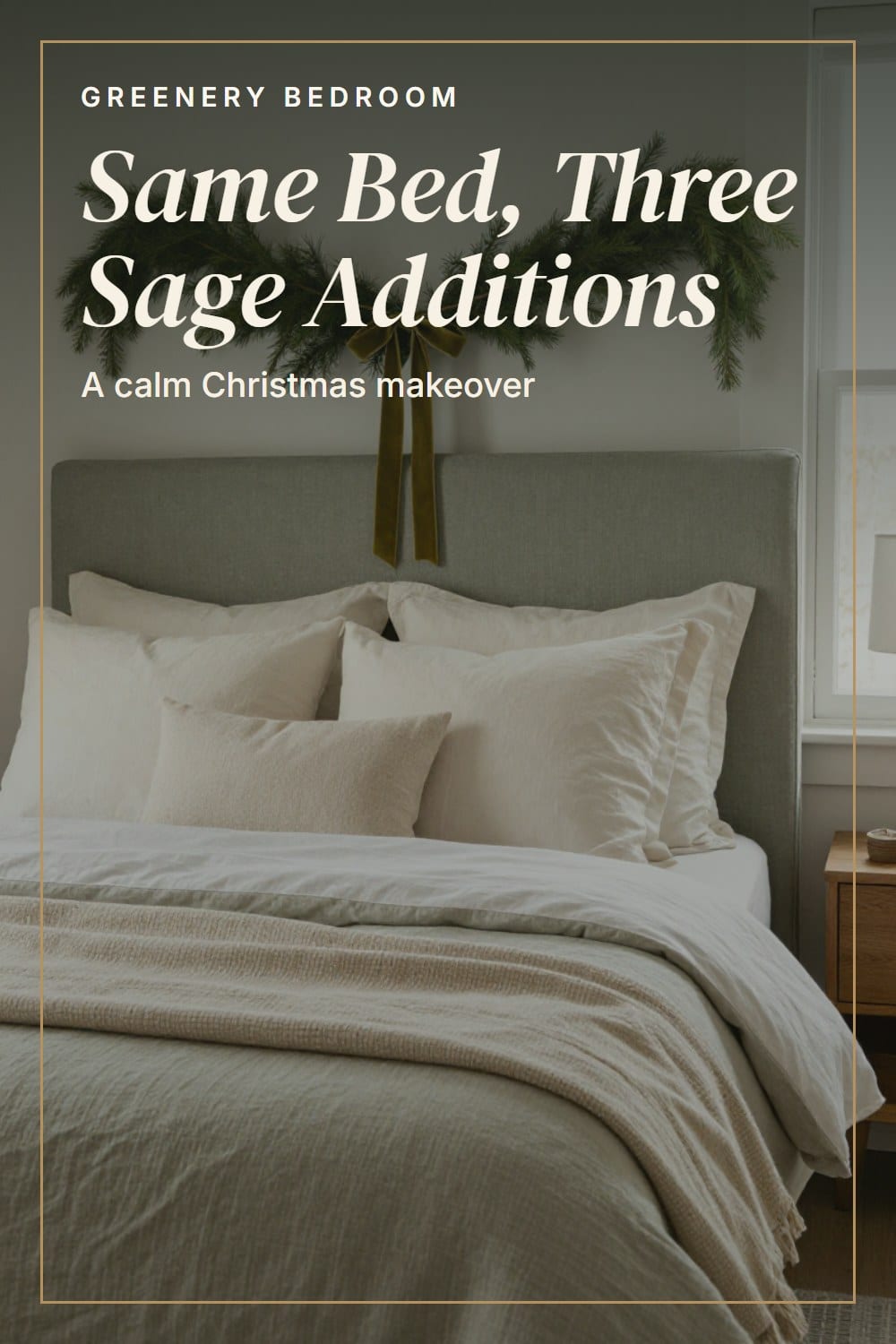
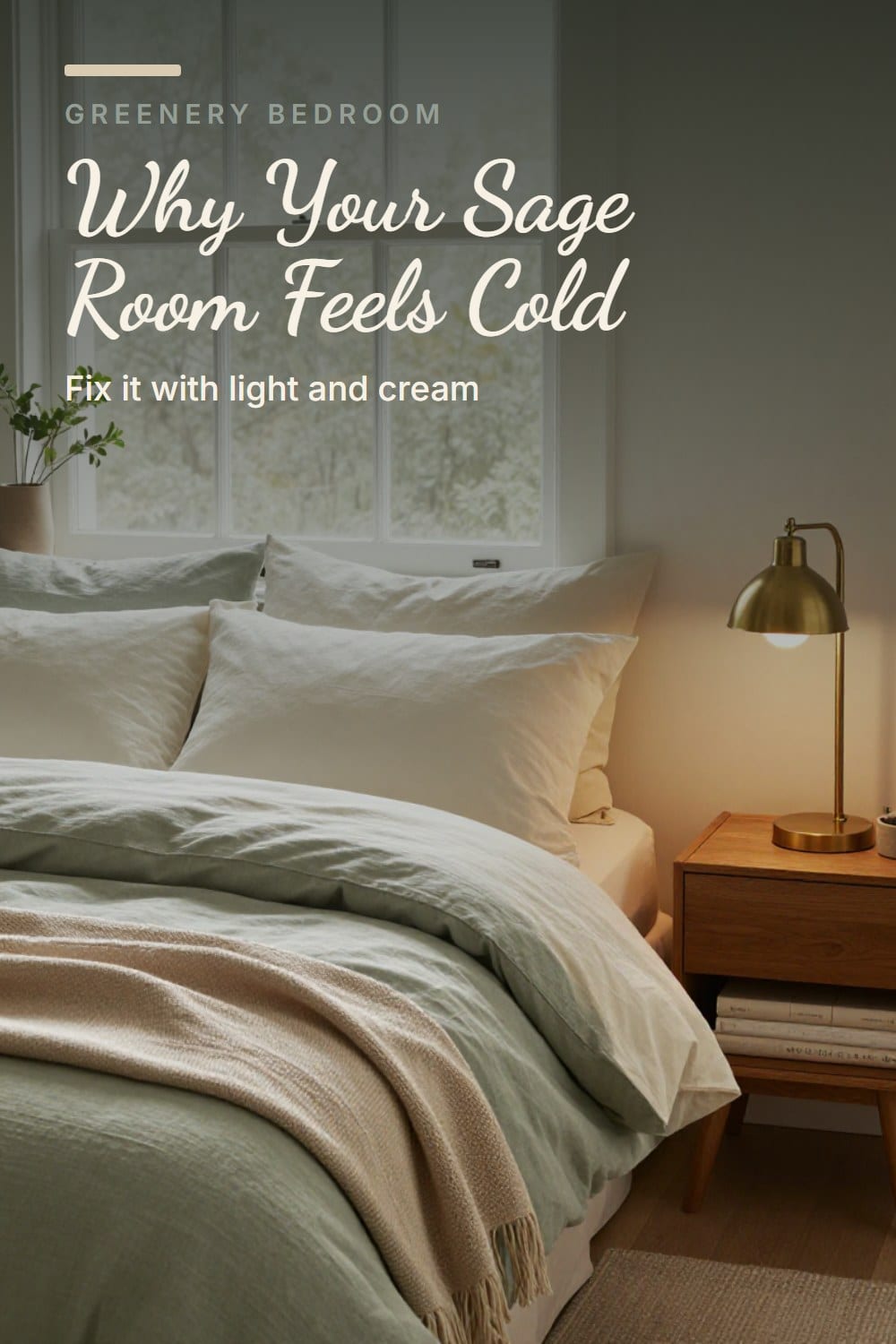
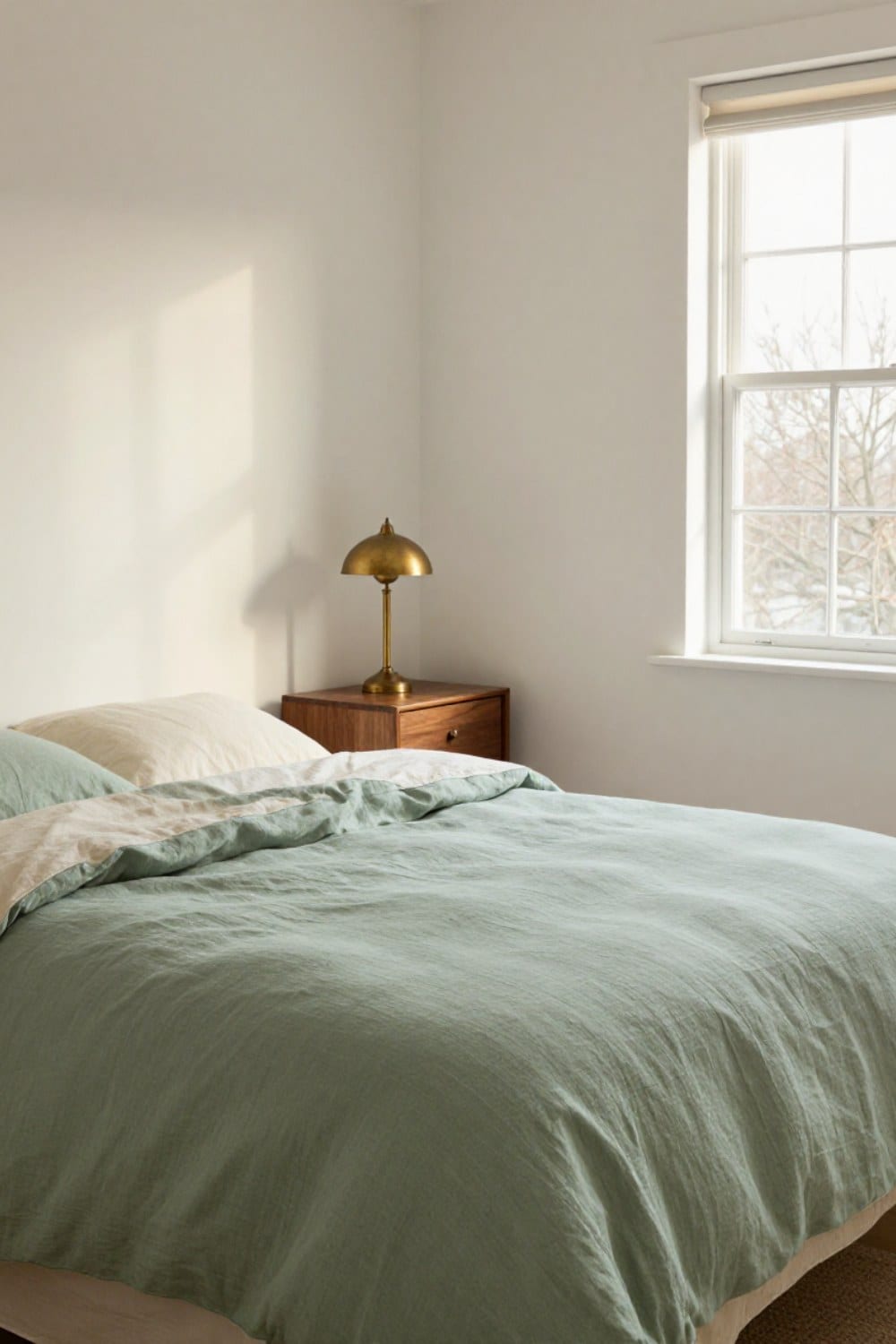
The bed is most of what you see when you walk in, so it carries most of the palette. A sage linen duvet cover is my favorite base. A midweight stonewashed linen, around 170 GSM, drapes softly and wrinkles in a way that looks relaxed instead of rumpled. Velvet reads richer under lamplight but heavier by day, so I save it for a throw.
Underneath, use cream sheets, not bright white. A soft cream percale or sateen takes the chill out of the green, and the creases look like linen should. Two sleeping pillows in cream, two euro pillows in sage, and one smaller lumbar in oatmeal or deeper olive is a combination I haven't gotten tired of yet.
Drape an oatmeal throw across the foot of the bed, off-center and a little careless. Centered and folded with a ruler, it looks like a hotel. Off-center, it looks like someone sleeps there.
If you're buying one piece for the season, make it the duvet cover. The thinking behind choosing bedding that lasts is covered in Luxury Bedding Gifts She'll Actually Use, and the same rules apply when the gift is for yourself.
Ribbon, garland and ornaments in sage
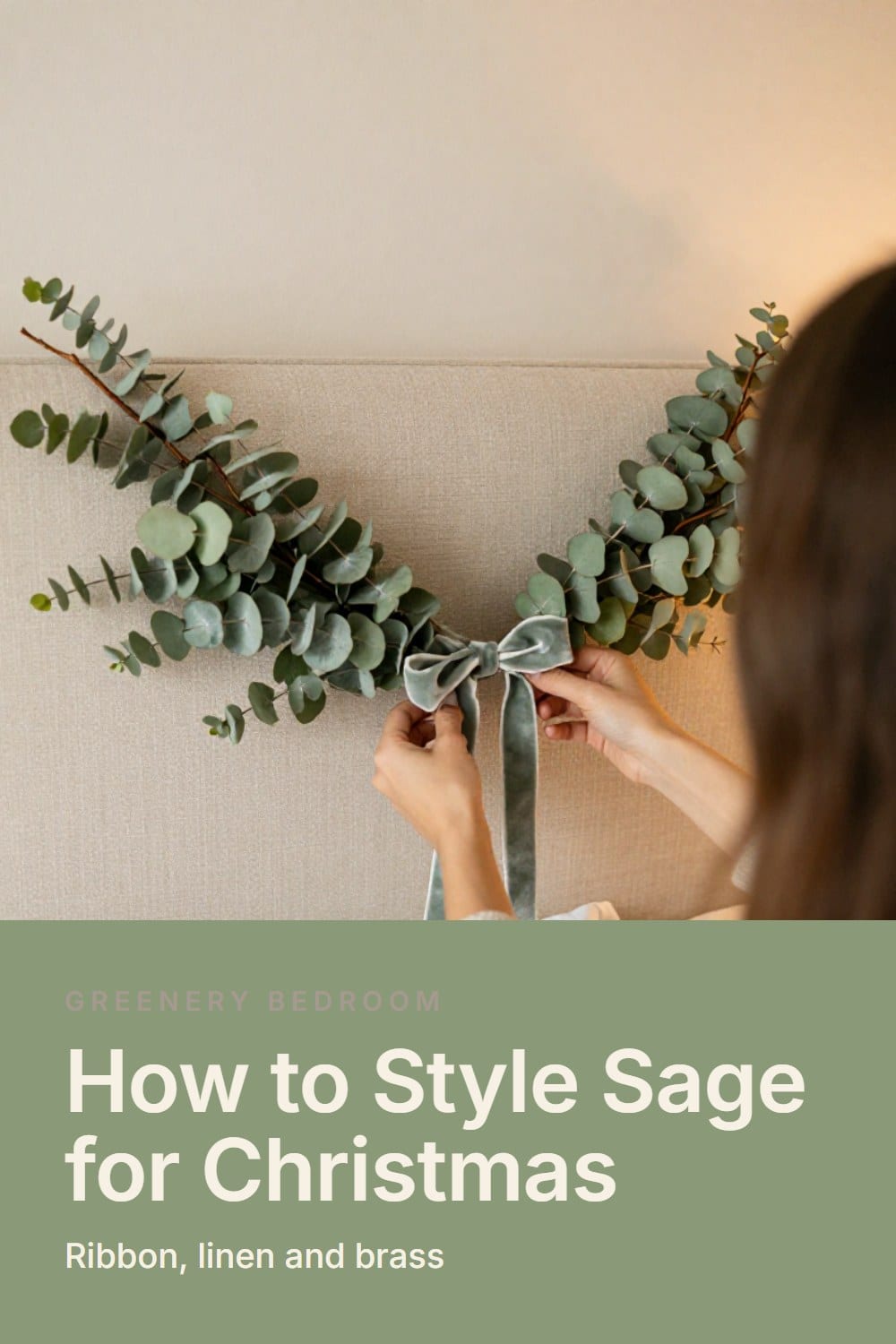
Ribbon is the fastest way to pull sage into a room. Wire-edged velvet or linen ribbon, 1.5 to 2.5 inches wide, tied in a loose bow with long tails, looks wonderful on a real cedar or fir garland because natural pine runs darker than sage. That contrast is the whole trick.
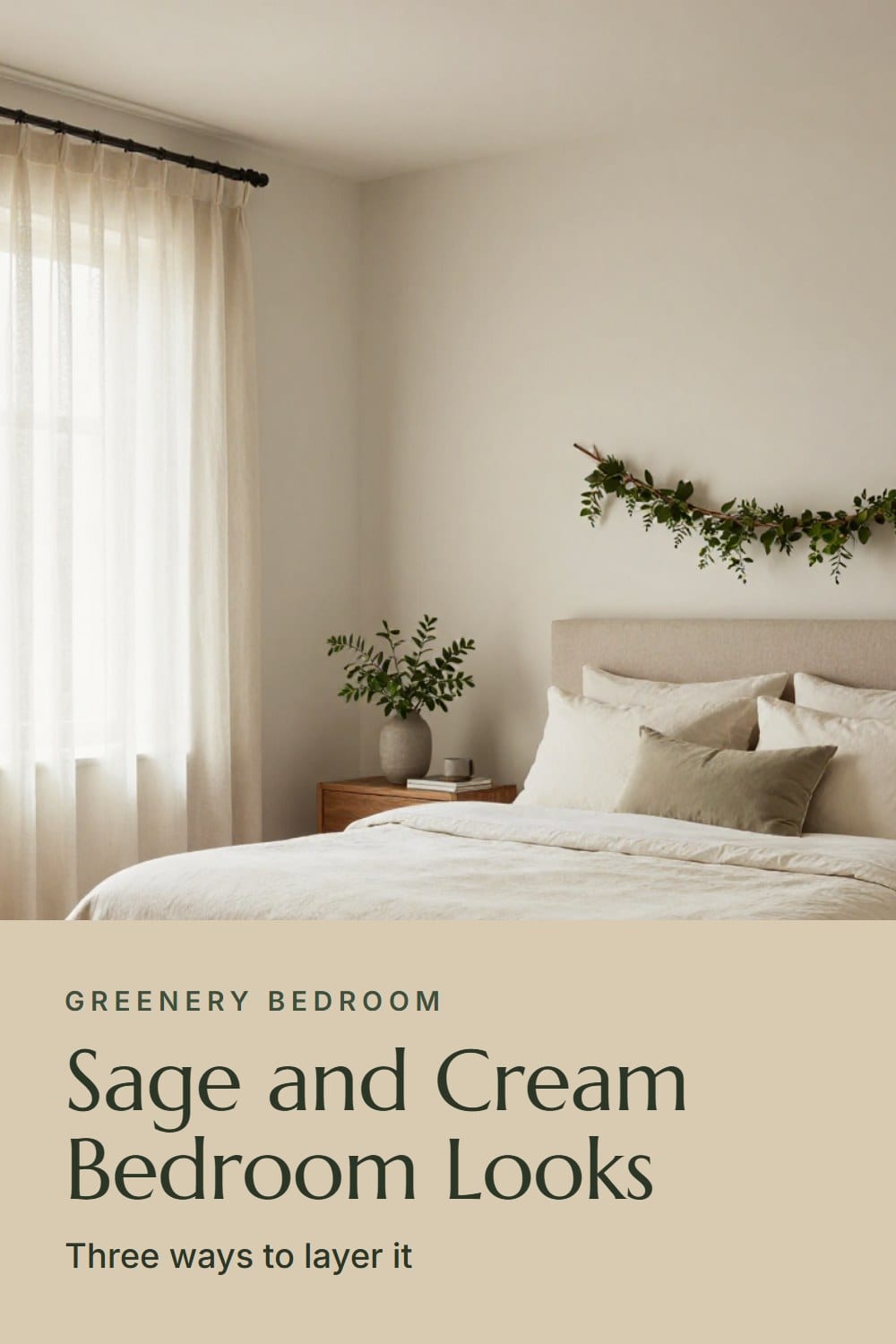
Eucalyptus is basically sage you don't have to buy. Seeded and silver dollar types are already the right gray-green, and a few stems tucked into a cedar garland tie the ribbon to the greenery. For hanging the garland itself, How to Hang Garland on a Headboard covers upholstered, wood and iron frames.
For ornaments, go matte. Matte glass and glazed ceramic in sage and cream, plus a few small brass pieces. Shiny mirrored glass picks up every bulb and color in the room and ends up looking busy. A dozen to twenty on a small tree is plenty, and A Small Christmas Tree in the Bedroom goes through tabletop, slim and living options.
Light changes everything: north rooms, south rooms and 2700K
The same sage looks like three different colors depending on the window. In a north-facing room the light is cool and bluish, so the green drifts toward slate. Lean harder on cream and brass, and switch your lamps on early. In December, I turn mine on around 3:30.
A south or west room does the opposite. Warm light pushes sage toward yellow-green, even olive, which is gorgeous at four o'clock and a bit muddy at noon. A cooler cream and a little more oatmeal keeps it balanced. East rooms are crisp in the morning and quiet by evening, so they mostly take care of themselves.
Then there are the bulbs. Use 2700K, and look for a CRI of 90 or higher on the box, which means colors render faithfully. At 3000K and up, sage turns minty and a little clinical. At the other end, 2200K amber filament bulbs make it go olive-brown. 2700K is the narrow, happy middle.
String lights follow the same rule: warm white, never cool white. Green or copper wire disappears into a cedar garland. A dimmer, or a smart bulb you can set low, lets one lamp do the work of three.
Candles, wood and the small warm things
Cream or ivory taper candles in brass candlesticks are the quietest way to bring in warm white. Beeswax candles have a natural warmth that bleached white ones lack. Light them only while you're awake and in the room, and snuff them before you leave, no exceptions.
Then wood. A walnut nightstand, a wooden tray holding a sage ceramic dish, an old bread board repurposed as a place to set your tea. Wood is the bridge between the green and the brass, and it stops the palette from reading as a color story instead of a room.
Scent is the last layer, and cedar and eucalyptus suit this palette beautifully. Whatever you light or diffuse, How to Make Your Bedroom Smell Like Christmas has the pet-safe details worth knowing first.
Seven things that make a sage green Christmas bedroom look cold
- Bright white sheets. They make sage look grayer by contrast. Cream is kinder.
- Silver, chrome or nickel. Cool metal fights the green. Stick to aged brass and wood.
- Five slightly different sages. Choose one main sage and make the rest clearly darker or lighter. Close-but-off greens look like a paint-chip mistake.
- Bulbs cooler than 2700K. The fastest way to turn a calm room clinical.
- Shiny plastic garland. Faux greens often run a loud blue-green that clashes with sage. If you go faux, pick matte tips in mixed shades, and let real eucalyptus stems do the soft work.
- Too much red. A single berry stem is an accent. Four red things is a different Christmas.
- Mirrored ornaments. Matte glass and ceramic let the sage do the talking.
When to put it up, how long it lasts, and when it comes down
Start with what lasts. The linens, ribbon, matte ornaments and brass can all go in the weekend after Thanksgiving. Nothing there goes stale.
Fresh greenery is the one that watches the calendar. Cedar and fir last about two to three weeks in a heated room before the needles start to drop, so I put mine up around the middle of December. Eucalyptus is more forgiving: it dries in place, holds its shape for weeks, and fades to a softer, grayer sage, which suits this palette better than it started.
Take the fresh greenery down once the needles turn crisp, usually by the first week of January. The sage duvet, cream sheets and oatmeal throw can stay on through winter, because they were never Christmas-only in the first place. That's the whole point of building a holiday room out of one calm color.
If this is going to be the room guests sleep in, Christmas Guest Bedroom Ideas pairs this palette with an afternoon's worth of finishing touches.
The rules in this post were simple: keep the green soft, go matte over shiny, and let a little warm metal do the sparkle. These four picks follow them.
Sage Green Velvet Finial Ornaments, 8 Piece Set
Velvet texture on the treeVelvet in sage adds a soft, tonal layer to the tree without bringing in any mirrored shine.
Matte Sage Green Ball Ornaments, 15 Piece Set
Filling out a small treeA matte finish keeps the ornaments from bouncing lamplight around, which is the reason I steer away from glossy glass.
Vintage-Style Gold Bells on Sage Ribbon, Set of 5
Warm metal on sage ribbonThe gold bells and the sage ribbon come together in one piece, so the brass note and the green stay in the same family.
Merino and Cashmere Wool Throw in Cream
Draping across the foot of the bedA cream merino and cashmere wool throw gives the bed a warm, soft layer that can stay on long after the greenery comes down.
The Sage Green Christmas Bedroom Checklist
The printable is being finished. It will live here, free, with no sign-up wall.
Questions about sage at Christmas
Frequently asked
Is sage green too cold for a Christmas bedroom?
Can I add red to a sage Christmas room?
What bulb color is best with sage?
Can I leave the sage up after Christmas?
Sarah Whitmore
she keeps the teak, she oils it in spring
Sarah has furnished the same porch three times and finally stopped. She writes about what actually survives a decade outdoors — which wood silvers, which fabric fades, and which inexpensive piece quietly reads the same as the expensive one.
SarahTimeless Manor is a participant in the Amazon Services LLC Associates Program, an affiliate advertising program designed to provide a means for sites to earn advertising fees by advertising and linking to Amazon.com. As an Amazon Associate we earn from qualifying purchases. This means if you click a link and buy something, we may receive a small commission at no additional cost to you. We recommend pieces we believe will still be on your patio in a decade — never on commission.
More from this corner
 Bedroom Sanctuary
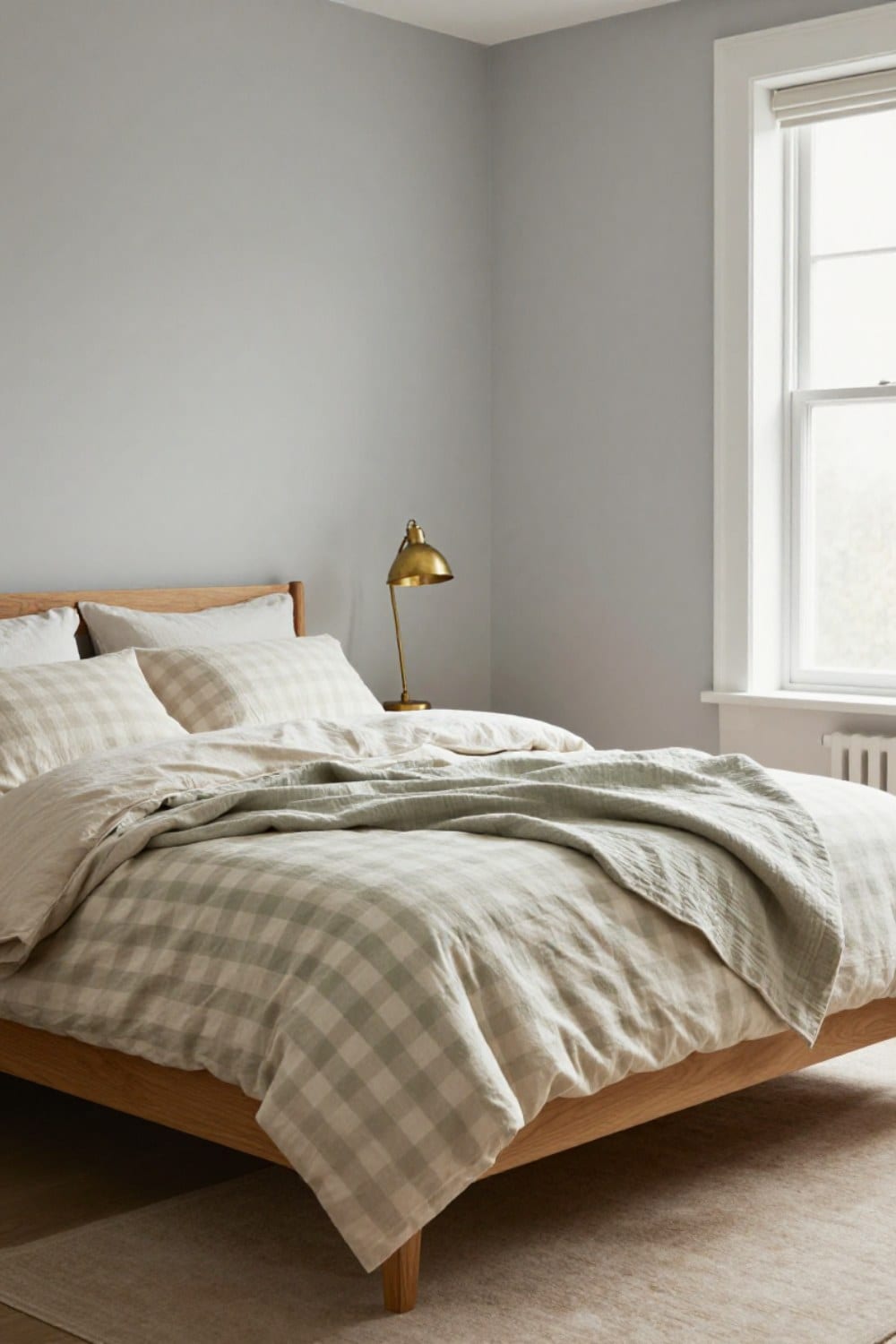
Green Gingham Bedding: How to Style It So It Looks Grown-Up
Green gingham bedding can look calm and collected instead of nursery. Here is how to choose the check size, keep it to one layer, mix it with other patterns and pair it with wood so the bed looks grown-up.
Oct 25, 2026 · 10 min read
 Bedroom Sanctuary
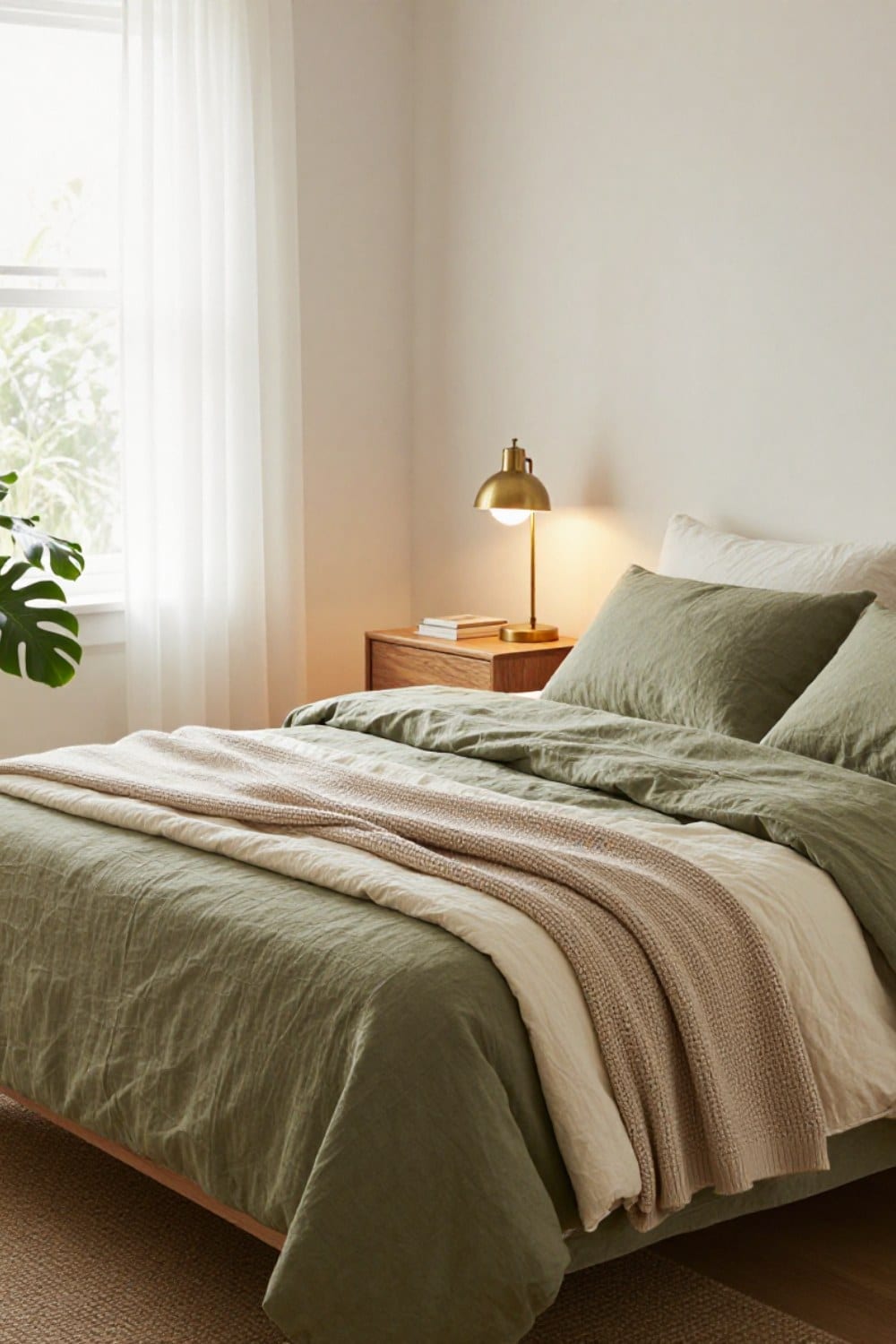
Olive Green Bedding Ideas: How to Make a Green Bed Look Collected
Olive green bedding ideas that make a bed look collected instead of matched: the three-tone rule, the fabrics that read expensive in green, what goes on top, and what belongs on the walls behind it.
Oct 22, 2026 · 11 min read
 Bedroom Sanctuary
What Color Walls Go With Green Bedding? Six Pairings That Work
Six wall colors that make green bedding look chosen on purpose: warm white, greige, soft plaster pink, taupe, pale sage and deep chocolate or charcoal. Each one comes with the green it suits, how your light changes it, and the wood that ties it together.
Oct 20, 2026 · 11 min read