Olive Velvet Bedding for Winter: How to Style It So It Looks Rich, Not Heavy
Olive velvet bedding makes a winter bed look rich when it sits on crisp white layers with matte linen beside it. Cotton versus polyester velvet, the one-sheen rule, lamplight, care and the March swap.

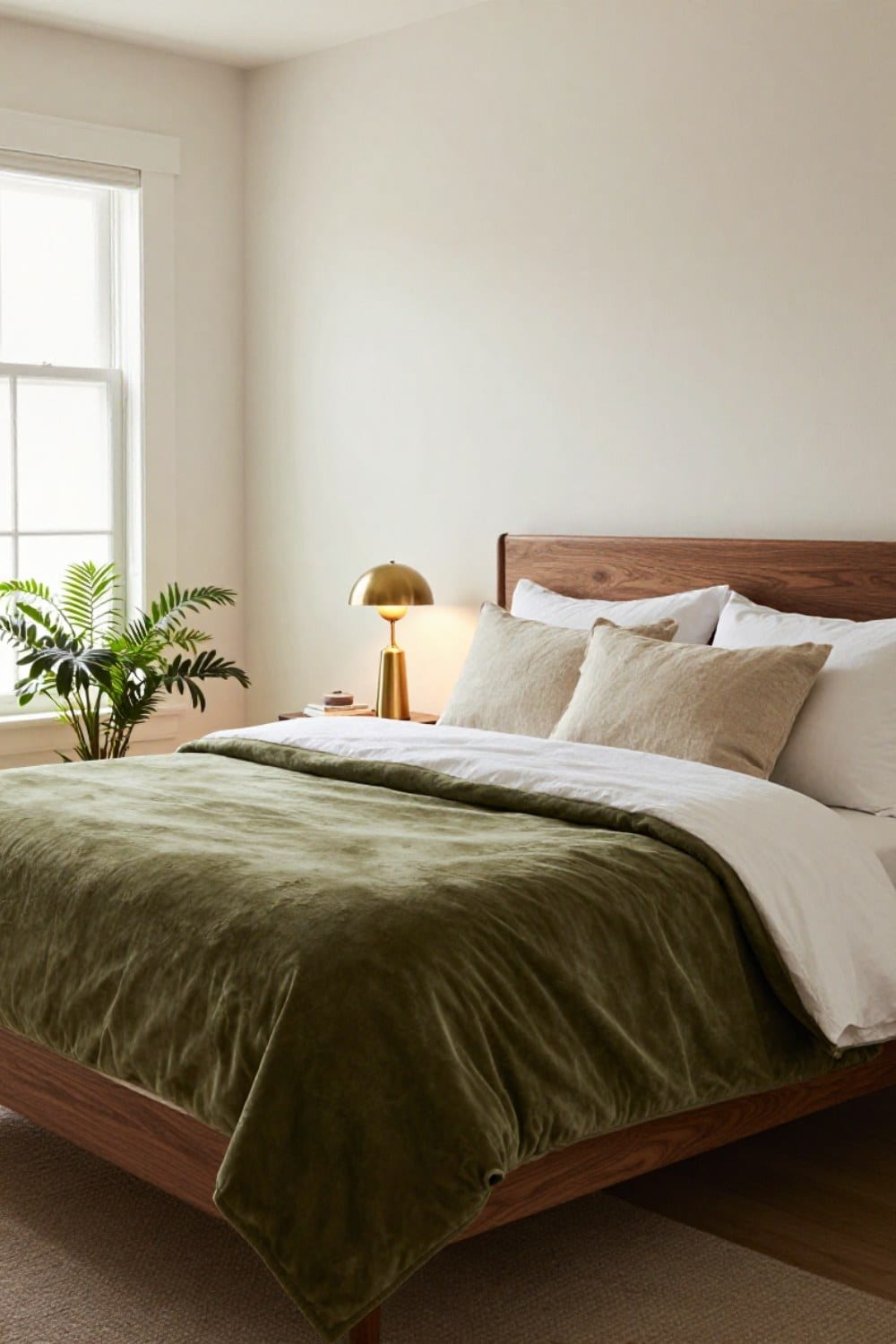
Olive velvet bedding is the quickest way I know to make a bed look rich in November without buying a single piece of furniture. It's also a quick way to make a bed look heavy, if the velvet goes on wrong. I've managed both, in the same guest room, two winters apart.
The difference is almost never the velvet itself. It's what sits under it, what sits beside it, and what the light does to it after dark. This post covers that and only that: a velvet quilt or coverlet in olive, at winter weight, from the first cold week to the last. For the rest of the room (garland, a tree, the whole green and cream mood), the Green Christmas Bedroom Decor guide has fifteen ideas that sit well around a bed like this.
If you're planning this in November, good. You have time to get the swap right, and velvet rewards a little planning.
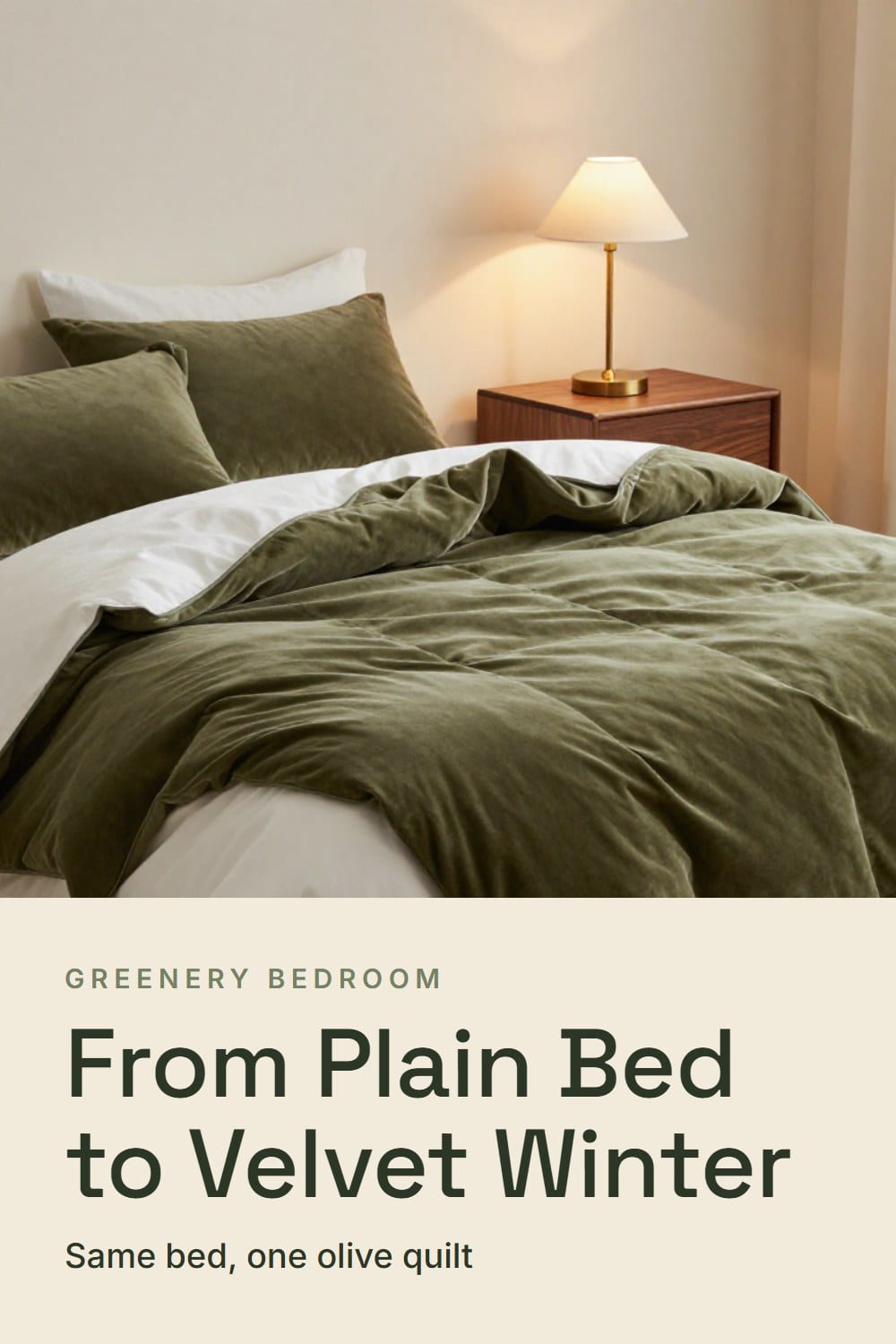
Why olive velvet works when the days get short
Olive isn't really a green. It's a green with brown and a little gray stirred in, which is why it behaves like a neutral. It sits easily beside oatmeal linen, walnut, cream walls and aged brass, and it takes one small ribbon of Christmas red without making a fuss.
Velvet adds the part winter takes away. A gray December afternoon flattens most colors, but the pile on velvet catches light at an angle, so the olive looks lighter where you smooth it and darker where it folds. The bed gets depth without anything else being added to it.
Heavy is a different problem. It comes from three things: a color that's too dark, too much of it, and the same shine everywhere. Fix those and the velvet reads as rich.
Cotton velvet or polyester velvet
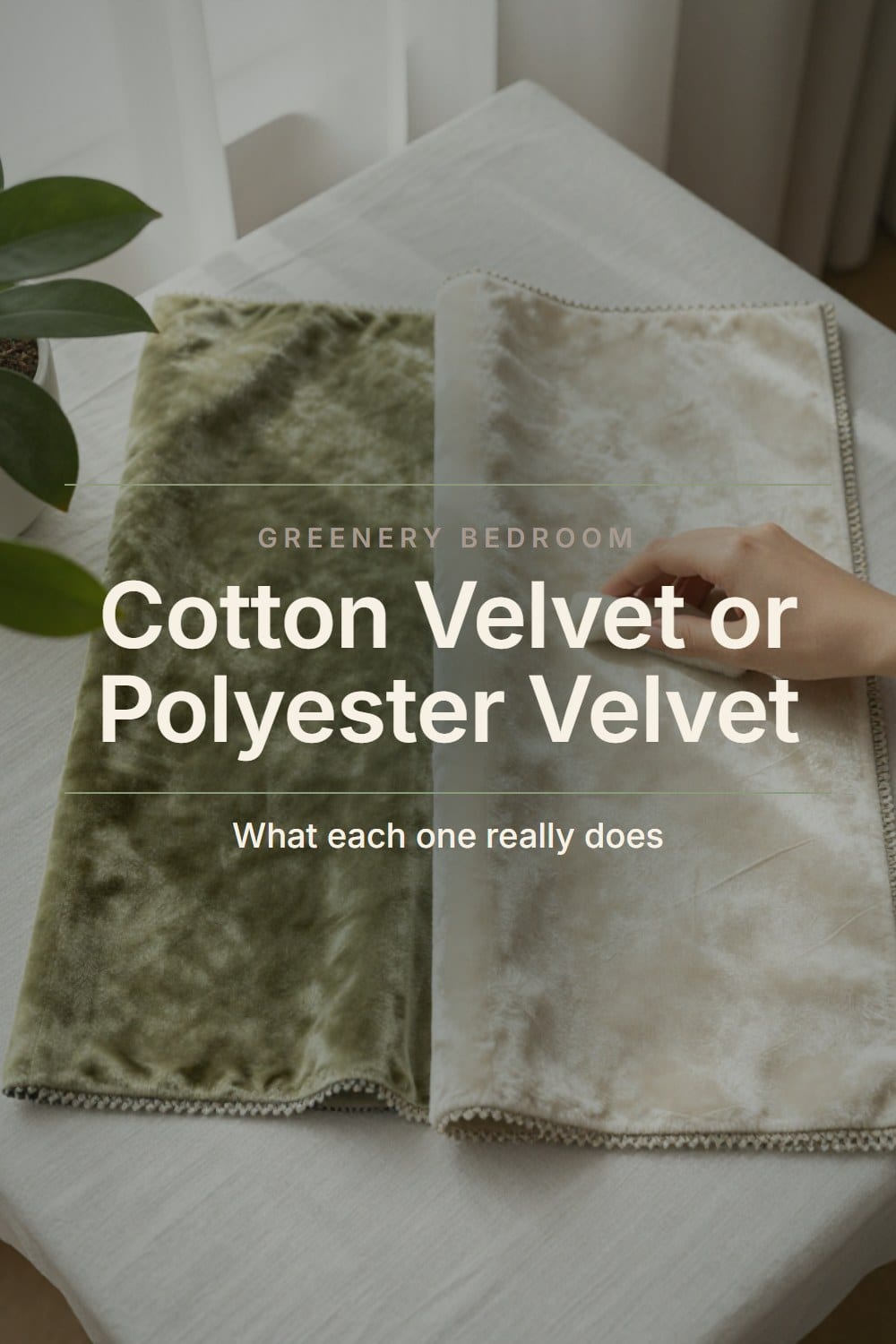
This is the decision that matters most, and the product page won't always help, so read the fiber content line before anything else. There are good versions of both. They just do different jobs.
Cotton velvet is denser, with a deeper, softer glow, closer to old upholstery than to anything glossy. It drapes well and it breathes, which counts when you're under it for eight hours with the heat running. The trade-offs: the pile crushes where you sit or lean, it can shed a little lint in the first few washes, and most labels ask for a gentle cycle or dry cleaning.
Polyester velvet is lighter, brighter and more forgiving. It springs back, it wrinkles less, and plenty of it goes in a regular machine on gentle. But it holds heat, it can read a bit glossy in a photo, and the lower grades pill. I bought a shiny polyester coverlet first because it looked wonderful on the shelf. By February it was pilling along the edge of the bed, right where I sit to put on socks.
- Warmth. Cotton velvet warms evenly and lets moisture out. Polyester velvet warms up faster and can turn clammy by the middle of the night.
- Sheen. Cotton gives a soft, deep glow. Polyester is brighter and flatter, and it looks harsh under an overhead bulb.
- Pilling. Cotton rarely pills but can crush and shed. Lower-grade polyester pills at the edges and wherever you lean.
- Washing. Cotton usually wants a gentle cycle in cold water or the dry cleaner, then air drying. Polyester is more forgiving but still wants low heat.
For the bed you sleep under every night, I'd choose cotton velvet or a cotton-rich blend. Polyester velvet is perfectly good on a guest bed that sees a few weekends of use, or folded as a throw across the foot. Before you commit, get a swatch if you can and rub the pile hard with your thumb for ten seconds. Then brush it the wrong way and watch whether it springs back.
Picking the right olive
Olive covers a lot of ground. Lean yellow and it turns warm and golden, lovely with walnut and brass. Lean gray and it goes cool and quiet, better against crisp white walls. Neither is wrong, but they aren't interchangeable.
Look at the swatch at night, under your own bedside lamp, because that's when you'll see the bed most. A mid-tone olive is the safe middle. Too dark and it reads black by ten o'clock. Too light and you've drifted into sage, which has its own lovely bedroom over in A Sage Green Christmas Bedroom.
Here's a trick I use. Photograph the swatch next to your headboard, then turn the photo to black and white. If the velvet vanishes into the wall, go a shade deeper. If it looks like a hole in the bed, go lighter.
Start with white underneath
Everything about the layering comes down to one idea: velvet looks richest on something crisp and matte. White percale is the classic. It's cool, flat and papery, and it makes the olive look deeper by contrast. In the coldest weeks I swap it for cream flannel, which is brushed and soft and just as matte.

Both sheets do a second job. They keep the velvet off your skin, so the quilt only needs washing a couple of times a season.
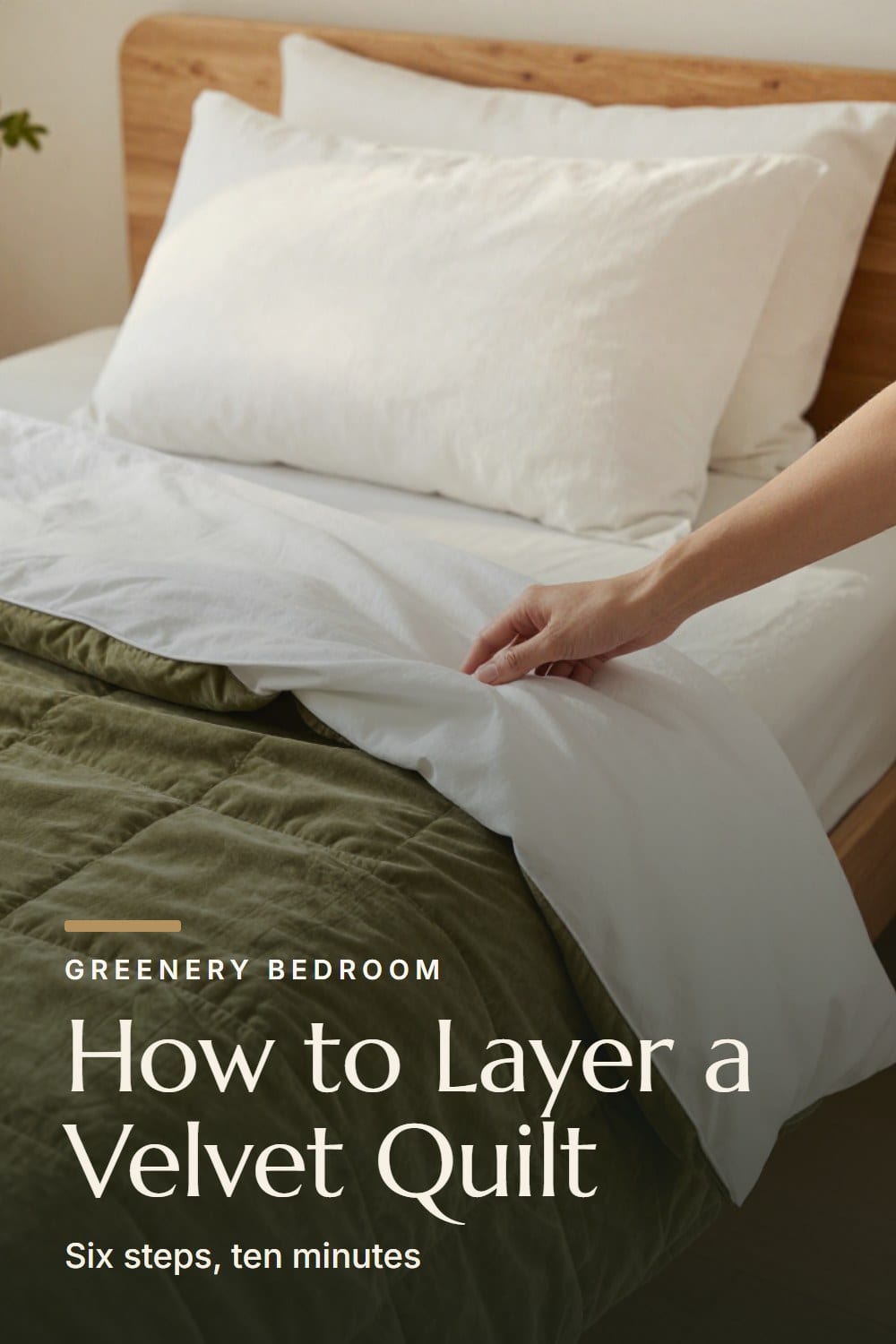
Pull the flat sheet up and fold its top edge back over the quilt, a band of white about 8 to 10 inches deep right under the pillows. That band stops the bed reading as one big block of green.
How to layer a velvet quilt, step by step
The first time takes about ten minutes. After that, five.
- Make the bed with a fitted sheet and flat sheet in white percale or cream flannel. Tuck the flat sheet in at the foot and sides.
- Add a thin wool or cotton blanket in oatmeal over the sheet, but only if your room runs cold.
- Lay the olive velvet quilt over everything and pull it up until the top edge sits a hand's width below the pillows.
- Fold the top edge of the flat sheet back over the quilt to make that white band, about 8 to 10 inches deep.
- Stack sleeping pillows in white percale cases, then linen shams in front, then one small square pillow last.
- Smooth it once and walk away. Velvet that has been fussed over shows every handprint.
Linen shams and the one-sheen rule
Here's the rule that does the most work in my bedroom: one shiny thing per bed. On this bed, the shiny thing is the velvet. Everything else is matte. Percale, flannel, linen, wool.
That means no satin ribbon on the pillows, no sateen sheets showing, no silky pillowcase peeking out, and no second velvet in a different color. Two sheens argue, and the bed starts to look like a display. Aged brass on the lamp is fine, because it's across the room on the nightstand and not on the bed.
Linen shams are the best companion I've found. Oatmeal or natural flax, washed often enough that they've gone soft and a little rumpled. Linen has a dry, slubby surface that makes the velvet look smoother by comparison. Two standard shams (20 by 26 inches) usually do it, or euro shams (26 inches square) if your headboard is tall. Add one small square pillow in the same olive velvet to tie things together. Just one.
Oatmeal linen shams also make a good gift, and the luxury bedding gifts list covers the other things she'll actually keep.
Let the lamp do the work
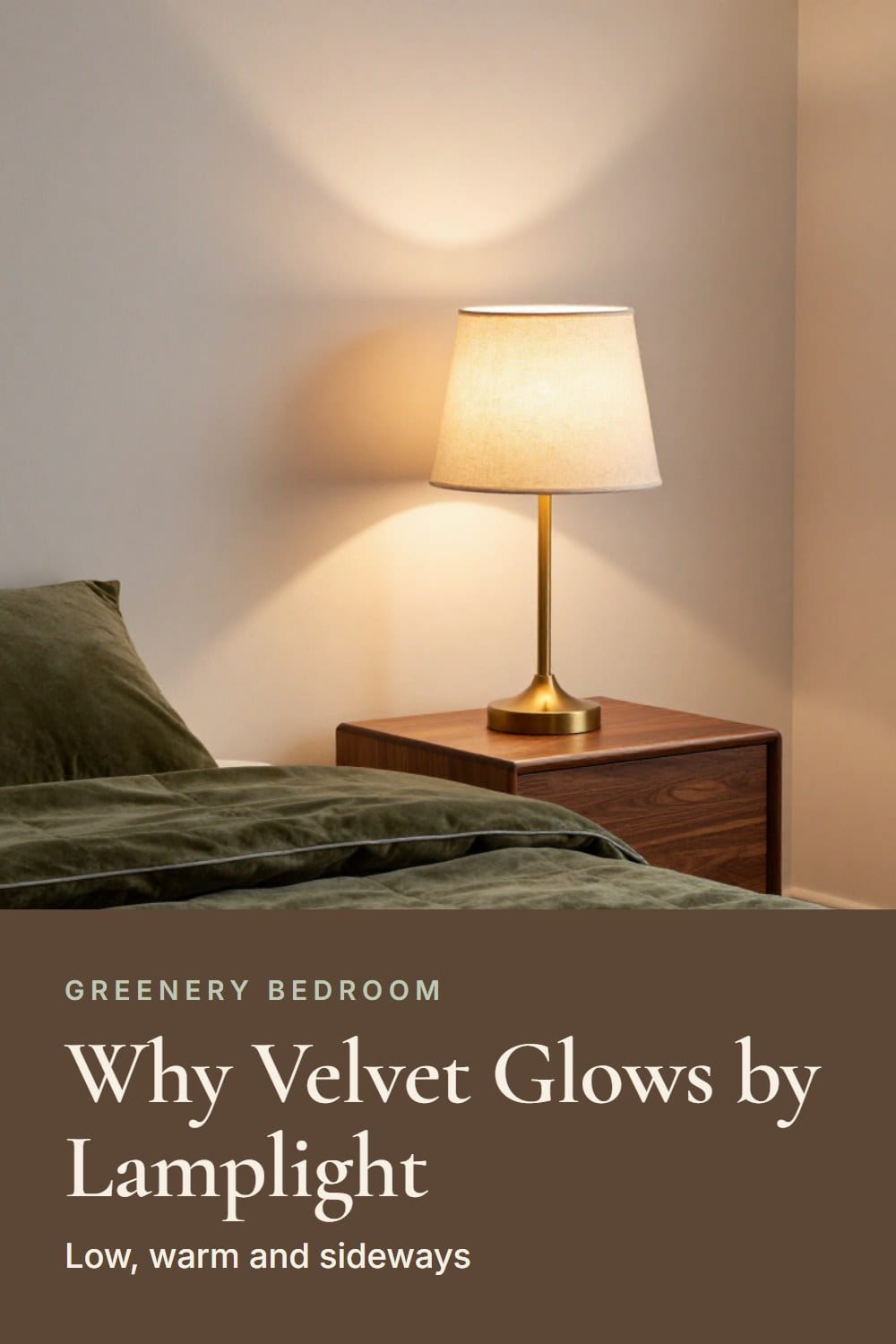
Velvet is as much a light fabric as a textile. Under a bare overhead bulb it looks flat and a little shiny. Under a lamp it wakes up.
Use a warm 2700K bulb in a lamp that sits lower than your shoulders when you're propped up in bed. A brass base and a linen shade throw a pool of light sideways across the pile, which is the angle velvet likes. The color shifts from dark to light as you move, and that shift is the whole reason people say velvet looks expensive.
In winter I switch off the overhead at dusk and run two lamps only. The first night I tried it, a neighbor stopped by and asked if I'd bought a new quilt. I hadn't.
Building the green Christmas bedroom around it
Because the quilt is already a deep green, the bed needs much less holiday on top. That's the best thing about using velvet this way. The bed is the decoration.
Choose one or two extras, not all of them. Garland on the headboard suits a plain wood or upholstered frame. A small tree fits a dresser corner. And if you're dressing a spare room, the guest room ideas show how to keep it to an afternoon. A cedar and fir scent can come later, with a gentler method than a candle.
Timing helps. Put the velvet on in the first properly cold week of November, when the nights start to bite. Wait until the weekend after Thanksgiving for garland. Fresh greenery dries out fast in a heated bedroom. Mine starts browning at the tips in about ten days, so anything touching the bed is faux and the real cedar lives on the dresser, in water.
The garland comes down in early January. The velvet stays until the end of February.
Keeping velvet from pilling, crushing and shedding
A velvet quilt is easy to live with once you know three habits.
Pilling. It starts where friction does, at the bed's edge and wherever you sit. On polyester velvet, lift pills with a lint roller or a soft fabric comb, lightly and with the direction of the pile. I skip the razor, because it cuts the pile. Cotton velvet mostly sheds lint rather than pilling, and a roller handles that.
Crushing. A handprint, a cat nap, a folded edge. Hold a steamer an inch or two off the fabric, then brush the pile back up with a soft clothes brush. Don't press an iron against the pile.
Washing. Sheets sit between you and the quilt, so it stays clean longer than you'd think. I wash mine twice a season. Check the label first, since cotton velvet is often dry clean only. If it can go in the machine: inside out, cold water, gentle cycle, no softener, then low heat or flat to dry.
The seasonal swap, November to March
Velvet is a winter fabric, and I treat it like one. It goes on in early November and comes off at the end of February.
In March I swap to a washed linen coverlet in oatmeal, or a plain white cotton quilt. Same white sheets, same linen shams. Nothing else has to move, which is the point of keeping the layers underneath neutral: the swap is one layer.
Before you store the velvet, air it for a day and wash it if the label allows. Fold it loosely, or roll it, and put it in a cotton pillowcase or other breathable bag with a cedar block on a closet shelf. Skip the vacuum bags, which crush the pile, and skip plastic bins that trap moisture. Refold along different lines next year so a crease doesn't set.
Start with the sheets. Get the white right underneath and the olive takes care of itself.
The Velvet Bed Layering Checklist
The printable is being finished. It will live here, free, with no sign-up wall.
Questions about olive velvet bedding
Frequently asked
Is velvet bedding warm enough for winter?
How often should I wash a velvet quilt?
Will olive velvet work with white walls?
Can I leave the velvet on the bed all year?
Sarah Whitmore
she keeps the teak, she oils it in spring
Sarah has furnished the same porch three times and finally stopped. She writes about what actually survives a decade outdoors — which wood silvers, which fabric fades, and which inexpensive piece quietly reads the same as the expensive one.
SarahMore from this corner
 Bedroom Sanctuary
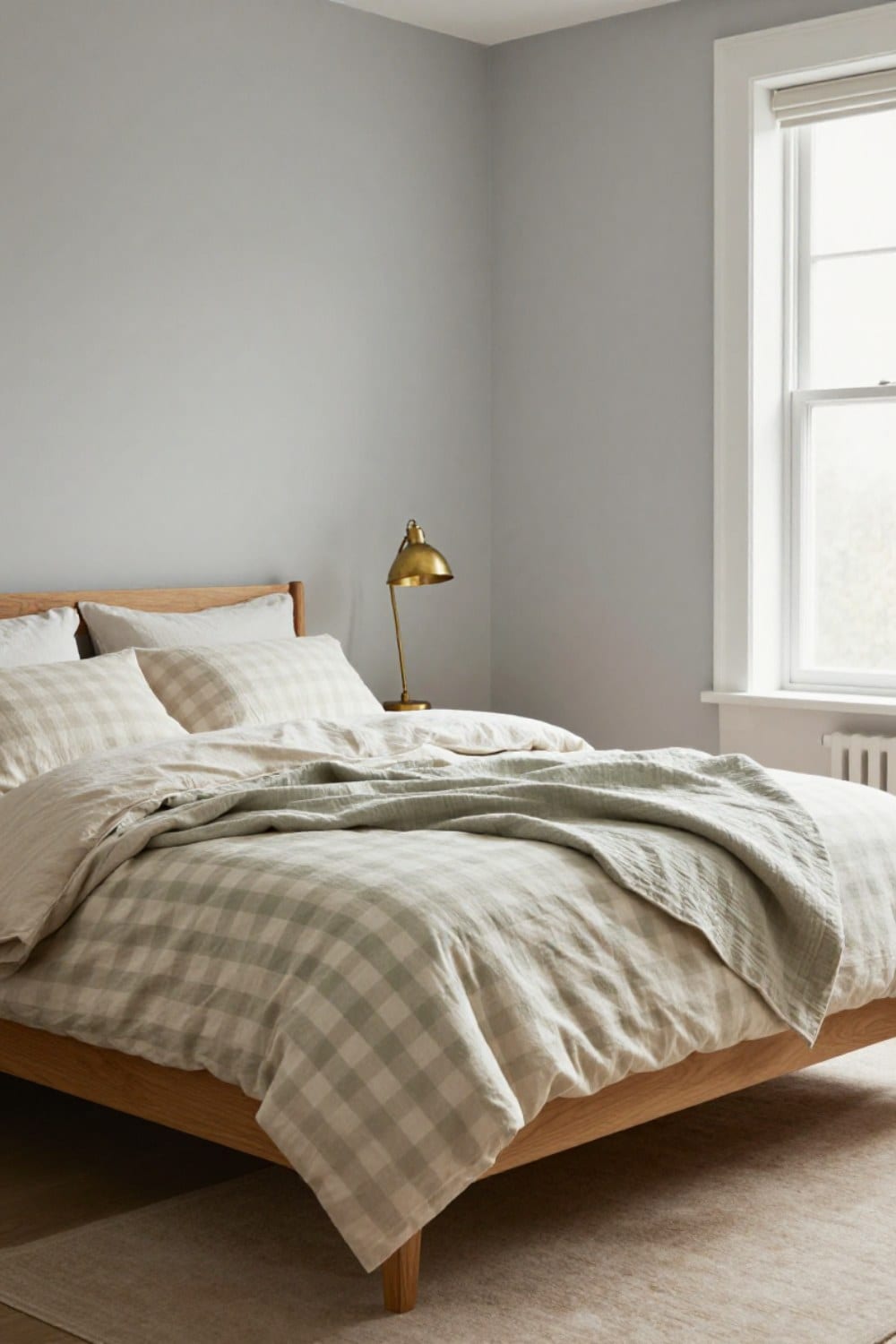
Green Gingham Bedding: How to Style It So It Looks Grown-Up
Green gingham bedding can look calm and collected instead of nursery. Here is how to choose the check size, keep it to one layer, mix it with other patterns and pair it with wood so the bed looks grown-up.
Oct 25, 2026 · 10 min read
 Bedroom Sanctuary
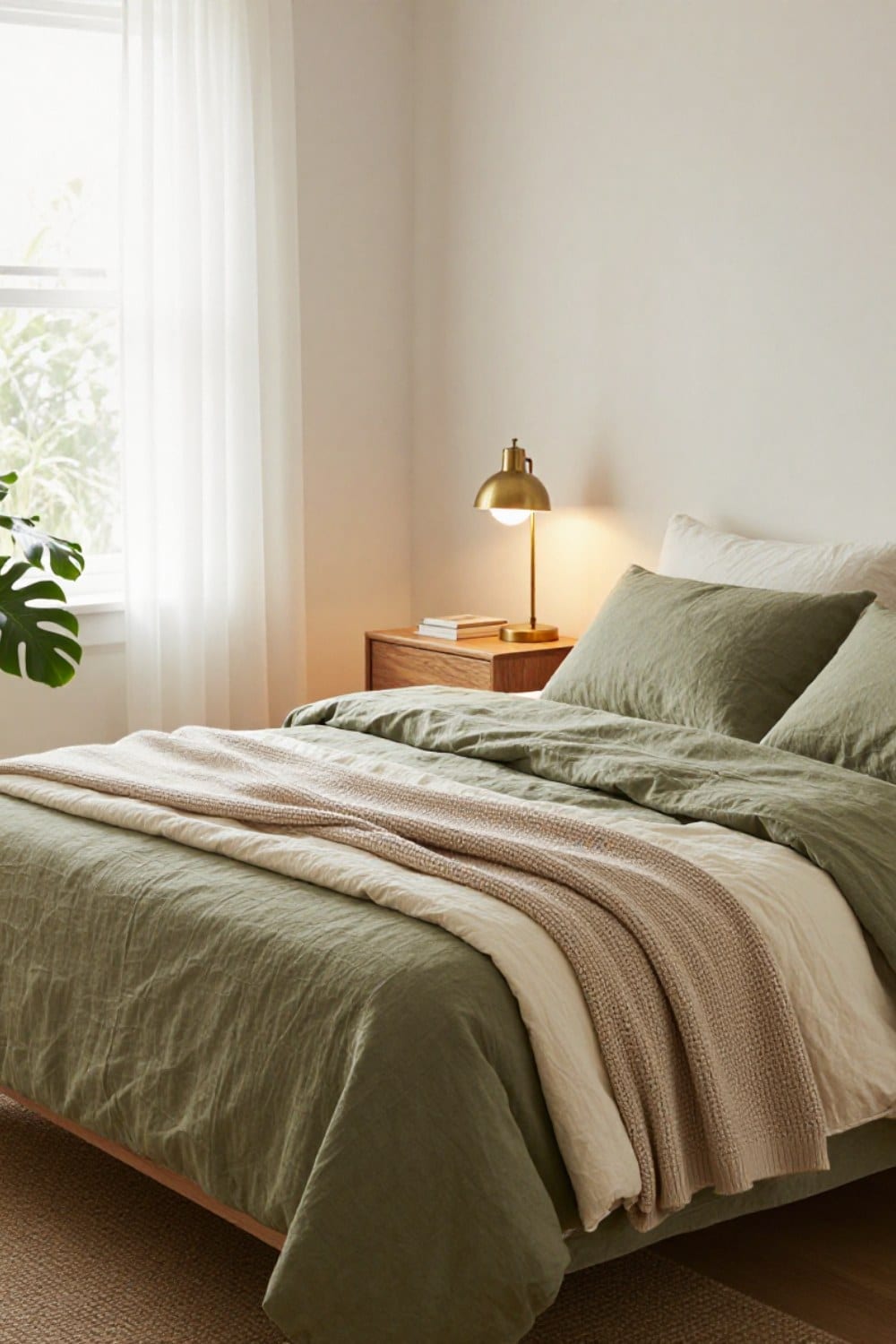
Olive Green Bedding Ideas: How to Make a Green Bed Look Collected
Olive green bedding ideas that make a bed look collected instead of matched: the three-tone rule, the fabrics that read expensive in green, what goes on top, and what belongs on the walls behind it.
Oct 22, 2026 · 11 min read
 Bedroom Sanctuary
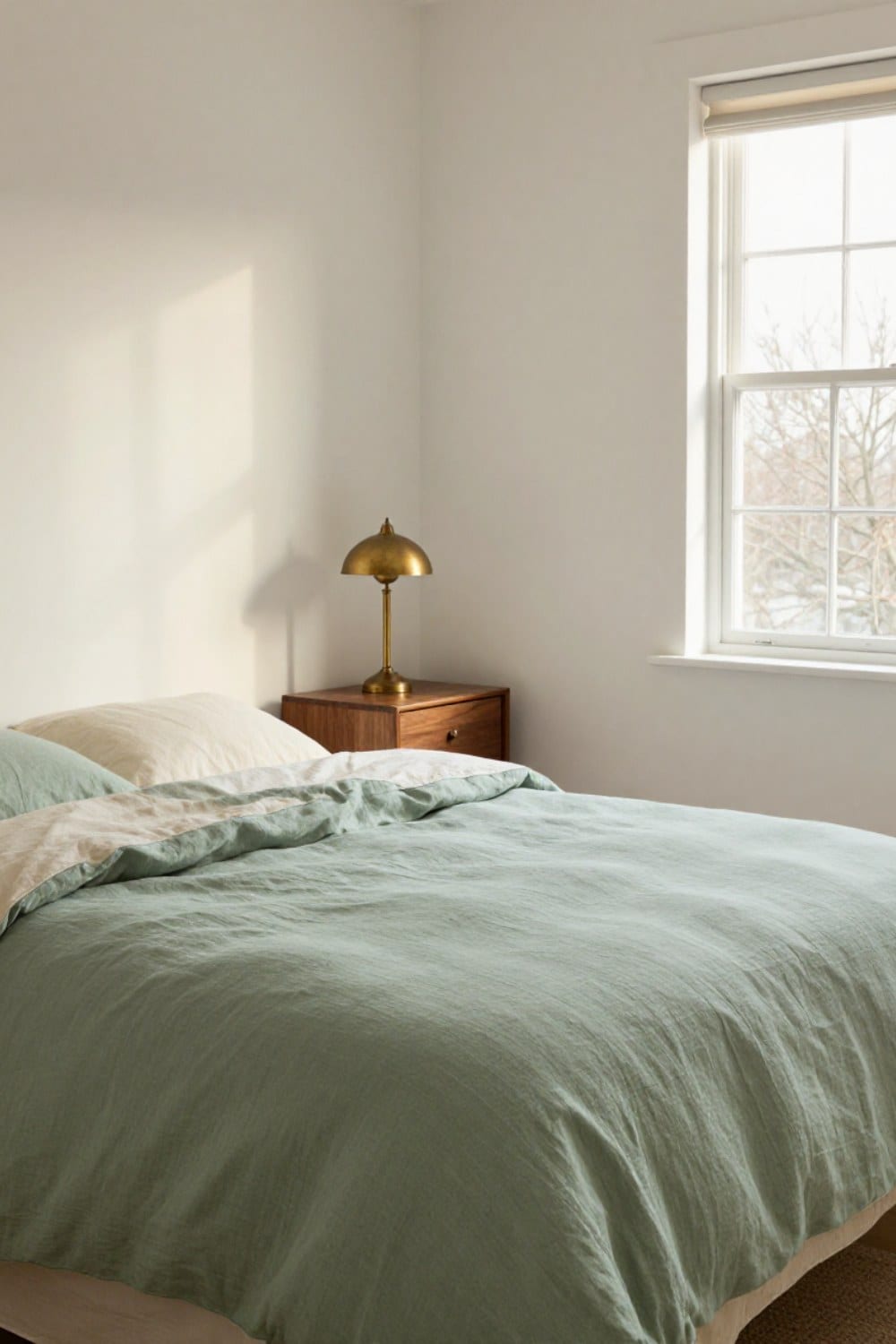
What Color Walls Go With Green Bedding? Six Pairings That Work
Six wall colors that make green bedding look chosen on purpose: warm white, greige, soft plaster pink, taupe, pale sage and deep chocolate or charcoal. Each one comes with the green it suits, how your light changes it, and the wood that ties it together.
Oct 20, 2026 · 11 min read