How to Make Your Bedroom Smell Like Christmas (Cedar, Fir and Eucalyptus)
Eleven quiet ways to make your bedroom smell like Christmas with real cedar, fir and eucalyptus, plus the honest rules for candles, diffusers and pets.


Walk into a house with a fresh fir tree and a pot of orange and cinnamon on the stove, and you feel December arrive before you have taken your coat off. Now try to make your bedroom smell like Christmas the same way and it goes sideways fast. Too sweet, too loud, and you are lying in it for eight hours.
I have done this wrong. Our first December in this house I ran a diffuser all night with a "winter forest" blend and woke up with a headache and a room that smelled like a car air freshener. Since then I have settled on something quieter: a few real things, put in the right places, and nothing burning while I sleep.
Here are eleven ways, roughly in the order I would do them. Pick three or four. If you are still working out the look of the room, the whole green and cream palette lives in Green Christmas Bedroom Decor, and this is the part that smells good.
Make your bedroom smell like Christmas, but quieter
A living room can take a big scent because you walk through it. A bedroom is the opposite. You are in it with the door shut, the heat on and your face a foot from the pillow.
So the goal is a hint. You should catch cedar when you open the door, then forget about it. Think of it as a note at the edge of the room rather than the main event.

1. Air the room out first
This is the unglamorous step that makes everything else work. A bedroom with the windows shut since October holds smell in the duvet, the curtains and the rug. Put pine on top of that and you get stale with a Christmas tree on it.
Turn the heat down, open the window for ten minutes, and wash the bedding. I hang the pillows on the sill while the sheets run. A clean base means a single cedar branch can actually be smelled.
2. Put cut cedar and fir branches in a pitcher
This is the one I would not skip. Tree lots usually have a pile of lower branches they trim off, and they will often let you take a few armfuls. Fraser fir smells sharp and a little citrusy. Western red cedar is sweeter and drier. A few of each is nicer than either alone.
Strip the bottom few inches, re-cut the stems at an angle, and stand four or five branches in a heavy pitcher of water on the dresser, about 18 to 24 inches tall. Change the water weekly and trim an inch off the stems each time.
Fresh greenery dries fast in a heated bedroom, so be honest about the timeline. In water, expect about two weeks of good scent. Out of water, the needles drop in days. Keep the pitcher away from the radiator.
3. Hang eucalyptus in the shower
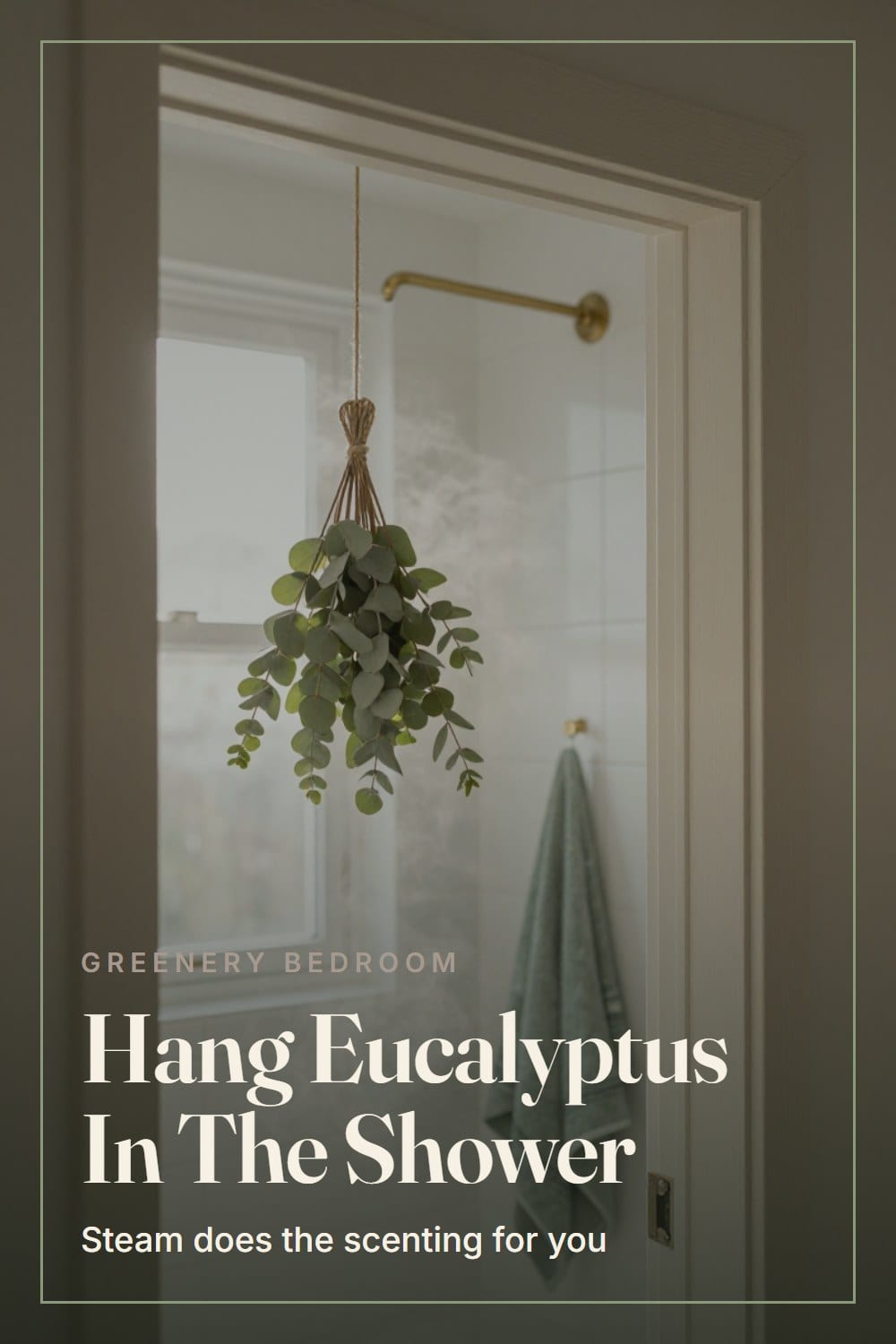
Tie five to seven fresh eucalyptus stems with twine and hang the bundle from the shower head, leaves down. Steam wakes the oils, and the scent drifts out through the bathroom door in a way that feels like a spa, with a slight pine edge that reads as winter.
It needs to be fresh eucalyptus, with that silvery gray-green look and a snap when you bend a stem. The dyed, preserved bunches sold for dried arrangements have almost no smell. Expect one to two weeks before it crisps and fades. If you have no bathroom attached to the bedroom, hang it on a hook behind the bathroom door instead.
4. Run a fir or cedarwood diffuser on a timer
A diffuser is where most people overdo it, me included. What works is a small one, three or four drops of fir needle or cedarwood oil, running for thirty to forty-five minutes in the evening while you change and read. Then it goes off.
A plug-in outlet timer takes the willpower out of it. Set it across the room from the bed, at least six feet away, and look for the botanical name on the bottle (Abies balsamea for balsam fir, for example). A bottle that only says "forest" is usually fragrance oil, and it smells like it.
Skip this one entirely if you share the room with a cat. More on that below.
5. Light a candle only while you are awake and in the room
A cedar or balsam fir candle in a heavy jar is lovely at the dressing table while you get ready or fold laundry. Trim the wick to a quarter inch first, set it on a tray away from curtains and bedding, and let it burn an hour or two at most.
It goes out before you get into bed. Not later, not after one more chapter. Out.
6. Tuck cedar blocks into the closet and drawers
Aromatic red cedar blocks cost very little and smell like an old trunk of good wool. Put one in each dresser drawer and a few on the closet shelf. The scent hits when you open the drawer, which is exactly how quiet it should be.
When the smell fades after a couple of months, rub the block with a bit of 120 grit sandpaper and it comes right back. People swear cedar keeps moths away. I would not trust it to, so I keep my wool sweaters in sealed bags anyway and enjoy the cedar for the smell.
7. Let a simmer pot do the work from the kitchen
Some Saturday afternoon, put a saucepan on the stove with a sliced orange, two cinnamon sticks, a few whole cloves, a bay leaf and a sprig of rosemary, then cover it with water and keep it at the lowest simmer. Open the bedroom door and let the smell travel up the stairs on its own.
Top up the water every half hour, because the pot will scorch if it dries out. Never leave it unattended and turn it off before bed. If you have pets, keep it out of reach, since cinnamon and clove are on the ASPCA's list of things to be careful with.
8. Mist the linens lightly
A fir or cedar linen spray is nice, if you use it with restraint. Two or three mists at the foot of the duvet from about a foot away, an hour before bed so it dries, is plenty. Skip the pillow your face is going to be on.
Test a hem first. Water spots show up on silk and especially on velvet, so if you are styling the bed with olive velvet bedding, spray the cotton sheets underneath and leave the velvet alone.
9. Set out a clove-studded orange
Press whole cloves into an orange, pole to pole, about a quarter inch apart. It takes twenty minutes in front of a podcast. Set it in a shallow dish on the nightstand and it perfumes the corner for weeks as it slowly dries, shrinking into something that looks like an antique.
It is faint, which is the point. You will smell it when you lean over to turn off the lamp.
10. Grow a rosemary tree
A trimmed rosemary plant in a terracotta pot smells like a pine forest crossed with a kitchen, and it keeps going long after cut branches have dried out. It is the lowest-effort option here as long as it has a bright windowsill. The ASPCA lists rosemary as non-toxic to cats and dogs, which is why it is my pick for houses with pets.
If you want a bigger green moment, a tabletop tree does the same thing with more drama. I covered the options in a small Christmas tree in the bedroom.
11. Rotate one thing, because your nose gives up
After about twenty minutes in a scented room, your nose stops reporting it. Guests notice it. You do not. The usual response is to add more, which is how bedrooms end up smelling like a candle shop.
Do the opposite. Step out for ten minutes, then walk back in and see what you catch. Swap one element every few days, such as new branches, then the orange, then the diffuser on a different night. A rotating hint always seems fresher than a constant cloud.
A word about cats, dogs and essential oils
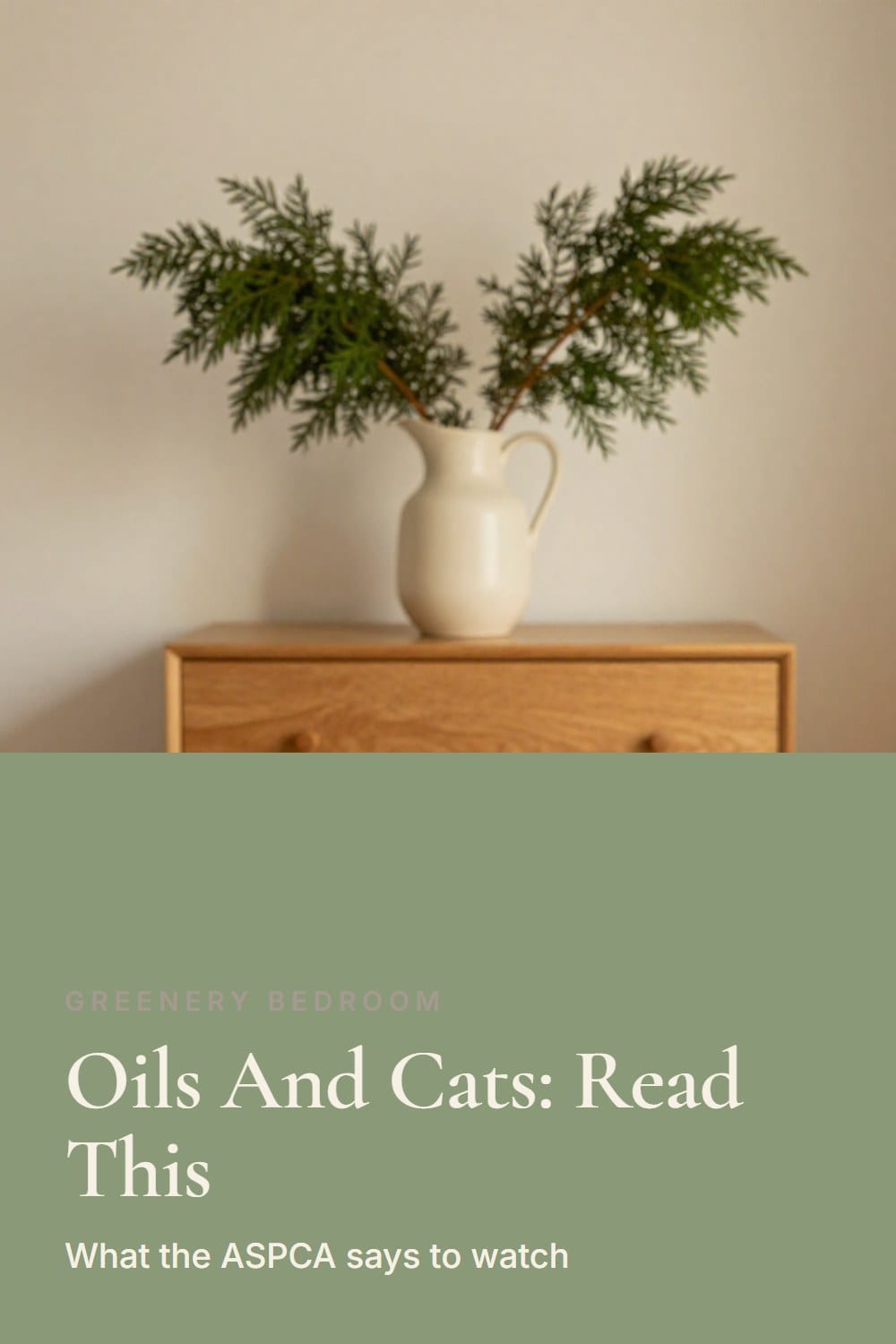
This is the part nobody puts on the pin. The ASPCA's animal poison control center warns that several common oils, including tea tree, pine, eucalyptus and cinnamon, can be toxic to cats and dogs, and cats are the most at risk because they process these compounds slowly. You can read the details at aspca.org.
In a house with a cat, I would skip the diffuser and use dry things instead: cedar blocks in closed drawers, a rosemary plant, a simmer pot kept on a high counter. Hang eucalyptus where paws and teeth cannot reach it. Keep fir needles off the floor, and do not let a cat drink the water from the branch pitcher.

When to put it up and when it comes down
I start the bedroom the first weekend of December, a week or so after the rest of the house, because it is the one room I am quietly slow with. Branches go in then, the eucalyptus goes up in the shower, and cedar blocks go in the drawers.
Cut greenery lasts about two weeks in a heated room, so I replace the branches around December 15th. That keeps the room smelling its best on Christmas morning, when you actually want it. Everything comes down by New Year's weekend. By then the needles are brittle, and brittle needles ruin a vacuum.
If this is the room guests will sleep in, the same hint works as a welcome. There is more on that in Christmas guest bedroom ideas.
The Bedroom Scent Checklist
The printable is being finished. It will live here, free, with no sign-up wall.
Scent is one layer. The look of the bed matters just as much, and hanging garland on a headboard pairs naturally with a pitcher of cut cedar nearby.
Questions I get about bedroom scent
Frequently asked
Is it safe to leave a diffuser running all night?
How long do fresh cedar and fir branches last in a bedroom?
Which scents are safe around cats?
Why can't I smell my bedroom after a few minutes?
Sarah Whitmore
she keeps the teak, she oils it in spring
Sarah has furnished the same porch three times and finally stopped. She writes about what actually survives a decade outdoors — which wood silvers, which fabric fades, and which inexpensive piece quietly reads the same as the expensive one.
SarahMore from this corner
 Bedroom Sanctuary
Green Gingham Bedding: How to Style It So It Looks Grown-Up
Green gingham bedding can look calm and collected instead of nursery. Here is how to choose the check size, keep it to one layer, mix it with other patterns and pair it with wood so the bed looks grown-up.
Oct 25, 2026 · 10 min read
 Bedroom Sanctuary
Olive Green Bedding Ideas: How to Make a Green Bed Look Collected
Olive green bedding ideas that make a bed look collected instead of matched: the three-tone rule, the fabrics that read expensive in green, what goes on top, and what belongs on the walls behind it.
Oct 22, 2026 · 11 min read
 Bedroom Sanctuary
What Color Walls Go With Green Bedding? Six Pairings That Work
Six wall colors that make green bedding look chosen on purpose: warm white, greige, soft plaster pink, taupe, pale sage and deep chocolate or charcoal. Each one comes with the green it suits, how your light changes it, and the wood that ties it together.
Oct 20, 2026 · 11 min read